
Tsetse fly
Glossina morsitans · Tsetse flies
A blood-feeding fly of sub-Saharan Africa that transmits trypanosomes and causes sleeping sickness in humans and nagana in livestock.
!Is the tsetse fly dangerous?
Yes, it can be. Tsetse flies bite to take blood. More importantly, some individuals carry trypanosome parasites that cause Human African Trypanosomiasis (sleeping sickness). Bites themselves can be painful and occasionally get secondarily infected. If you are bitten and develop fever, headache, swollen lymph nodes, confusion, or sleep disturbance, seek medical attention promptly. There is no first aid that removes disease risk; monitor for symptoms and tell clinicians about any tsetse exposure.
Pets
Tsetse transmit animal trypanosomiasis (nagana), which can be fatal to cattle, horses and other livestock. Veterinary attention is needed if animals show fever, weakness, anemia or weight loss. Control in livestock often uses insecticide-treated cattle.
📖Overview
Glossina morsitans is one of the classic savannah tsetse flies found in parts of sub-Saharan Africa. Adults are obligate blood feeders on mammals and sometimes reptiles; females are viviparous and give birth to a single larva that pupates in soil. G. morsitans is an important disease vector of African trypanosomes, affecting human and animal health and local economies.
These flies are most common in savanna and woodland edges, where they feed on wild and domestic mammals. They are attracted to moving hosts, dark or contrasting objects, and carbon dioxide. Control relies on traps, insecticide-treated cattle or targets, and area-wide techniques such as the sterile insect technique in some programs.
🔍How to identify a tsetse fly
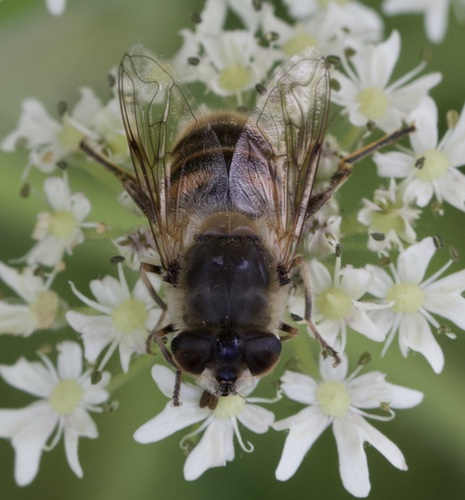
Adult tsetse are robust, biting flies with a long forward-projecting proboscis and a characteristic wing fold: when wings are at rest they overlap completely and lie directly over the abdomen. Body length is generally compact with a somewhat humpbacked thorax. They have clear wing venation with a 'hatchet' or 'cell' shape in the wing; antennae bear featherlike arista. Coloration is generally yellowish to brown with darker thoracic markings.
- Forward-projecting proboscis and characteristic blade-like mouthparts visible from the side
- Wings overlap completely at rest and show distinctive venation with a hatchet-shaped cell
- Robust yellowish to brown body with darker thoracic markings and feathered antenna arista
Lookalikes
Riverine tsetse Glossina palpalis
G. palpalis typically inhabits riverine and forested habitats, has slightly different wing venation and prefers shaded, humid environments compared to the savannah-loving G. morsitans.
Forest tsetse Glossina fusca
Forest species are usually darker and found in denser vegetation; habitat and subtle body shape and wing venation separate them from G. morsitans.
↻Life cycle
Egg (internal)
Females do not lay eggs in the environment. Eggs develop and hatch internally; the larva is nourished inside the mother.
Larva (mature at birth)
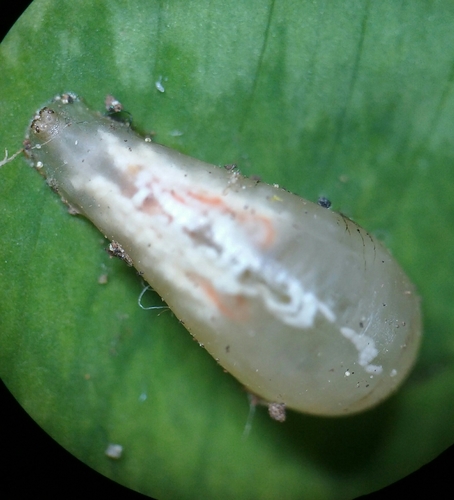
The female deposits a single fully developed larva onto shaded soil. Larvae are provided 'milk' secretions from the mother and do not feed externally.
Pupa
The larva burrows slightly into soil and forms a hard puparium. Pupation lasts 3-6 weeks depending on temperature and humidity.
Adult
An adult emerges from the pupa ready to seek blood meals. Males and females feed on vertebrate blood; females produce few offspring but invest heavily in each one.
🍃Diet and predators
Young eat
Larvae are nourished internally by maternal milk secretions until deposited to pupate; larval stage does not feed externally.
Adults eat
Obligate blood feeders on mammals and occasionally reptiles; both sexes feed on blood.
Predators of the young
Soil-dwelling predators and parasitic fungi can kill pupae; ants and beetle larvae may attack pupae.
Predators of adults
Birds, bats, reptiles, predatory insects and spiders prey on adults; larger mammals may swat them.
🌱Effect on plants and gardens
Tsetse flies do not feed on plants and do not directly damage crops or gardens, but they affect humans and livestock that use grazing land.
How to get rid of tsetse flies
Reduce encounters with tsetse by avoiding infested areas when possible, wear neutral-colored clothing (not bright or dark contrasts), and use insect repellent on exposed skin (repellents give limited protection). Area control methods used by health and agricultural agencies include blue/black baited traps and targets treated with insecticide, insecticide-treated cattle, aerial spraying or ground spraying in some campaigns, and the sterile insect technique to reduce populations. Household insecticides and window screens are of limited use for free-ranging tsetse.
📍Where and when to find it
Look in savanna, woodland edges and near waterholes where wild and domestic mammals congregate. Adults are seen on host animals, resting vegetation, or attracted to moving objects.
Best time
Most active during daylight hours; best observed in warm months when hosts are active. Local seasonal peaks depend on rainfall and temperature.
Observation tips
Use long zoom lenses and maintain distance from hosts. Avoid sudden movements that attract flies. Blue/black traps used by researchers make tsetse easier to observe at a safe remove.
✨Fun facts
- Female tsetse are viviparous and give birth to a single late-instar larva rather than laying eggs.
- Tsetse flies have highly developed mouthparts for piercing skin and drawing blood in a single continuous proboscis.
- They locate hosts using motion, color contrast (they are attracted to blue and black), body heat and carbon dioxide.
?Frequently asked questions
Are tsetse flies dangerous to people?
Yes. Tsetse flies can transmit trypanosome parasites that cause Human African Trypanosomiasis (sleeping sickness). Not every bite transmits disease, but the risk is significant in endemic areas.
Do tsetse flies sting or bite?
They bite. They use a forward-projecting proboscis to pierce the skin and take blood; the bite can be painful.
Why are tsetse flies in my area?
Glossina morsitans prefers savanna and open woodland where wild and domestic mammals are present. Their presence is driven by suitable habitat, host availability and local climate.
How can I avoid or get rid of tsetse flies?
Avoid infested areas when possible, wear light neutral clothing, use insect repellents for limited protection, and support or follow public health measures such as insecticide-treated targets, traps, or treated cattle. Effective area control typically requires coordinated programs run by health or agricultural authorities.
Will a tsetse bite leave a scar?
Bites can be irritating and occasionally leave a small sore; secondary infection can enlarge the wound. Persisting or severe reactions should be checked by a clinician.
More flies & mosquitoes
This guide was written with AI assistance and fact-checked, last updated 2026-10-10. Identification from photos is never certain: don't handle insects you can't identify, and get medical advice for bites, stings or allergic reactions. More about the tsetse fly: iNaturalist, Wikipedia.