
Fungus gnat
Bradysia coprophila · Fungus gnats
Small dark gnats whose larvae feed on fungi, decaying organic matter and plant roots, often a pest in potted plants and greenhouses.
!Is the fungus gnat dangerous?
No. Adults do not bite or sting. They are mainly a nuisance when flying around people or near lights; can contaminate food surfaces but do not transmit significant human diseases. First aid: none required if adults land on skin. Maintain good hygiene around food.
Pets
Not toxic to pets. Larval damage to houseplants can reduce plant health, which may indirectly affect animals that eat those plants. Adult flies may annoy pets but do not bite.
📖Overview
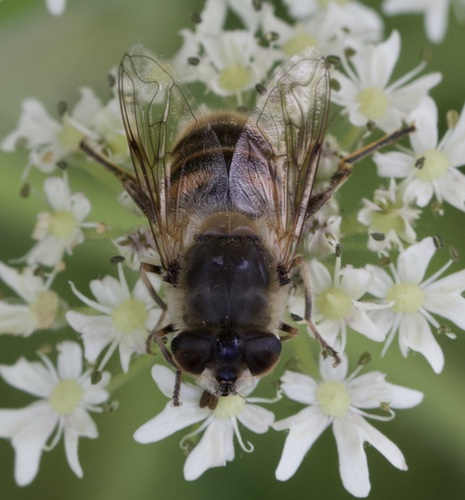
Bradysia coprophila is a species of small fly in the family Sciaridae commonly called a fungus gnat. Adults are fragile, mosquito-like flies that are weak fliers; larvae are slender, white to translucent maggots with a black head and are typically found in moist organic-rich soil. The larvae feed on fungal hyphae, decaying plant material and sometimes root hairs and young roots; large larval populations can damage seedlings and greenhouse crops. Adults are primarily a nuisance indoors and aid in dispersing fungal spores and pests.
🔍How to identify a fungus gnat
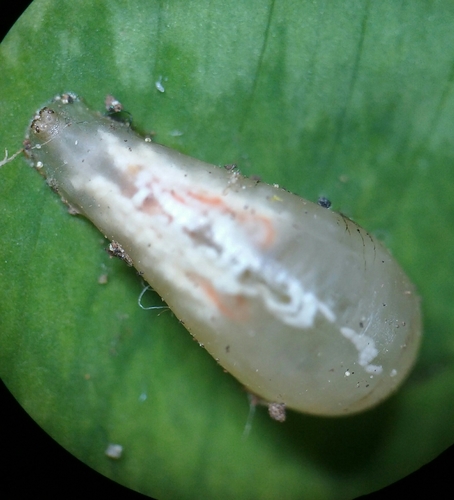
Adults are tiny, delicate flies with long legs and long segmented antennae; wings are clear to slightly smoky with fine venation. Body length of adults is small and slender. Larvae are 3-5 mm, legless, whitish or translucent with a shiny black head capsule. Pupae are obtect and form in the soil. Species-level identification of Bradysia coprophila vs closely related sciarids typically requires microscopic examination of adult male genitalia.
- Adults are 2-4 mm long, slender, dark-bodied flies with long legs and long multi-segmented antennae.
- Larvae are white or translucent maggots with a dark head capsule, found in the top 1-3 cm of moist potting soil.
- Adults are weak fliers and often seen walking on soil or flying low in swarms near plants or lights.
- Species-level separation from other sciarids requires microscopic examination of adult genitalia; look for general sciarid morphology for field ID.
Lookalikes
Common fungus gnat Bradysia impatiens
Very similar in appearance; B. impatiens is another frequent greenhouse pest. Distinguishing species usually requires microscopic examination of adult male structures or genetic methods.
Sciara fly Sciara spp.
Sciara species are similar dark gnats; differences are subtle and mostly visible to specialists using genitalia and wing venation details.
↻Life cycle
Egg
Small, pearly eggs laid in moist soil or on decaying organic matter; hatch in a few days under warm conditions.
Larva (maggot)
Legless, white to translucent larvae that feed on fungi, decaying material and roots; larvae develop for 1-3 weeks depending on temperature.
Pupa
Pupation occurs in the soil; pupal stage lasts several days before adults emerge.
Adult (fly)
Small, dark, delicate flies that live about 1-2 weeks, mate and lay eggs on moist substrates.
🍃Diet and predators
Young eat
Fungal hyphae, decaying organic matter, sometimes fine roots and root hairs
Adults eat
Adults feed on nectar, moisture and do not feed on plant tissue; they may not feed much as adults and mainly focus on reproduction.
Predators of the young
Soil predators such as predatory mites, rove beetles, predatory nematodes, and ground beetle larvae
Predators of adults
Generalist predators like spiders, predatory insects and insectivorous birds; sticky traps capture adults
🌱Effect on plants and gardens
Larvae feed on fungal growth, decaying organic matter and sometimes plant roots and root hairs; heavy infestations can stunt seedlings, cause root damage and kill young plants, making them a greenhouse and houseplant pest.
How to get rid of fungus gnats
Reduce excess moisture and remove decaying organic matter from potting soil. Allow soil surface to dry between waterings to discourage larvae. Use sticky traps to monitor and reduce adults. Repot with fresh, well-draining potting mix and discard heavily infested soil. For serious infestations, biological controls such as beneficial nematodes (Steinernema feltiae) or predatory mites (Hypoaspis miles) can reduce larvae; insecticidal drenches containing Bacillus thuringiensis israelensis (Bti) or chemical soil drenches are another option in severe cases. Always follow label directions and local regulations.
📍Where and when to find it
Look on the soil surface, around pot rims, under leaf litter and near compost or greenhouse benches. Larvae are found in the top few centimetres of moist potting soil.
Best time
Spring through fall outdoors; year-round in greenhouses and indoor plant collections. Adults are most noticeable at dusk or when disturbed.
Observation tips
Place yellow sticky traps near plants to monitor adult activity. To photograph larvae, gently remove soil from a pot and sift the top 1-3 cm onto a tray and examine with a magnifier.
✨Fun facts
- Fungus gnats are attracted to the fungi that grow in moist potting mixes and often indicate overwatering.
- Adult fungus gnats are weak fliers and often run across the soil surface or flutter around pots rather than flying long distances.
- They can rapidly build up in greenhouse conditions where warm, moist, organic-rich media and continuous propagation provide ideal breeding sites.
?Frequently asked questions
Do fungus gnats bite?
No. Adults do not bite people or pets; they are a nuisance but not blood feeders.
Why are fungus gnats in my houseplants?
They thrive in moist, organic-rich potting soil. Overwatering, poor drainage and decaying plant material encourage egg-laying and larval development.
Can fungus gnats kill my plants?
Small numbers usually cause little harm, but heavy larval infestations can damage roots and kill seedlings or weaken plants.
How do I get rid of fungus gnats?
Let soil dry between waterings, remove decaying debris, use sticky traps for adults, repot with fresh sterile mix if needed, and consider biological controls like Steinernema feltiae or Bti for larval control.
Are fungus gnats harmful to pets or children?
They are not poisonous or biting. The main issue is nuisance and potential contamination; handle infestations by reducing breeding habitat and using safe control methods.
More flies & mosquitoes
This guide was written with AI assistance and fact-checked, last updated 2026-10-10. Identification from photos is never certain: don't handle insects you can't identify, and get medical advice for bites, stings or allergic reactions. More about the fungus gnat: iNaturalist.