
European crane fly
Tipula paludosa · Crane flies
A slender, long-legged fly whose larvae feed on grass roots and can be an agricultural and turf pest in cooler regions.
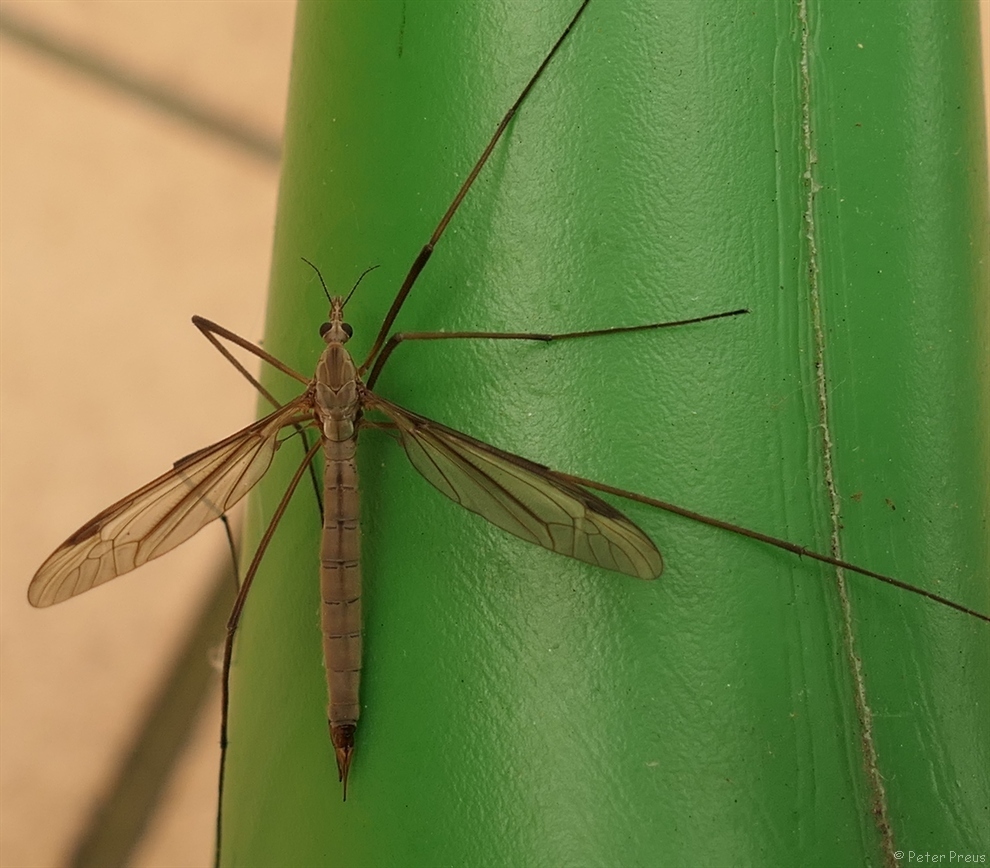
!Is the european crane fly dangerous?
No. Adults do not bite or sting and are not venomous. They are harmless to people other than being a nuisance around lights. Handle gently if needed because their legs break easily. If you have concerns about allergic reactions to insect parts, wash the area if crushed on skin.
Pets
Not toxic to pets. Pets may try to eat adults; accidental ingestion is generally harmless though birds and small mammals may be attracted to them.
📖Overview
Tipula paludosa is a widespread crane fly originally native to Europe that has become established in parts of North America and other regions. Adults are fragile, long-legged flies often seen in late summer and autumn; they do not feed on people and live only a few days. The larval stage, called a leatherjacket, lives in soil and eats grass roots and decaying plant material, and in large numbers can damage lawns, pastures and cereal crops.
Adults are most noticeable when they emerge en masse and fly weakly near lights or low vegetation. The species is well studied because of its economic impact on turf and agricultural grasslands; management focuses on reducing larval numbers in soil rather than targeting short-lived adults.
🔍How to identify a european crane fly
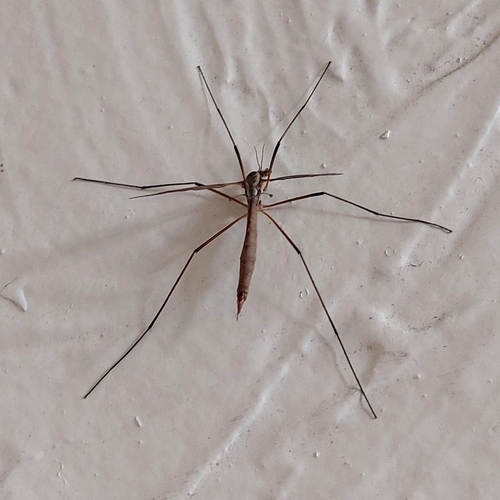
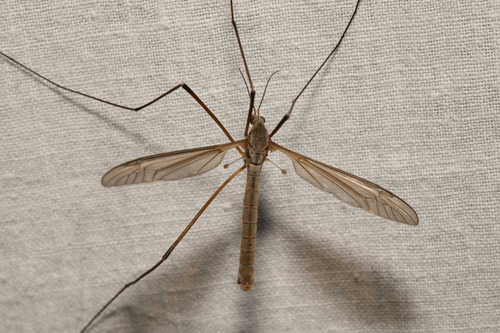
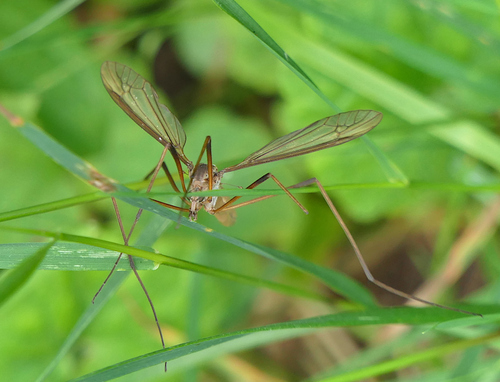
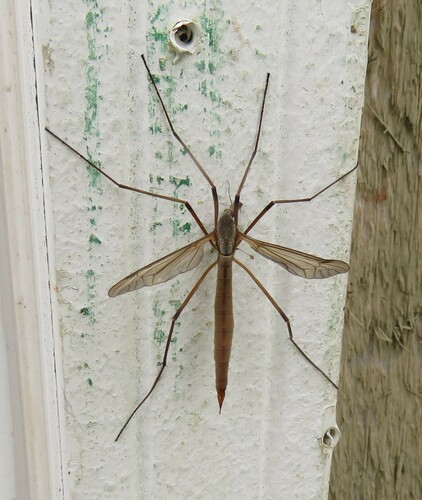
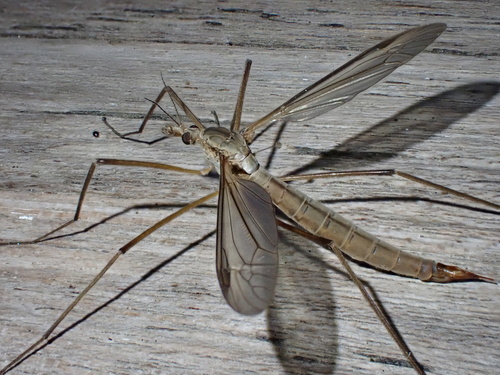
Adult T. paludosa are slender, long-legged flies 12-20 mm body length with wings that give a wingspan around 25-40 mm. They have a brown to grey thorax and abdomen with fine, sometimes indistinct longitudinal markings; legs are long and thin. Wings are clear to slightly smoky with visible veins. Larvae (leatherjackets) are legless, cylindrical, and grey-brown, typically 20-40 mm long when mature, with a tough, leathery skin and a tapered posterior breathing structure.
- Long, very thin legs and a slender body typical of crane flies
- Brown-grey thorax and abdomen with subtle markings; wings clear to slightly smoky with visible veins
- Larvae are legless, grey-brown 'leatherjackets' 20-40 mm long in soil or thatch
- Active outdoors at dusk or near lights in late summer and autumn
Lookalikes
Common crane fly Tipula oleracea
T. oleracea is similar in size and coloration but usually has two generations a year (spring and autumn), and its females have wings longer than the abdomen, whereas T. paludosa females have shortened wings; expert keys are needed for reliable separation.
Large crane fly Tipula maxima
Much larger (wingspan up to about 65 mm) with distinctly dark-patterned wings, whereas T. paludosa has plain wings.
↻Life cycle
Egg
Laid in clusters in moist soil, thatch or vegetation in late summer; hatch in about 1-3 weeks depending on temperature.
Larva (leatherjacket)
Legless, brown-grey larvae feed on grass roots and organic matter in soil through autumn, winter and spring; they are the stage that causes most plant damage.
Pupa
Larvae pupate in soil in late spring to early summer; pupal stage lasts one to several weeks before adults emerge.
Adult (crane fly)
Short-lived reproductive stage; adults mate and lay eggs in late summer and autumn and do not feed on large quantities of plant material.
🍃Diet and predators
Young eat
Roots, root hairs, crowns of grasses, and decaying organic matter in soil
Adults eat
Adults feed little or not at all; if they feed, it is on nectar or not recorded—mostly their role is reproduction
Predators of the young
Ground beetles, birds, small mammals, parasitic nematodes and some parasitoid wasps
Predators of adults
Birds, spiders, bats and other insectivorous predators
🌱Effect on plants and gardens
Larvae feed on grass roots, young cereal seedlings and other low vegetation; heavy infestations cause patchy lawn dieback, reduced pasture productivity and damage to cereal crops in some areas.
How to get rid of european crane flys
Encourage healthy turf: proper drainage, aeration and balanced fertilization reduce suitability for larvae. Cultural control: reduce thatch and avoid overwatering; reseed damaged areas in spring. Biological control: nematodes (Steinernema species) can reduce leatherjacket numbers when applied correctly; check product suitability for your region. Chemical control: soil-applied insecticides are used in some agricultural or turf management settings but should be applied following local regulations and integrated pest management guidance.
📍Where and when to find it
Adults: low vegetation, near lights, and in grassy areas at dusk and night. Larvae: in soil and thatch of lawns, pastures and wet grassland.
Best time
Best observed as adults in late summer to autumn (often August-October). Larvae are easiest to find in soil samples from autumn through spring.
Observation tips
Check soil cores or turf plugs to find leatherjackets. For photographing adults, look at dusk near grassy margins or use low-wattage lights to attract them; handle carefully because legs break easily.
✨Fun facts
- The larvae are called leatherjackets because of their tough, leathery skin.
- Tipula paludosa is an introduced pest in parts of North America and New Zealand, where it can damage lawns and pastures.
- Adults are often seen in large swarms during their brief autumn emergence, which can make them locally conspicuous despite individual fragility.
?Frequently asked questions
Do European crane flies bite?
No. Adults do not bite or sting. They are harmless to people.
Are leatherjackets harmful to my lawn?
Yes. Large numbers of leatherjackets (T. paludosa larvae) feed on grass roots and can cause patchy brown areas and reduced turf quality.
Why are crane flies in my house?
Adults are attracted to lights and may enter houses accidentally, especially during their late-summer and autumn emergence. They do not infest homes and usually die within a few days.
How can I get rid of leatherjackets?
Manage turf health with good drainage, aeration and reduced thatch, consider biological controls such as appropriate entomopathogenic nematodes, and use approved soil insecticides only as a last resort and following local guidelines.
Where does Tipula paludosa live?
It prefers moist grasslands, pasture, lawns and marshy edges. Larvae live in soil and thatch where they feed on roots and organic matter.
📷Photos of the european crane fly
More flies & mosquitoes
This guide was written with AI assistance and fact-checked, last updated 2026-10-09. Identification from photos is never certain: don't handle insects you can't identify, and get medical advice for bites, stings or allergic reactions.