
Drain fly
Clogmia albipunctata · Drain flies
Small, fuzzy moth-like flies that breed in organic slime in drains and plumbing, common indoor nuisance pests.
!Is the drain fly dangerous?
Only mildly. Drain flies do not bite or sting. Large indoor populations can be a nuisance and occasionally aggravate allergies or asthma in sensitive people due to shed scales and body fragments. They can mechanically transfer bacteria picked up on their bodies from drain material onto nearby surfaces or food, so good hygiene is advised. First aid: for allergic reaction seek medical advice; otherwise no specific first aid is needed.
Pets
Not dangerous to pets. Pets may catch or eat individual flies without harm, though ingestion of large numbers is unlikely and not a known health risk.
📖Overview
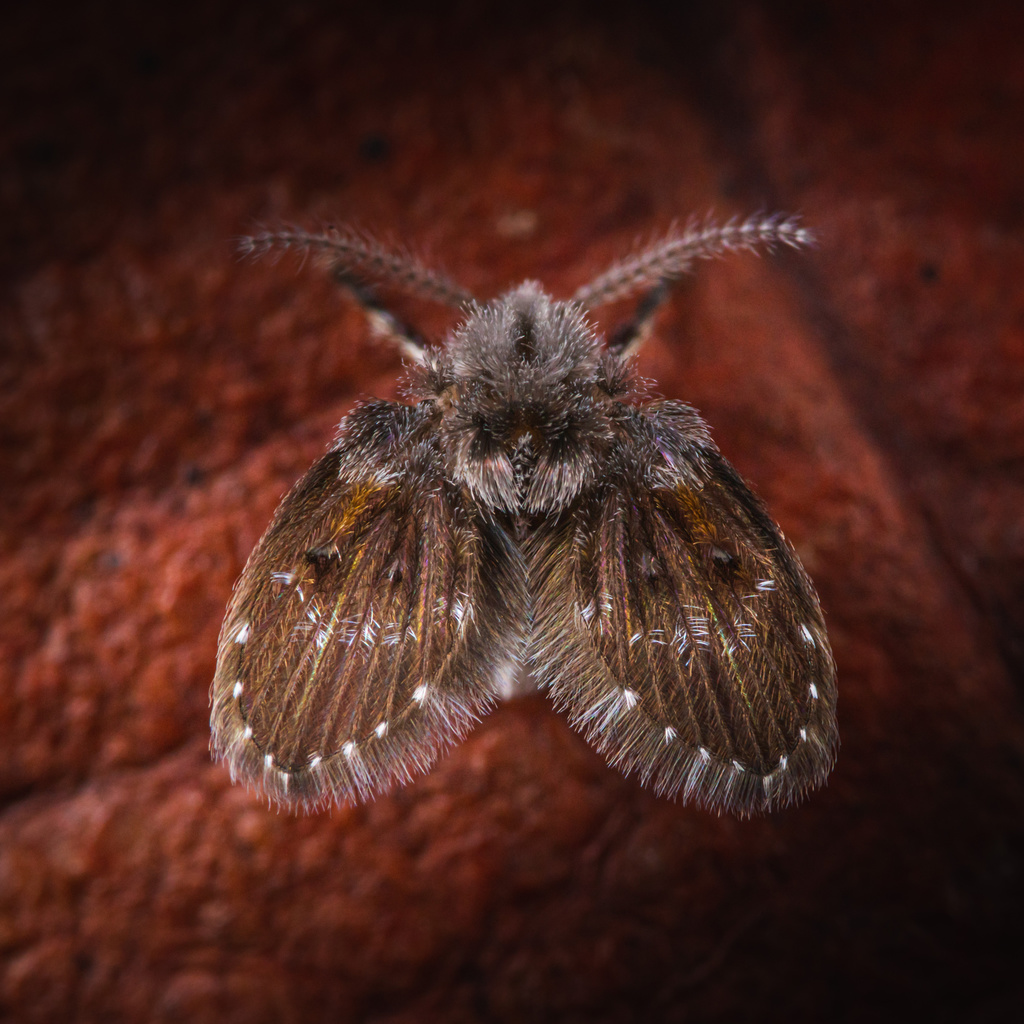
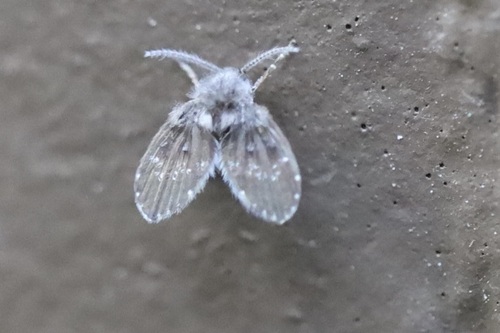
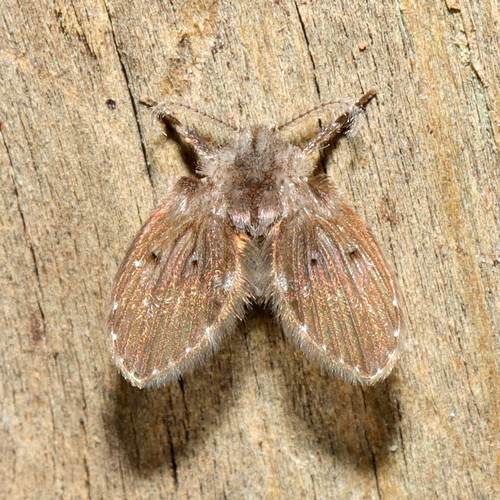
Clogmia albipunctata is a tiny, hairy fly often found around sinks, floor drains, septic systems and other places with standing water and decaying organic matter. Adults look like miniature moths and are weak fliers, often hopping or fluttering near their breeding site. The species thrives indoors in temperate and tropical regions where plumbing provides warm, moist habitats year-round.
They are primarily a nuisance rather than a direct health threat: larvae develop in the gelatinous film that accumulates inside drains, and large numbers of adults can emerge and cause annoyance. They do not bite, and while they can carry bacteria on their bodies they are not known as major disease vectors. Control focuses on removing the breeding substrate in drains and plumbing traps.
🔍How to identify a drain fly
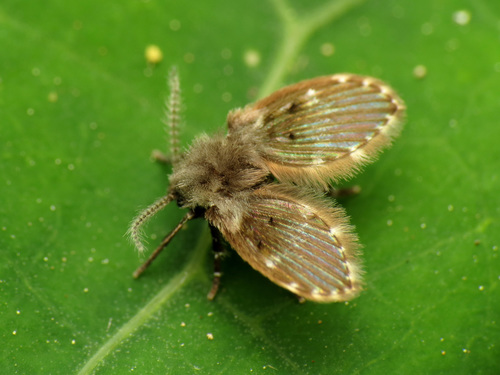
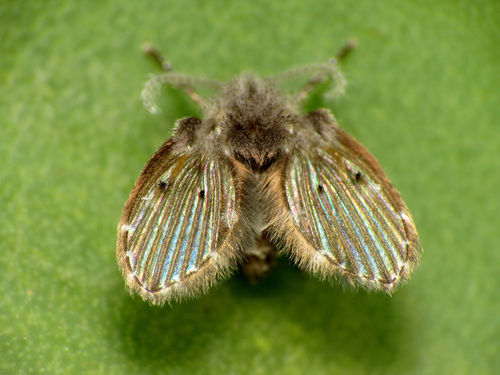
Adults are small (about 2-5 mm long), compact and densely covered with hairs, giving a fuzzy or moth-like appearance. Wings are broad, rounded and held roof-like over the body when at rest; wing veins are reduced and the wings often show a speckled or dusted look from the body hairs. Body and wings are typically dark grey to black but appear lighter when covered with fine pale hairs.
- Tiny (2-5 mm), densely hairy body and wings giving a fuzzy, moth-like look.
- Broad, rounded wings held roof-like over the body with reduced wing venation.
- Weak, fluttering flight; often walk or hop near drains rather than fly long distances.
- Gather in groups on walls or near the drain where they breed, especially in bathrooms and kitchens.
Lookalikes
Fungus gnat Family Sciaridae (various species)
Fungus gnats are more slender, longer-legged and have clear wings with visible venation; they are associated with potted soil rather than drains.
Phorid fly Family Phoridae (various species)
Phorid flies are hump-backed, run quickly on surfaces and have different wing venation; many breed in decaying organic matter but not specifically drain slime.
↻Life cycle
Egg
Females lay batches of eggs in moist organic films; eggs hatch in about 48-72 hours depending on temperature.
Larva (maggot)
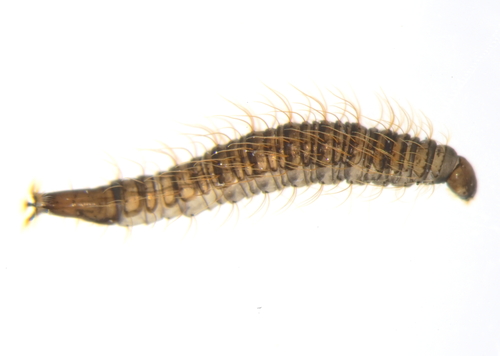
Larvae are elongated, slightly tapered and feed on bacteria and organic slime in drains; this stage lasts about 1-3 weeks depending on conditions.
Pupa
Pupation occurs in drier pockets near the breeding film; pupal stage lasts several days before adults emerge.
Adult (drain fly)
Adults are short-lived (about 1-2 weeks), mate near breeding sites and females lay eggs shortly after mating.
🍃Diet and predators
Young eat
Bacteria, fungi and decaying organic matter (slimy biofilm) found in drains and standing-water niches.
Adults eat
Adults feed little; they may sip moisture and sugary liquids or feed on surface films but do not actively feed on living tissue.
Predators of the young
Predatory aquatic insects in open water, microbial antagonists and physical removal by plumbing flow.
Predators of adults
Spiders, predatory insects, bats and insectivorous birds; indoor predators include house spiders.
🌱Effect on plants and gardens
Drain flies do not feed on or damage living plants or crops; larvae consume decaying organic matter and microbial films, not healthy plant tissue.
How to get rid of drain flies
Remove the breeding substrate: clean and scrub inside drains, use a drain brush or plumbing snake to remove organic buildup, and flush with hot water and detergent. For persistent infestations, clean traps and U-bends, pour enzymatic drain cleaners that digest organic slime, or use a professional plumber to access blocked areas. Reduce standing water and fix leaks. Sticky traps can capture adults but will not stop breeding; insecticide sprays give temporary reduction but will not eliminate larvae inside pipes.
📍Where and when to find it
Look for adults resting on walls near sinks, showers, floor drains and around laundry or boiler rooms. Inspect inside drains, U-bends and trap seals for larval slime.
Best time
Year-round indoors; evenings and night when adults are most active.
Observation tips
To locate the breeding site, turn off water and observe where adults cluster; use a flashlight and a drain brush to inspect and clean possible drain lines.
✨Fun facts
- Drain flies are sometimes called moth flies because their fuzzy appearance makes them look like tiny moths.
- A small number of drain flies can persist unnoticed for months inside plumbing; outbreaks usually mean a buildup of organic material somewhere in the system.
- Because adults are weak fliers, seeing them far from a drain often indicates a nearby breeding site you may not have noticed.
?Frequently asked questions
Do drain flies bite?
No. Drain flies do not bite or sting people.
Are drain flies dangerous or do they spread disease?
Only mildly. They do not bite or sting and are not considered significant disease vectors, but they can mechanically carry bacteria from drain material to nearby surfaces and large numbers may aggravate allergies. Maintain cleanliness to reduce any risk.
Why are drain flies in my house?
They indicate moist organic buildup in drains, traps, grease traps or other standing-water areas where larvae can develop.
How do I get rid of drain flies?
Remove breeding sites by scrubbing and clearing organic slime from drains and traps, use enzymatic drain cleaners, reduce standing water and fix leaks; sticky traps and insecticides only reduce adults temporarily.
Can I prevent them from coming back?
Yes. Regularly clean drains, run hot water, use a drain brush or enzymatic cleaners, keep traps filled with water and repair leaks to remove breeding habitat.
📷Photos of the drain fly
More flies & mosquitoes
This guide was written with AI assistance and fact-checked, last updated 2026-10-10. Identification from photos is never certain: don't handle insects you can't identify, and get medical advice for bites, stings or allergic reactions. More about the drain fly: iNaturalist, Wikipedia.