
St Mark's fly
Bibio marci · March flies
A common spring March fly in Europe, often seen around St Mark's Day (late April); adults are short-lived and larvae live in soil feeding on decaying organic matter.
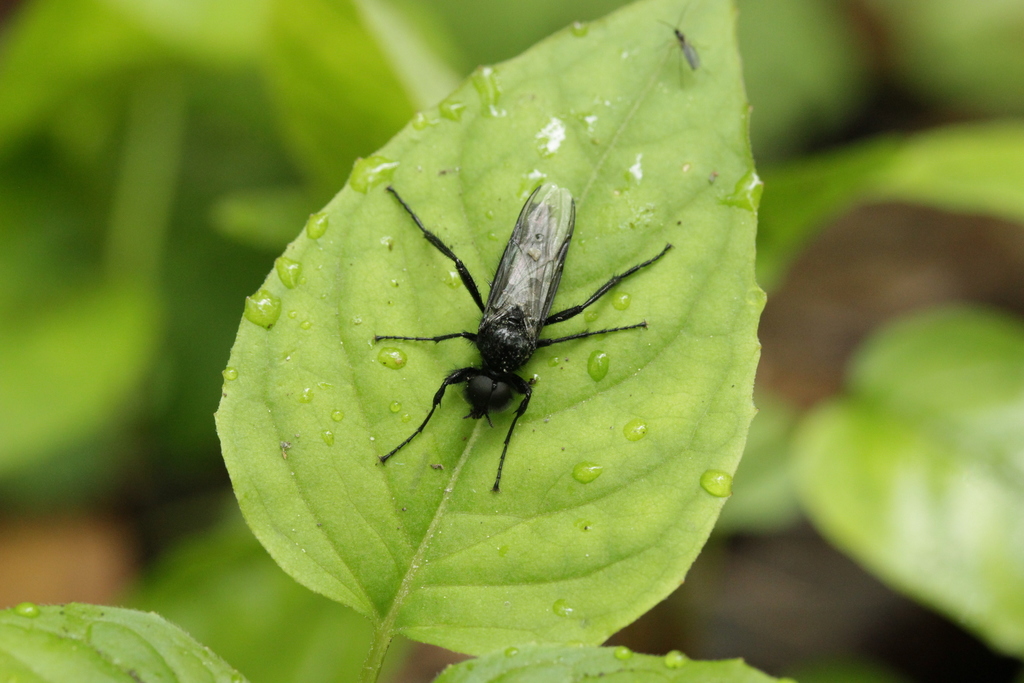
!Is the St Mark's fly dangerous?
No. Adults do not have a medically significant bite or sting and are not poisonous. They may brush against people and leave small, harmless stains from crushed bodies, but they do not transmit disease. No specific first aid is needed beyond normal wound care if an accidental scratch occurs.
Pets
Not toxic to pets. Larvae in soil are not a direct threat to pets; small animals may eat adults but this is not harmful.
📖Overview
Bibio marci is a species of March fly (family Bibionidae) widespread in temperate Europe. Adults emerge in spring in large numbers, with males often swarming while females are less conspicuous. Adults are short-lived, their main role being reproduction. The larvae live in soil and leaf litter where they feed on decaying organic matter and sometimes the roots of young plants. Populations are usually harmless and play a role in decomposition, though in localized outbreaks larvae can damage seedlings or turf.
🔍How to identify a St Mark's fly
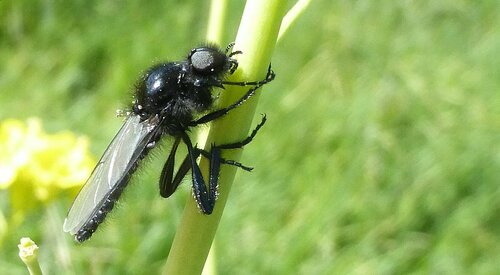
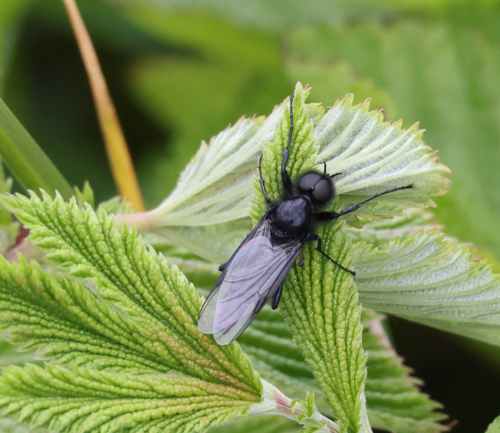
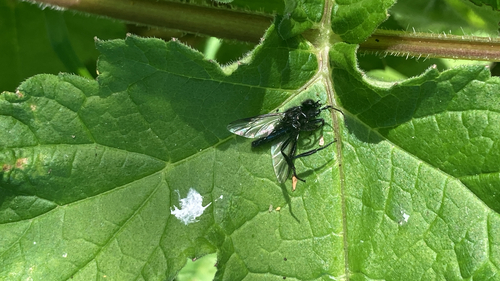
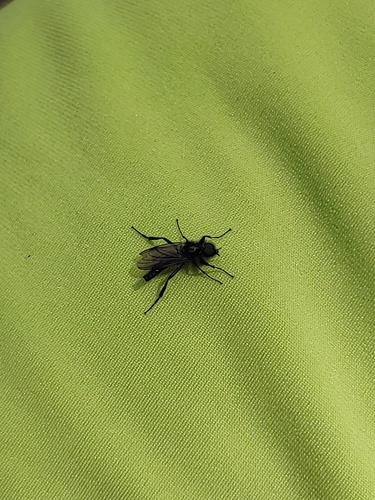
Adults are hairy, all-black flies with a relatively compact body and long legs; the long hind legs dangle conspicuously in flight. Wings are translucent to slightly smoky and held roof-like over the abdomen when at rest. Males have huge eyes covering most of the head, while females have a small, narrow head and are slightly larger. Larvae are elongate, cylindrical, cream to pale brown maggots with a well-sclerotized head, typical of soil-dwelling fly larvae.
- Season: adults appear in spring, often around late April (St Mark's Day) which is a useful field clue
- Hairy, all-black body 8-12 mm long with long black legs that dangle in flight
- Wings translucent to slightly smoky and held roof-like over the body when at rest
- Males may be seen swarming in groups while females are more solitary and less numerous
Lookalikes
Heather fly Bibio pomonae
B. pomonae has distinctive red-orange thighs and flies in late summer, mainly on heaths and moors, rather than in spring.
Garden March fly Bibio hortulanus
Females of B. hortulanus have a largely orange-red body, while St Mark's flies of both sexes are all black.
Fever fly Dilophus febrilis
Fever flies are smaller (about 4-6 mm) black March flies with rings of spines on the front legs; they often fly in large numbers later in the year.
↻Life cycle
Egg
Eggs are laid in soil or leaf litter in spring; they hatch within days to weeks depending on temperature and moisture.
Larva (maggot)
Soil-dwelling larvae feed on decaying plant material and humus; they develop over weeks to many months and overwinter in the soil in colder regions.
Pupa
Larvae pupate in the soil; the pupal stage lasts days to weeks before the adult emerges in spring.
Adult (fly)
Adults emerge in spring to mate. They visit spring blossoms for nectar and live for only a short time while reproducing.
🍃Diet and predators
Young eat
Decaying plant material, humus and small amounts of root tissue
Adults eat
Nectar and pollen from spring blossoms such as fruit trees and hawthorn.
Predators of the young
Ground beetles, predatory nematodes, centipedes and other soil predators
Predators of adults
Birds, spiders and insectivorous flies
🌱Effect on plants and gardens
Larvae feed on decaying organic matter and sometimes very young roots or seedlings; generally they aid decomposition and soil health. In rare, localized high-density situations larvae can damage newly sown grass or seedlings.
📍Where and when to find it
Adults: flying around hedgerows, meadows and gardens in spring. Larvae: in soil and leaf litter, compost heaps and turf.
Best time
Late April to May during warm, calm daylight hours.
Observation tips
Photograph adults at eye level in sunny weather; look for male swarms near hedgerows. To find larvae, search compost and moist topsoil in autumn and winter.
✨Fun facts
- Named 'St Mark's fly' because adults often appear in large numbers around St Mark's Day (April 25) in parts of Europe.
- Males commonly form aerial swarms that help females locate mates.
- Larvae help recycle nutrients by breaking down decaying plant matter in soil.
?Frequently asked questions
Do St Mark's flies bite?
No. Adults do not have a medically significant bite and are not aggressive toward people.
Why are St Mark's flies in my garden?
They emerge from soil or leaf litter where larval stages developed. Gardens with moist soil and plenty of organic matter are good habitat for larvae.
Are St Mark's fly larvae harmful to plants?
Usually no. Larvae mostly eat decaying material and help decomposition. In heavy infestations they can chew on young roots or seedlings, but this is uncommon.
How can I get rid of St Mark's flies?
Reducing soil moisture, removing excess leaf litter and garden debris, and avoiding over-fertilizing can lower larval habitat. Adults are harmless and disappear within a few weeks, so insecticide use is not necessary and is discouraged.
When will I see them?
Adults appear in spring, often peaking around late April to May in much of Europe; best seen on warm, calm sunny days.
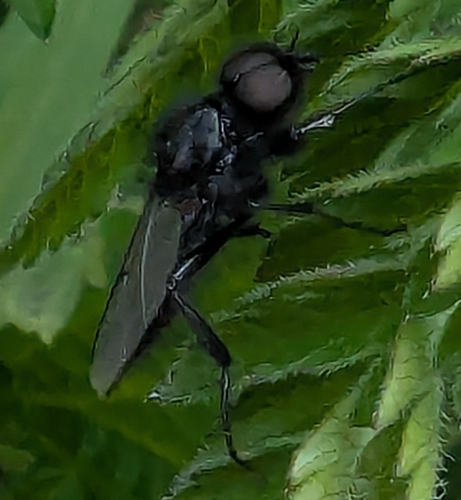
📷Photos of the St Mark's fly
More flies & mosquitoes
This guide was written with AI assistance and fact-checked, last updated 2026-10-10. Identification from photos is never certain: don't handle insects you can't identify, and get medical advice for bites, stings or allergic reactions. More about the St Mark's fly: iNaturalist, Wikipedia.