
Lesser house fly
Fannia canicularis · Lesser house flies
A small, slender grey fly common in and around houses; a nuisance that can mechanically spread bacteria but does not bite.
!Is the lesser house fly dangerous?
Only mildly. Lesser house flies do not bite or sting and are not venomous. They can mechanically transfer bacteria, protozoa and other microbes from decaying material and faeces onto food and surfaces; this poses a hygiene risk. Clean and cover food, wash hands after handling waste, and if contact with potentially contaminated material occurs, clean the area with disinfectant.
Pets
Generally harmless to pets in terms of biting, but may transfer pathogens from waste or carcasses; keep pet food covered and remove droppings or soiled bedding promptly.
📖Overview
Fannia canicularis is a small synanthropic fly closely associated with human buildings and decaying organic matter. Adults are often seen indoors, resting on ceilings and making short, repetitive flights in the middle of rooms, often circling beneath light fixtures. They develop in damp decaying organic material, compost, animal feces and occasionally in decaying food. While not aggressive biters and not venomous, they are nuisance pests and can mechanically transfer microbes from waste to food and surfaces.
🔍How to identify a lesser house fly
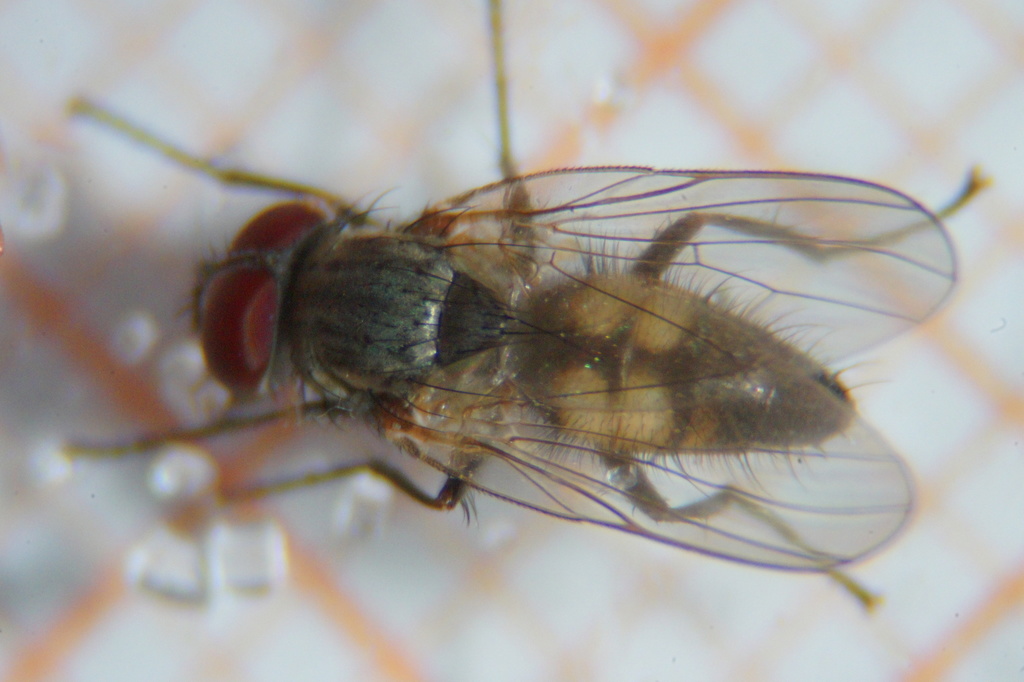
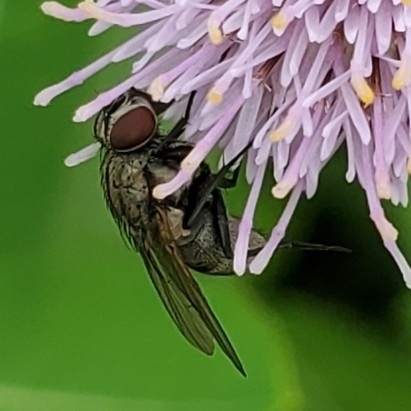
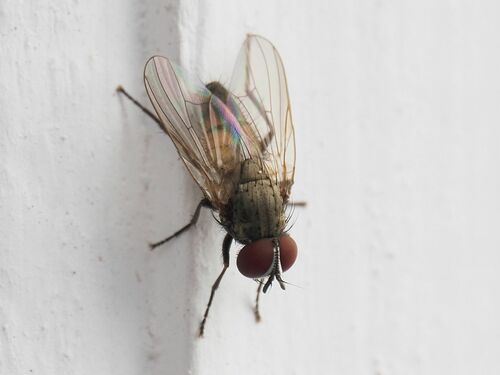
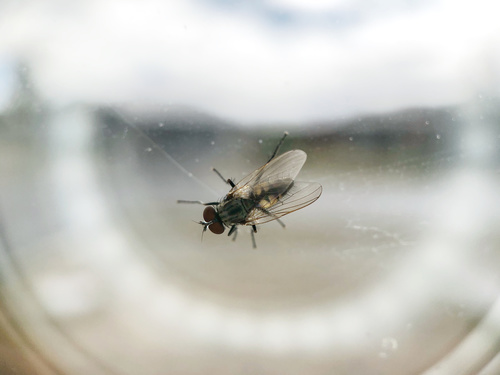
Adults are noticeably slimmer and more delicate than the common house fly (Musca domestica). They have a narrow, elongated abdomen often with faint darker banding, a grey thorax with subtle longitudinal lines, and relatively long legs. At rest they frequently cling to ceilings or walls; their flight is distinctive—short, rapid loops or figure-eight patterns across rooms. Males have yellowish translucent patches near the base of the abdomen and do most of the patrolling flights; females are plainer grey and fly less.
- Small slender fly 3.5-6 mm long (smaller than Musca domestica)
- Distinctive short, looping flights and tendency to hover in the centre of a room or over ceilings
- Narrow elongated abdomen with faint banding and a grey thorax with subtle longitudinal lines
- Males patrol in angular loops below light fixtures and seldom land on food; when resting they choose ceilings, cords and light fittings.
Lookalikes
House fly Musca domestica
House fly is generally larger and stouter with broader abdomen and different flight (more direct). Musca has more pronounced thoracic striping and different wing venation.
Fannia scalaris (latrine fly) Fannia scalaris
Fannia scalaris is similar in size but larvae are more commonly associated with semi-liquid decaying matter and indoor infestations of specific waste; careful examination by an expert is needed to separate species.
↻Life cycle
Egg
Females lay small, white eggs in damp decaying organic material, manure, compost or similar substrates.
Larva (maggot)
Legless maggots feed on decaying matter; development depends on temperature and substrate quality and may take days to weeks.
Pupa
Larvae pupate in drier parts of the substrate or nearby soil; the pupa stage lasts several days to a couple of weeks.
Adult
Adults emerge, mate and seek protein and sugar sources. Females require protein for egg development and use suitable decaying substrates to lay eggs.
🍃Diet and predators
Young eat
Decaying organic matter, animal feces, compost and other damp detritus
Adults eat
Sugars and liquids such as nectar, honeydew, plant sap, and liquids from food; they also feed on moisture and soluble nutrients from waste
Predators of the young
Predatory beetles, other insect larvae, ants, and microfauna in compost and manure
Predators of adults
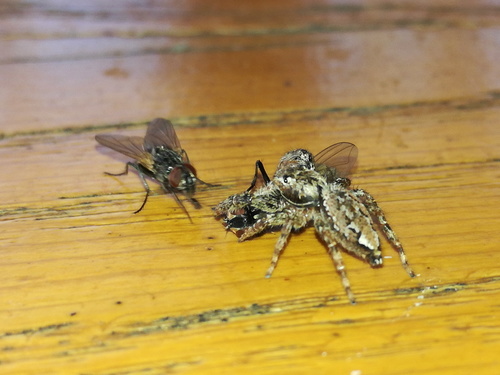
Spiders, predatory flies, birds, bats and insectivorous plants in some habitats
🌱Effect on plants and gardens
Adults do not feed on or damage living plants. Larvae feed on decaying organic matter rather than living plant tissue.
How to get rid of lesser house flies
Find and remove breeding sites: clean up or dry out manure, soiled animal bedding, wet compost and rotting food; keep garbage in sealed bins and clean them regularly. Fit window and door screens. Sticky fly ribbons or ultraviolet light traps help indoors. Insecticides are rarely needed in homes; on farms, manure management is the main control, with labelled treatments applied by a professional if necessary.
📍Where and when to find it
Indoors: ceilings, walls, kitchens and near windows. Outdoors: compost heaps, manure piles, animal bedding, garbage and damp decaying plant matter. Look for adults hovering in short loops.
Best time
Spring to autumn outdoors; year-round indoors in heated buildings. Daytime activity is highest in warm daylight hours.
Observation tips
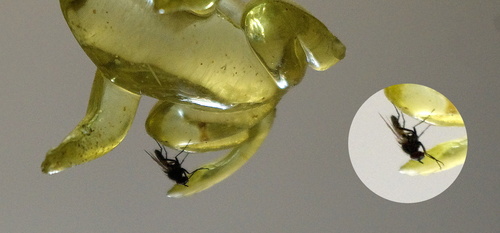
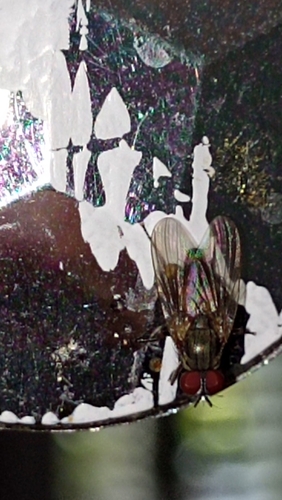
Photograph individuals on ceilings or walls from below to capture the slender profile. To find breeding sites, check moist compost, under soiled bedding and wet accumulated organic waste.
✨Fun facts
- The looping flights seen under ceiling lights are made mostly by males patrolling for females.
- Unlike blow flies that are attracted to exposed meat, lesser house fly larvae prefer damp decaying material and can develop in compost and accumulated waste that retains moisture.
?Frequently asked questions
Do lesser house flies bite?
No. Fannia canicularis does not bite people or pets; it is a nuisance because of its presence and potential to contaminate food.
Are lesser house flies dangerous?
They are not venomous or directly dangerous, but they can mechanically transfer disease-causing microbes from waste to food and surfaces, so good hygiene is important.
Why are lesser house flies in my house?
They are attracted to houses by food, moisture and breeding sites like compost, animal bedding, garbage or drains. Adults often enter through open windows and doors or breed nearby.
How do I get rid of lesser house flies?
Remove or manage breeding sources: keep garbage sealed, clean drains, turn compost regularly and reduce damp organic debris. Use window screens, sticky traps or indoor electric traps for adults. In heavy infestations, target larval sites with sanitation and, if necessary, a licensed pest control professional.
Where do they breed?
Females lay eggs in damp, decaying organic material such as compost, manure, soiled animal bedding, garbage or wet food waste; they prefer substrates that retain moisture.
Can they transmit disease?
Yes, they can mechanically carry bacteria, protozoa and other microbes picked up from waste to food and surfaces, so they are considered a hygiene risk rather than a direct vector like biting insects.
📷Photos of the lesser house fly
More flies & mosquitoes
This guide was written with AI assistance and fact-checked, last updated 2026-10-10. Identification from photos is never certain: don't handle insects you can't identify, and get medical advice for bites, stings or allergic reactions. More about the lesser house fly: iNaturalist, Wikipedia.