
Common snipe fly
Rhagio mystaceus · Snipe flies
A slender, long-legged snipe fly of eastern North American woodlands; adults rest head-down on tree trunks and leaves while larvae are soil predators.
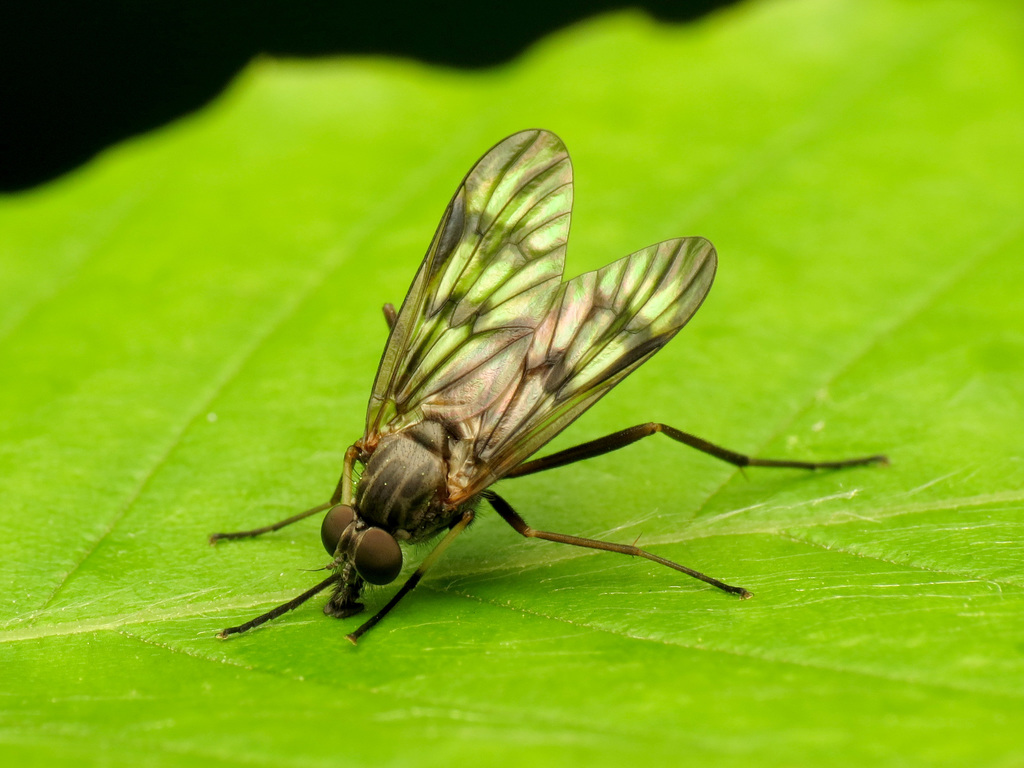
!Is the common snipe fly dangerous?
No. Not venomous and does not bite people. No known disease transmission. Safe to observe and to usher outdoors.
Pets
Harmless to pets. Not known to transmit disease to cats or dogs; pets might catch and eat adults without ill effect.
📖Overview
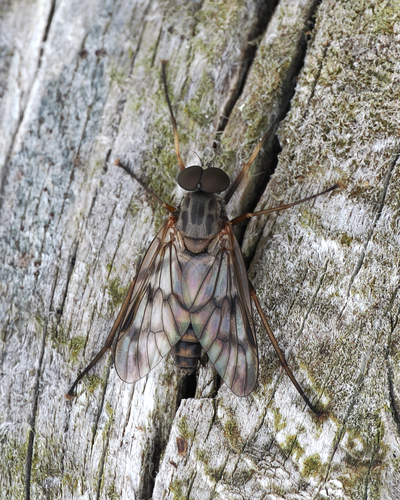
Rhagio mystaceus is a species of snipe fly in the family Rhagionidae common in woodlands of eastern North America. Adults are often seen resting on foliage or visiting flowers in woodland edges, hedgerows and gardens. They often rest head-down on tree trunks and foliage and are most noticeable by their yellowish abdomen with darker markings and relatively long legs. Larvae live in soil or leaf litter and are predatory on other small invertebrates.
This species is not dangerous to people. Adults do not bite people; they feed on small soft-bodied insects and possibly honeydew or nectar. The life cycle follows a typical fly pattern of egg, larva, pupa and adult, with larvae developing in damp, organic-rich soil or leaf litter.
🔍How to identify a common snipe fly
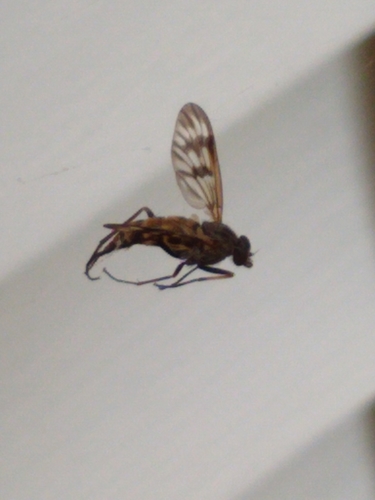
Adult Rhagio mystaceus are small, slender flies with a narrow elongated abdomen often showing yellow or yellow-brown ground colour and darker dorsal markings. The thorax is usually brownish with subtle striping and the wings are clear or lightly smoky with fine venation. Legs are relatively long and fine, often yellowish to brown. The head bears large compound eyes and short antennae. Overall appearance is a delicate, wasp-like snipe fly rather than a robust housefly.
- Slender fly about 8-12 mm with an orange-yellow abdomen bearing dark markings and a greyish, striped thorax
- Long, fine legs and a narrow elongated body typical of snipe flies
- Often rests head-down on tree trunks and leaves during the day
Lookalikes
Downlooker snipefly Rhagio scolopaceus
The European counterpart; very similar in shape and posture but has more heavily spotted wings and occurs in Europe rather than North America.
Golden-backed snipe fly Chrysopilus thoracicus
Another eastern North American snipe fly, but its thorax is covered in bright golden hairs and its abdomen is dark.
↻Life cycle
Egg
Laid in damp soil or leaf litter; small, pale eggs that hatch into larvae.
Larva
Soil-dwelling predatory maggots that feed on other small invertebrates and develop over weeks to months.
Pupa
Pupation occurs in the soil; a non-feeding resting stage before the adult emerges.
Adult (fly)
Winged, mainly predatory stage that mates and lays eggs; active during warm daylight hours.
🍃Diet and predators
Young eat
Predatory on small soil invertebrates (worms, insect larvae, springtails)
Adults eat
Small soft-bodied insects; possibly honeydew or nectar
Predators of the young
Ground beetles, predatory mites, parasitic wasps and other soil predators
Predators of adults
Spiders, birds, predatory flies and insectivorous insects
🌱Effect on plants and gardens
Does not feed on plants; adults may occasionally visit flowers, and larvae prey on soil invertebrates
📍Where and when to find it
Look for adults resting on leaves, shrubs and tall grasses at woodland edges and hedgerows; search soil and leaf litter for larvae.
Best time
Spring through late summer, during warm daylight hours.
Observation tips
Photograph resting adults on leaves from a side angle to capture body shape and abdomen markings; use gentle approach to avoid flushing the fly.
✨Fun facts
- Snipe flies are named for their long legs and slender, tapering bodies; the head-down resting habit gives Rhagio its other nickname, down-looker.
- Rhagio mystaceus often sits head-down on tree trunks, a posture thought to help it watch for prey and danger approaching from below.
?Frequently asked questions
Are common snipe flies dangerous?
No. Rhagio mystaceus are non-venomous and not dangerous to people or pets.
Do common snipe flies bite?
No. Unlike some western North American snipe flies (genus Symphoromyia), Rhagio mystaceus does not bite people; it feeds on small insects.
Why is a snipe fly in my house?
They are attracted to light or may wander indoors from nearby gardens or hedges. Damp basements and sheds near vegetation can also lure them.
How do I get rid of snipe flies?
They are harmless and usually leave on their own. To remove one, open a window or use a cup and card to capture and release it outdoors. Reducing damp leaf litter and sealing gaps can lower indoor visits.
Where does the common snipe fly live?
In deciduous woodlands, woodland edges and shady gardens across eastern North America.
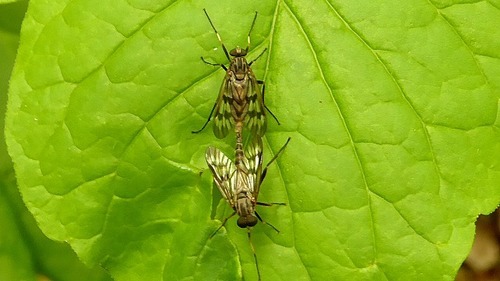
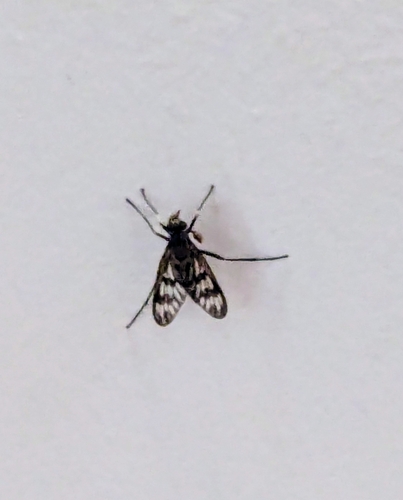
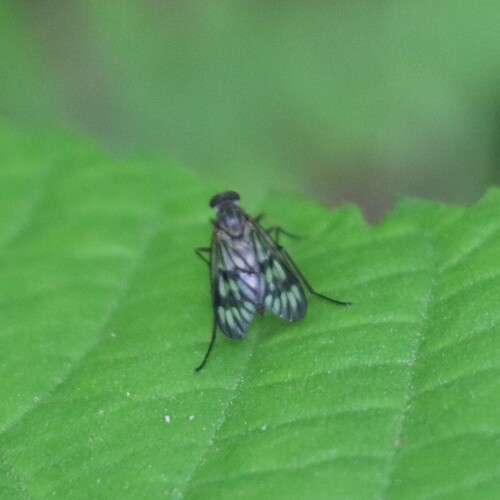
📷Photos of the common snipe fly
More flies & mosquitoes
This guide was written with AI assistance and fact-checked, last updated 2026-10-10. Identification from photos is never certain: don't handle insects you can't identify, and get medical advice for bites, stings or allergic reactions. More about the common snipe fly: iNaturalist, Wikipedia.