
Horn fly
Haematobia irritans · House flies and relatives
Small blood-feeding fly that lives on cattle and causes irritation, reduced weight gain and production losses in livestock.
!Is the horn fly dangerous?
Only mildly. Horn flies are primarily a livestock pest and only occasionally bite people who work closely with infested cattle; bites are brief and itchy or mildly painful. They are not known to be vectors of human disease. For bite care, clean the bite with soap and water and apply a cold compress for swelling. Seek medical attention for severe allergic reactions.
Pets
Occasional nuisance bites to dogs or horses may occur if animals are near heavily infested cattle; primary impact is on cattle and other bovids. Pets are rarely significant hosts.
📖Overview
The horn fly, Haematobia irritans, is a small, obligate blood-feeding fly closely associated with cattle and other bovids. Adults spend most of their time on the host animal, resting on the back, shoulders and belly, and take frequent, short blood meals. Larvae develop in fresh cattle dung. Horn flies are an important pest of grazing livestock because heavy infestations cause persistent irritation, decreased feeding, weight loss and reduced milk production.
Horn flies are a temperate and subtropical species now found across North America, much of Europe, parts of South America, Africa and other regions where cattle are present. They are adapted to spend their adult lives on hosts and move between animals only briefly. Control focuses on livestock treatments, pasture management and biological control agents where available.
🔍How to identify a horn fly
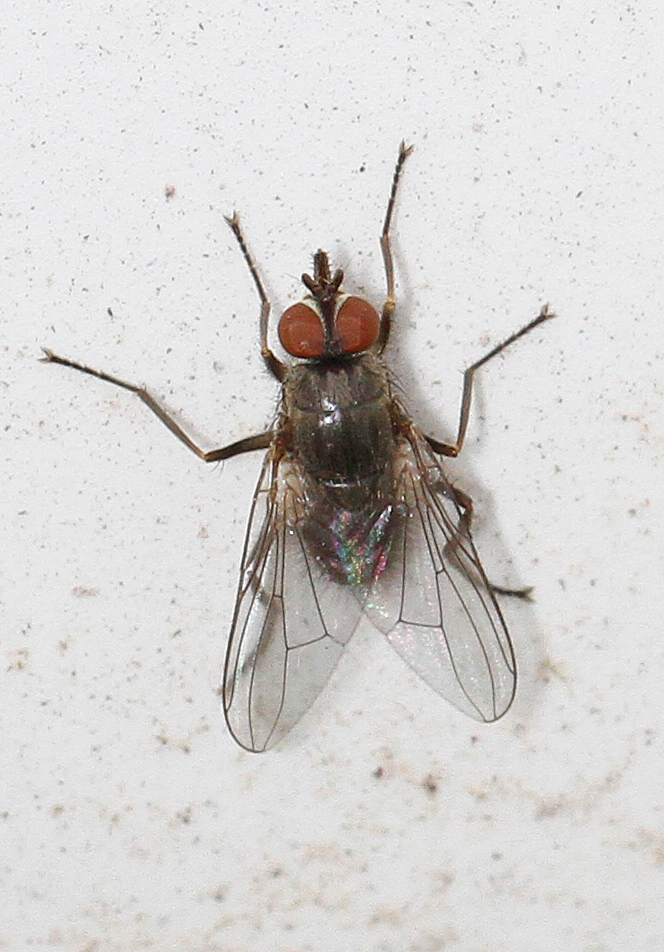
Adults are small (about 3-5 mm long), slender, and darker than common house flies. They have a gray to black thorax with faint longitudinal stripes and a darker abdomen. The head is relatively small with conspicuous forward-pointing piercing-sucking mouthparts and short antennae. When not feeding they cling to the hair of the host in large numbers and often shift positions in response to movement or attempts to brush them off.
- Very small fly 3-5 mm long that stays on cattle, often in large numbers on the back, shoulders and flanks, typically resting head-down.
- Darker gray to black body with faint thoracic stripes and a narrow, pointed profile compared with house flies.
- Persistent on the host and flies only short distances; frequently moves across the animal to feed.
- Piercing-sucking mouthparts visible on close inspection; adults cluster on legs, belly and sides of cattle.
Lookalikes
Stable fly Stomoxys calcitrans
Stable flies are larger (about house-fly size), have a checkerboard-patterned abdomen, rest on legs, fences and walls, and readily bite humans; horn flies are about half that size and remain on the backs and sides of cattle.
Face fly Musca autumnalis
Face flies are larger, tend to feed around the eyes and nose of cattle and feed on secretions rather than blood; horn flies are smaller and are obligate blood feeders that remain on the body.
↻Life cycle
Egg
Females lay eggs in fresh cattle dung, usually within a few hours after defecation. Eggs hatch in about 1-2 days in warm conditions.
Larva (maggot)
Larvae develop in the dung pat, feeding on organic material and microbes. Development takes about 3-7 days depending on temperature.
Pupa
Larvae pupate in the surface of the dung or nearby soil. The pupal stage lasts several days to a couple of weeks.
Adult
Adults emerge from pupae and immediately seek hosts. Adults feed almost exclusively on blood and spend most time on the host, leaving only briefly to lay eggs.
🍃Diet and predators
Young eat
Larvae feed on the organic material and microbes in fresh cattle dung.
Adults eat
Adults are obligate blood feeders, taking frequent small blood meals from cattle and other bovids.
Predators of the young
Dung beetles, predatory flies, some soil predators and microbial pathogens reduce larval populations.
Predators of adults
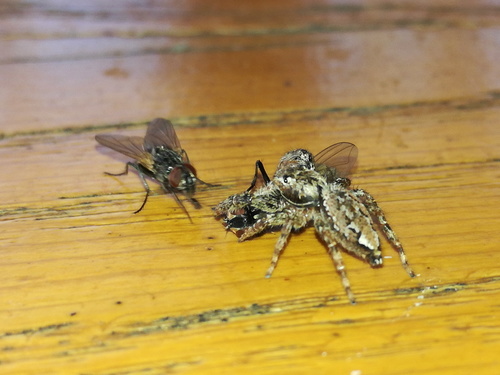
Birds, predatory flies, spiders and parasitic wasps can kill adults or pupae; on-host grooming by cattle also removes adults.
🌱Effect on plants and gardens
Horn flies do not feed on plants; they feed on the blood of cattle and other bovids and do not damage vegetation directly.
How to get rid of horn flies
Use an integrated approach on cattle: insecticide-impregnated ear tags, pour-ons, sprays, back rubbers or dust bags applied according to label instructions, and rotate insecticide classes between seasons to slow resistance. Walk-through fly traps and feed-through products (larvicides or insect growth regulators) can reduce numbers. Healthy dung beetle populations break up dung pats and reduce larval survival. Begin control when numbers exceed about 200 flies per animal and follow veterinary or extension advice.
📍Where and when to find it
On the backs, flanks, shoulders, belly and legs of cattle and other bovids; larvae are found inside fresh cattle dung pats.
Best time
Warm months (spring to fall) in temperate regions; year-round in warm climates. Daytime active; most visible when cattle are grazing or resting.
Observation tips
Approach quietly and photograph animals from a safe distance. To view adults closely, inspect the hair on the udder, shoulders and belly of cattle or watch for flies leaving and returning to animals.
✨Fun facts
- Horn flies spend most of their adult life on the host, and each fly may take 20-40 small blood meals a day.
- Because eggs are laid in fresh cattle dung, horn fly populations are closely tied to grazing density and dung management.
- Heavy infestations can reduce weight gain and milk production, making them economically important to ranchers.
?Frequently asked questions
Do horn flies bite?
Yes. Adults are obligate blood feeders and bite cattle repeatedly. They only occasionally bite people who work close to infested animals.
Are horn flies dangerous to humans?
Only mildly. They are primarily an animal pest; the occasional bite on a person is irritating but they are not known to transmit human diseases. People with severe allergic reactions should seek medical care.
Why are horn flies on my cattle?
Horn flies are attracted to cattle because they require frequent blood meals and the cattle provide both a food source and sites for resting. Fresh dung near pastures provides breeding sites for larvae.
How do I get rid of horn flies on livestock?
Integrated approaches work best: rotate and apply approved insecticide pour-ons or ear tags according to label instructions, use insecticidal dusts or sprays during heavy infestations, practice pasture rotation and dung management, and consider biological control agents where available. Follow veterinary advice and resistance management practices.
Where do horn flies live and lay eggs?
Adults live on cattle. Females lay eggs in fresh cattle dung pats; larvae develop in the dung and pupate in the pat or nearby soil.
📷Photos of the horn fly
More flies & mosquitoes
This guide was written with AI assistance and fact-checked, last updated 2026-10-10. Identification from photos is never certain: don't handle insects you can't identify, and get medical advice for bites, stings or allergic reactions. More about the horn fly: iNaturalist, Wikipedia.