
Face fly vs Horn fly
These two are easy to mix up. Here's how to tell a face fly from a horn fly, and whether either one bites or stings.
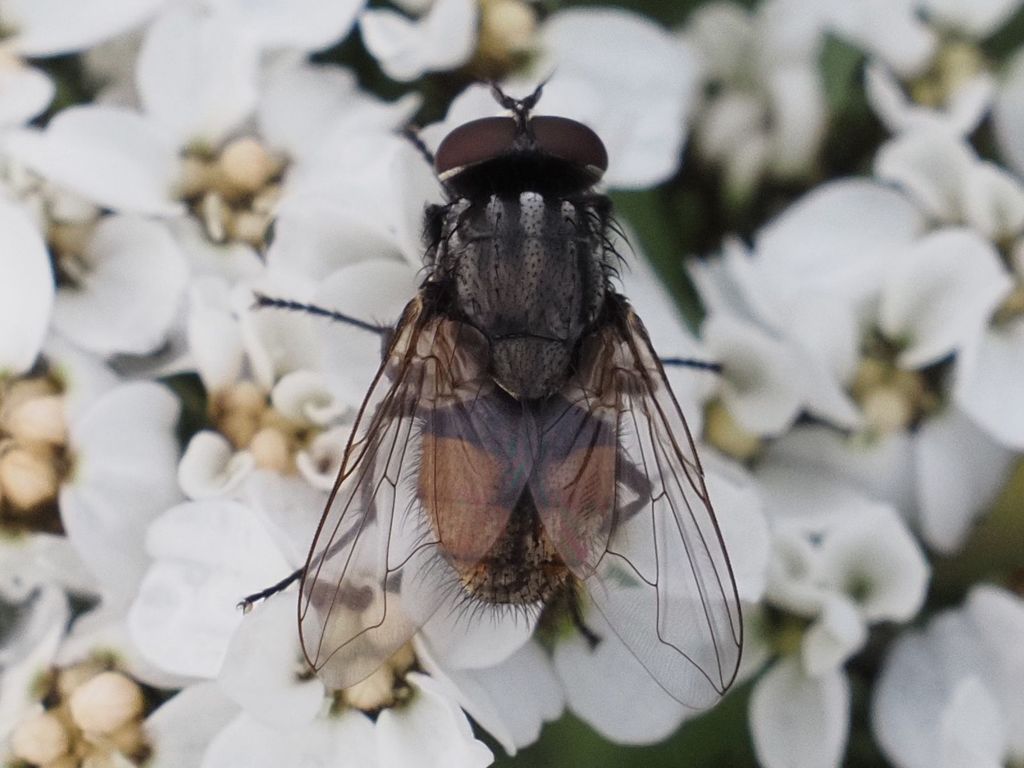
Face fly
Musca autumnalis
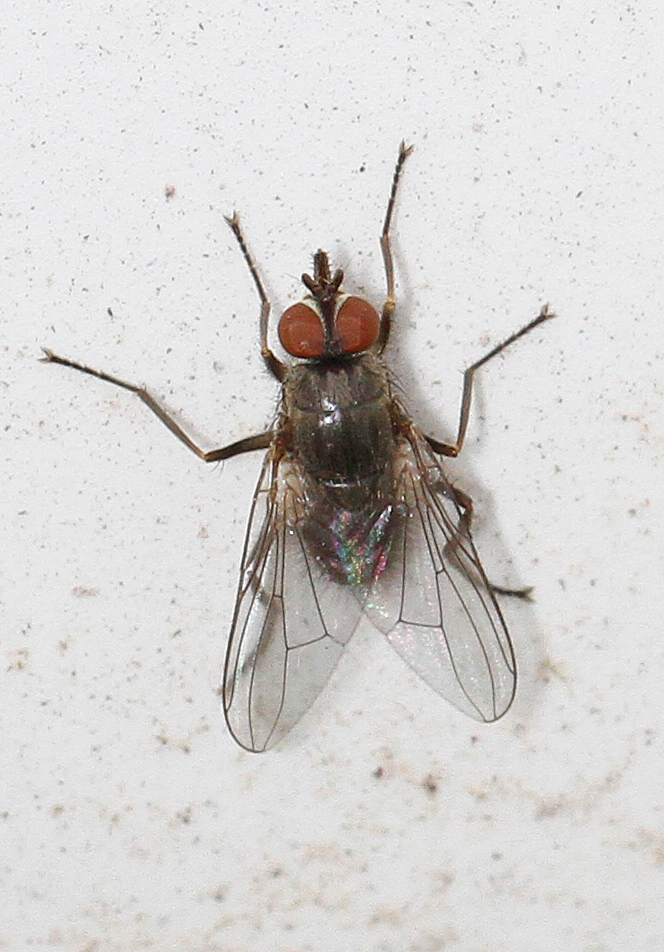
Horn fly
Haematobia irritans
≠The key differences
Face flies are larger, tend to feed around the eyes and nose of cattle and feed on secretions rather than blood; horn flies are smaller and are obligate blood feeders that remain on the body.
⚖︎Side by side
| Face fly | Horn fly | |
|---|---|---|
| To humans | Mechanical vector | Blood feeder |
| Size | 6-8 mm long | 3-5 mm body length (about half the size of a house fly) |
| Colours | Gray, Black, Yellow (face), Reddish (eyes) | Gray, Black, Dark brown |
| Family | Muscidae | Muscidae |
| Habitat | Farms, pastures, meadows, and any area with cattle dung or livestock; also around barns, farm buildings and sometimes houses near livestock. | On cattle and other bovids, in pastures and areas with fresh dung where larvae develop |
| Range | Native to Europe and Asia; introduced and established across much of North America and present in temperate regions worldwide. | Originally Eurasian, now widespread in North America, South America, Africa and other regions where cattle are raised |
| Active | Active spring through autumn in temperate regions, day-active (diurnal) with peak activity in warm daylight hours. | Active in warm months; most abundant spring through fall in temperate zones and year-round in some warmer regions; day-active |
| Pest? | Yes | Yes |
🔍How to spot a face fly
- Size 6-8 mm, similar to house fly but with a paler or slightly yellowish face.
- Thorax grey with four distinct dark longitudinal stripes.
- Abdomen with alternating light and dark patterning; large red eyes.
- Frequently rests on the faces or around eyes and nostrils of cattle and other animals.
🔍How to spot a horn fly
- Very small fly 3-5 mm long that stays on cattle, often in large numbers on the back, shoulders and flanks, typically resting head-down.
- Darker gray to black body with faint thoracic stripes and a narrow, pointed profile compared with house flies.
- Persistent on the host and flies only short distances; frequently moves across the animal to feed.
- Piercing-sucking mouthparts visible on close inspection; adults cluster on legs, belly and sides of cattle.
?Frequently asked questions
What is the difference between a face fly and a horn fly?
Face flies are larger, tend to feed around the eyes and nose of cattle and feed on secretions rather than blood; horn flies are smaller and are obligate blood feeders that remain on the body.
Is a face fly or a horn fly more dangerous?
Face fly: Mechanical vector. Horn fly: Blood feeder. Face flies do not bite or inject venom. Horn flies are primarily a livestock pest and only occasionally bite people who work closely with infested cattle; bites are brief and itchy or mildly painful.
Identification from photos is never certain: don't handle insects you can't identify, and get medical advice for bites, stings or allergic reactions.