
Asian tiger mosquito vs Yellow fever mosquito
These two are easy to mix up. Here's how to tell an Asian tiger mosquito from a yellow fever mosquito, and whether either one bites or stings.
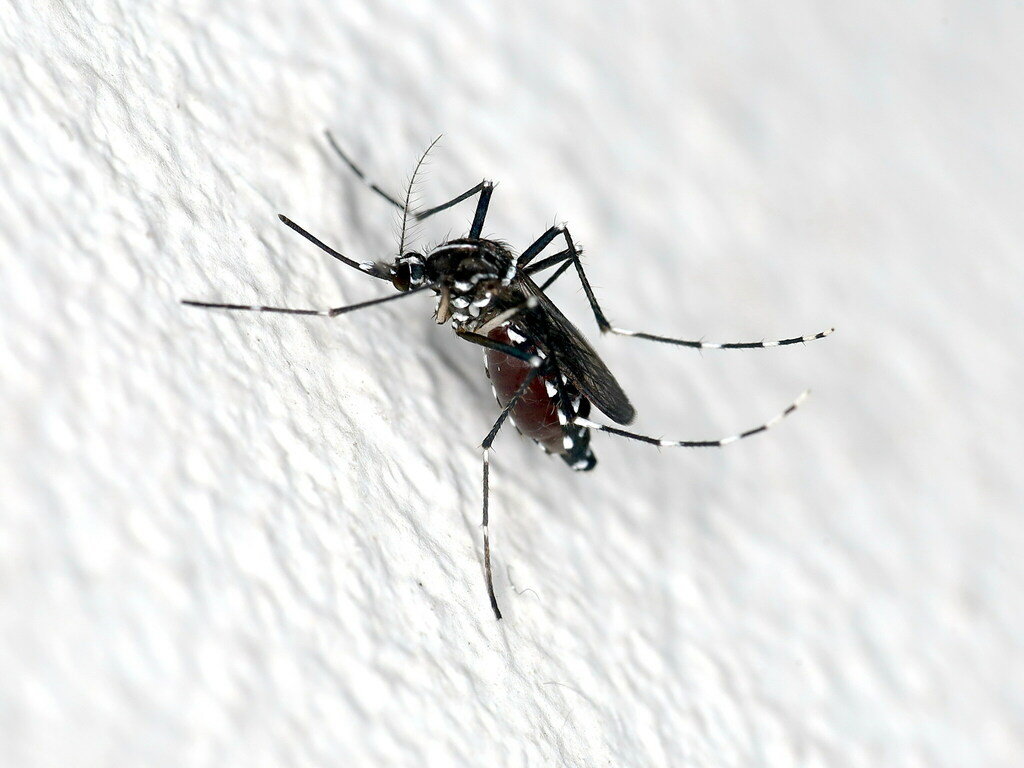
Asian tiger mosquito
Aedes albopictus
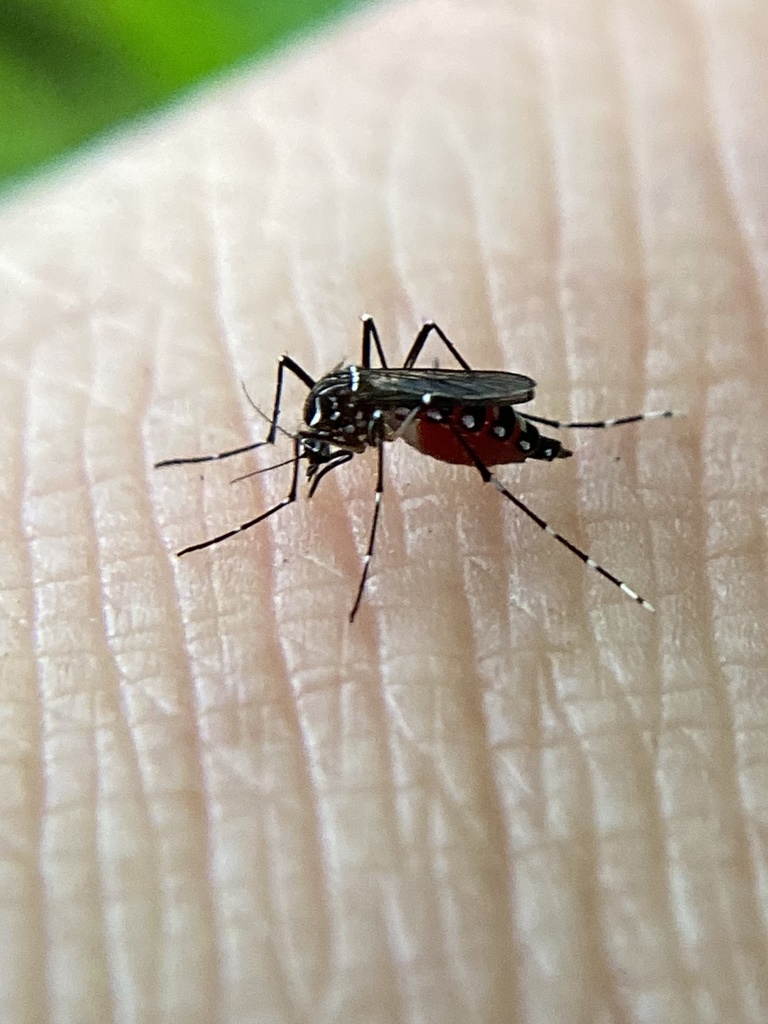
Yellow fever mosquito
Aedes aegypti
≠The key differences
Aedes aegypti has lyre-shaped pale markings on the thorax and more pronounced white scales on the head and thorax; its pattern of leg banding and overall head shape differ from Aedes albopictus.
Aedes albopictus has a single white dorsal stripe on the thorax (not a lyre shape) and slightly different banding on legs; albopictus is generally more tolerant of vegetated areas.
⚖︎Side by side
| Asian tiger mosquito | Yellow fever mosquito | |
|---|---|---|
| To humans | Disease vector | Disease vector |
| Size | 5-10 mm body length | 4-7 mm body length |
| Colours | Black, White, Very dark brown | Black, White, Dark brown |
| Family | Culicidae | Culicidae |
| Habitat | Urban, suburban and rural areas near houses; breeds in small, shaded water containers (tires, buckets, plant saucers, gutters, tree holes). | Urban and peri-urban areas near human habitation; breeds in small, often artificial, containers of standing water (pots, tires, buckets, gutters, flower vases, water storage). |
| Range | Native to Southeast Asia; now established across much of the tropics and subtropics and parts of temperate regions worldwide due to transport in used tires, plants and vehicles. | Native to Africa; now established throughout tropical and subtropical regions worldwide and present in some warm temperate areas where conditions allow. |
| Active | Daytime (diurnal), especially early morning and late afternoon; most active in warm months and in temperate zones from late spring to early autumn. | Day-active, especially early morning and late afternoon; most active in warm months year-round in tropical regions. |
| Pest? | Yes | Yes |
🔍How to spot an Asian tiger mosquito
- Look for a single white stripe running down the center of the thorax (dorsal white line).
- Check legs for alternating white bands on the dark legs—especially the hind legs.
- Small size (5-10 mm) and day-active biting behavior distinguish it from many other mosquitoes.
- Eggs are laid on container walls just above the waterline and can withstand drying.
🔍How to spot a yellow fever mosquito
- Small mosquito 4-7 mm with a black body and distinct white scale markings on the thorax forming a lyre-shaped pattern
- Legs show white banding on dark segments (banded legs)
- Daytime activity: often found resting indoors on walls or in shaded areas near people
- Eggs or larvae found in small, clean water containers close to buildings
?Frequently asked questions
What is the difference between an Asian tiger mosquito and a yellow fever mosquito?
Aedes aegypti has lyre-shaped pale markings on the thorax and more pronounced white scales on the head and thorax; its pattern of leg banding and overall head shape differ from Aedes albopictus. Aedes albopictus has a single white dorsal stripe on the thorax (not a lyre shape) and slightly different banding on legs; albopictus is generally more tolerant of vegetated areas.
Is an Asian tiger mosquito or a yellow fever mosquito more dangerous?
Asian tiger mosquito: Disease vector. Yellow fever mosquito: Disease vector. Females bite people to obtain blood for egg development; bites are often painful and can cause local itching. Females bite and can transmit viruses such as yellow fever, dengue, Zika and chikungunya.
Identification from photos is never certain: don't handle insects you can't identify, and get medical advice for bites, stings or allergic reactions.