
House fly vs Black soldier fly
These two are easy to mix up. Here's how to tell a house fly from a black soldier fly, and whether either one bites or stings.
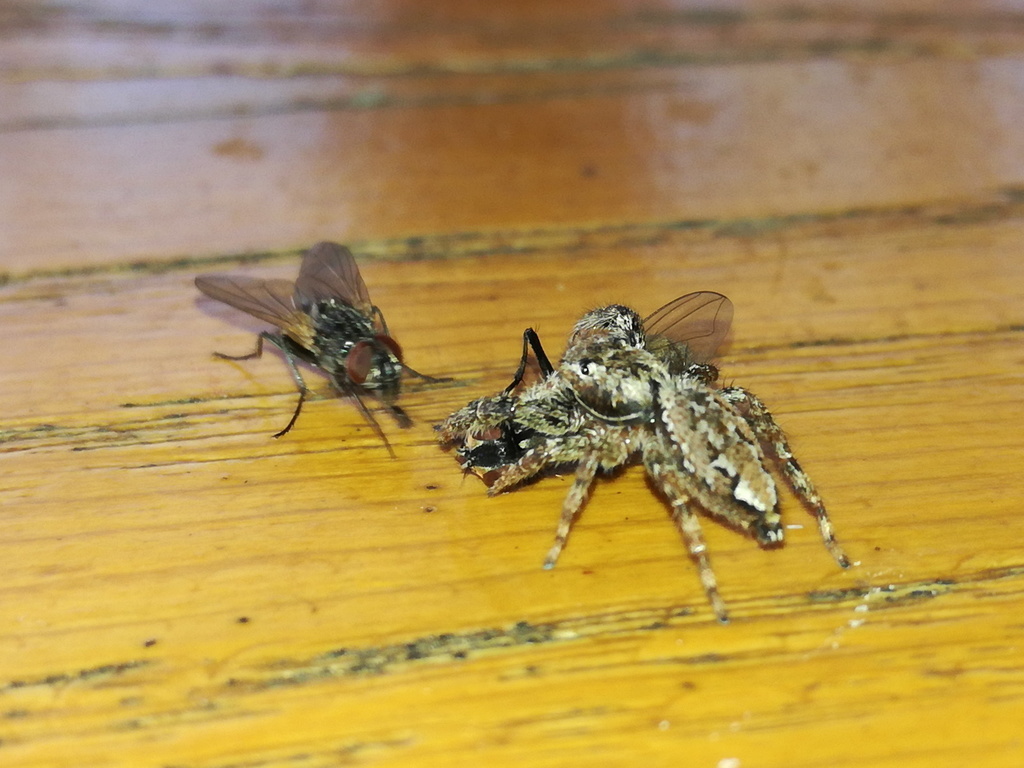
House fly
Musca domestica
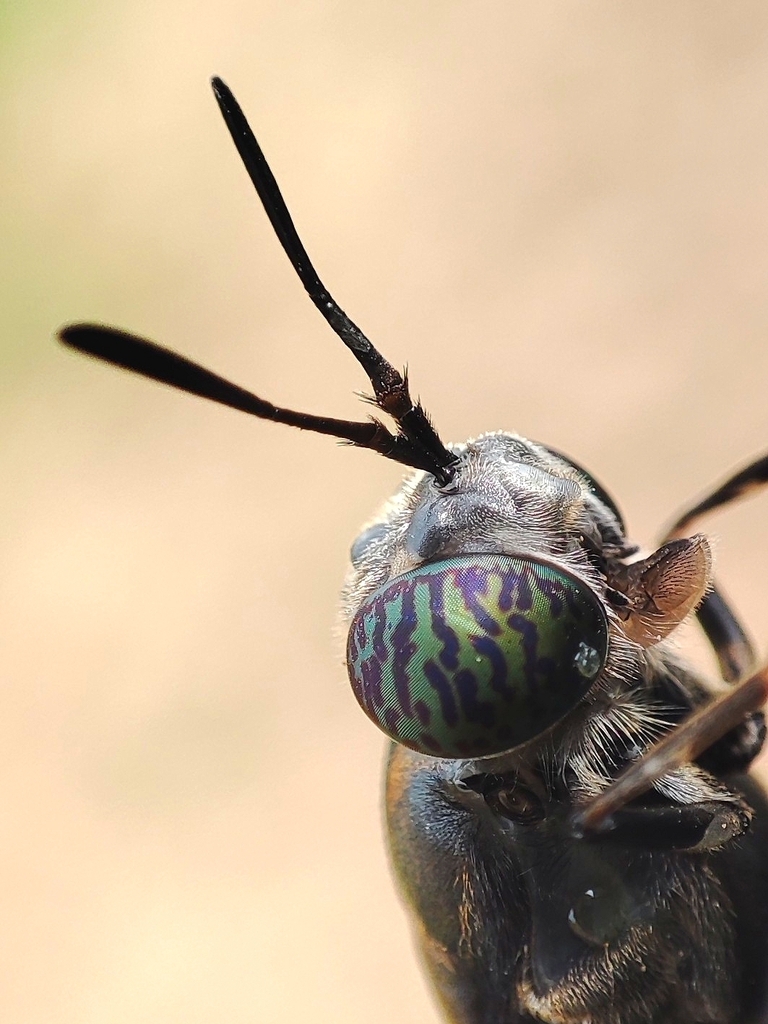
Black soldier fly
Hermetia illucens
≠The key differences
House flies are smaller, more compact, with shorter antennae and different wing venation; they lack the wasp-like silhouette and translucent abdominal windows of BSF.
⚖︎Side by side
| House fly | Black soldier fly | |
|---|---|---|
| To humans | Disease vector | Non-toxic |
| Size | 6-7 mm body length | 15-20 mm body length (wingspan ~20-25 mm) |
| Colours | Gray, Dark gray / black, Yellow-gray, Reddish brown (eyes) | Black, Metallic blue-black, Brown (larva), Cream (young larva) |
| Family | Muscidae | Stratiomyidae |
| Habitat | Human dwellings, farm buildings, garbage dumps, compost piles, manure and other decaying organic material. | Near decaying organic matter: compost, manure, food-waste bins, agricultural waste sites, and warm, sheltered areas. |
| Range | Cosmopolitan — found worldwide wherever humans or domestic animals occur. | Native to the Neotropics but now cosmopolitan in tropical and warm temperate regions worldwide; established in North America, South America, Africa, Asia, Europe (in warm locales) and Australia. |
| Active | Active year-round in warm climates; spring to autumn in temperate zones; mostly daytime (diurnal). | Most active in warm months and warm climates; adults fly during daylight hours, especially in warm, sunny conditions. |
| Pest? | Yes | No |
🔍How to spot a house fly
- Gray thorax with four dark longitudinal stripes (more visible from above).
- Red-brown compound eyes (closer together in males) and slightly checkerboarded abdomen.
- Body length about 6-7 mm; sponging mouthparts and characteristic wing venation of Muscidae.
- Habit of resting on vertical surfaces and walking on food items while feeding with white saliva-like regurgitate sometimes visible.
🔍How to spot a black soldier fly
- Wasp-like black fly with narrow waist and folded wings; adults 15-20 mm long.
- Two distinctive translucent pale 'windows' near the base of the abdomen.
- Long antennae compared with common house flies.
- Larvae are stout, tapered at one end, leathery, and 20-30 mm when mature.
?Frequently asked questions
What is the difference between a house fly and a black soldier fly?
House flies are smaller, more compact, with shorter antennae and different wing venation; they lack the wasp-like silhouette and translucent abdominal windows of BSF.
Is a house fly or a black soldier fly more dangerous?
House fly: Disease vector. Black soldier fly: Non-toxic. House flies do not bite to feed, but they can contaminate food and surfaces with bacteria, protozoa and viruses picked up from waste and animal matter. Adults do not bite or sting and are not venomous.
Identification from photos is never certain: don't handle insects you can't identify, and get medical advice for bites, stings or allergic reactions.