
House fly
Musca domestica · House flies
A widespread synanthropic fly that breeds in decaying organic matter and can spread pathogens to people and food.
!Is the house fly dangerous?
Only mildly. House flies do not bite to feed, but they can contaminate food and surfaces with bacteria, protozoa and viruses picked up from waste and animal matter. They are linked to diarrheal disease transmission and food spoilage. First aid for contact is routine hygiene: wash hands and any exposed skin with soap and water; discard exposed food that may have been contaminated.
Pets
House flies do not typically harm pets directly but can transfer pathogens and can annoy animals. In large numbers fly larvae in pet bedding indicate poor sanitation and should be removed.
📖Overview
Musca domestica is the typical 'house fly' found around human dwellings worldwide. It is strongly associated with people and livestock, breeding in garbage, manure and other decaying organic matter. Adults are active feeders on liquids and semi-liquids and transfer microbes mechanically on their mouthparts, feet and body hairs. The species completes multiple generations per year in warm conditions and adapts readily to indoor and outdoor habitats where food waste and organic substrates occur.
House flies are not venomous and do not bite to feed, but they are important mechanical vectors of bacteria, viruses and parasites because they visit faeces, carcasses and human food. Control focuses on sanitation, exclusion and targeted traps or insecticides when necessary. The species is cosmopolitan and extremely common in temperate and tropical regions where humans or livestock provide breeding material.
🔍How to identify a house fly
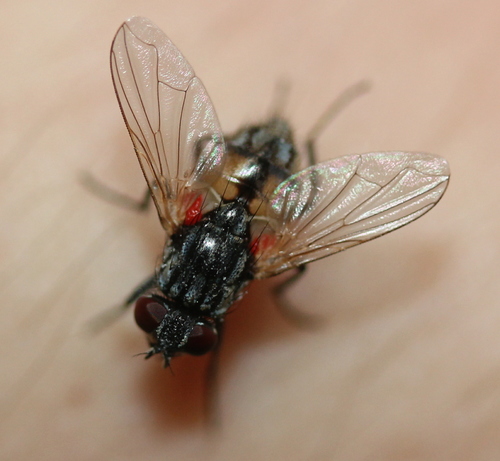
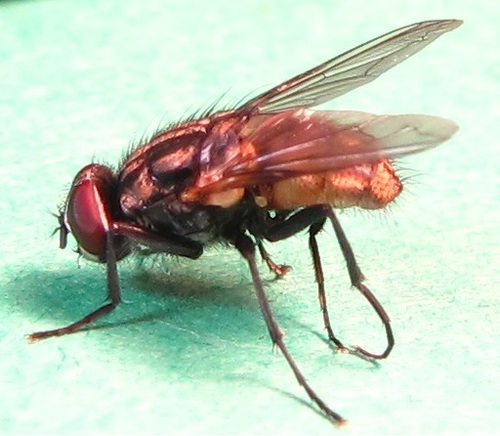
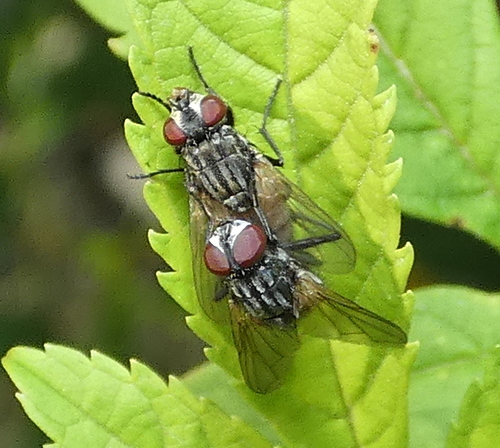
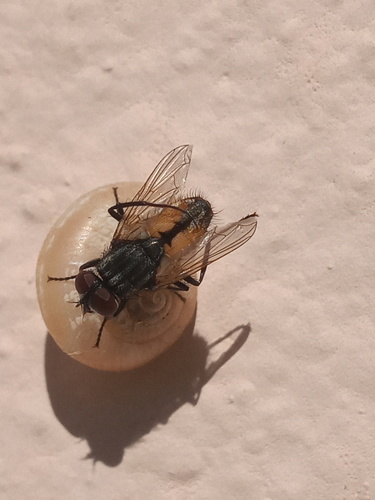
Adult house flies are medium-sized, robust flies with a single pair of wings, short antennae and large red-brown compound eyes. The thorax is gray with four darker longitudinal stripes; the abdomen is slightly checkerboarded and often yellow-gray to dull black. Legs and mouthparts are adapted for walking and sponging liquid food. The wing venation is typical of Muscidae with a distinctive curved vein near the wing tip.
- Gray thorax with four dark longitudinal stripes (more visible from above).
- Red-brown compound eyes (closer together in males) and slightly checkerboarded abdomen.
- Body length about 6-7 mm; sponging mouthparts and characteristic wing venation of Muscidae.
- Habit of resting on vertical surfaces and walking on food items while feeding with white saliva-like regurgitate sometimes visible.
Lookalikes
Stable fly Stomoxys calcitrans
Stable flies bite to blood-feed and have a prominent piercing proboscis; they hold their proboscis forward while feeding and the thorax lacks the same pattern of four stripes as clearly as house fly.
Face fly Musca autumnalis
Very similar in appearance; face flies are more associated with cattle and often found around animal faces and ocular secretions, while house flies are more generalist around human habitats.
Blow flies (bluebottles and greenbottles) Calliphora spp. / Lucilia spp.
Blow flies are metallic blue or green (bright metallic colours), larger and lack the plain gray thorax stripes of house flies.
↻Life cycle
Egg
Females lay batches of about 75-150 eggs in moist decaying organic material (manure, garbage, compost). Eggs hatch in about 8-24 hours in warm conditions.
Larva (maggot)
Three larval instars feed on the substrate for about 3-7 days depending on temperature, growing to 7-12 mm.
Pupa
Larvae pupate in drier material or soil; the pupal stage lasts about 3-6 days in warm weather, longer when cool.
Adult
Adults emerge, feed on liquids and reproduce; females begin laying eggs after a few days if suitable food and substrates are available.
🍃Diet and predators
Young eat
Decaying organic matter, animal manure, garbage, compost.
Adults eat
Liquids and semi-liquids: sugary substances, plant exudates, animal secretions, human food and other organic fluids. They feed by regurgitating digestive enzymes and sponging the liquefied material.
Predators of the young
Soil predators and parasitoids, beetles, ants, birds and small mammals that disturb breeding substrates.
Predators of adults
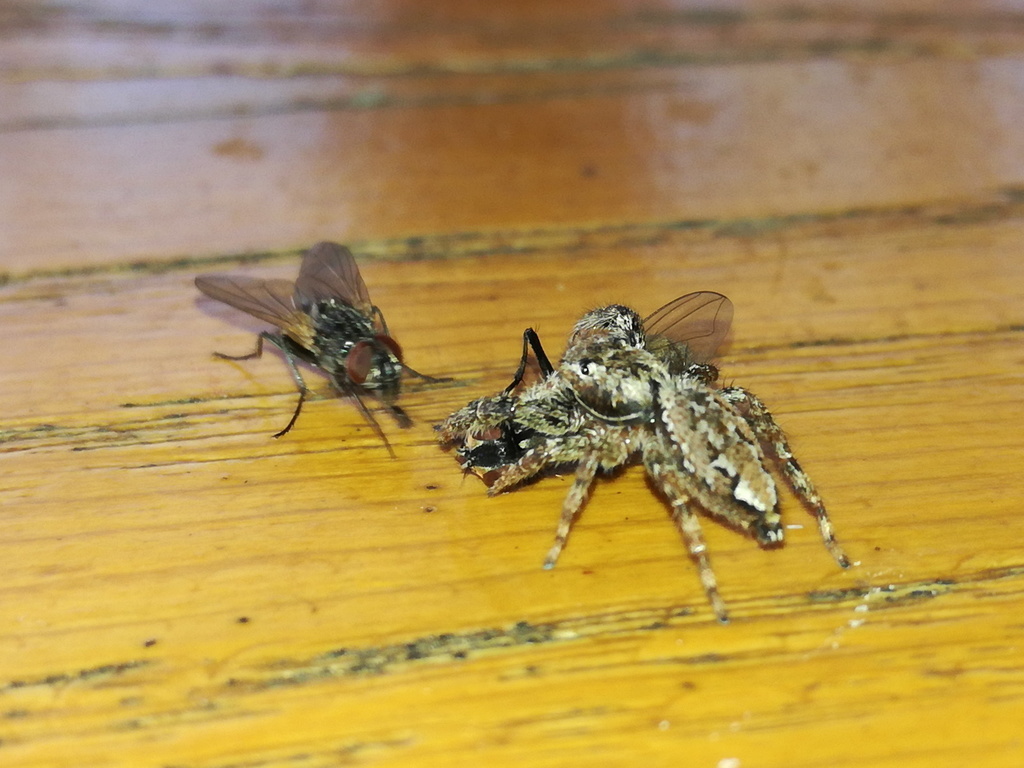
Spiders, predatory flies, birds, bats and insectivorous insects.
🌱Effect on plants and gardens
Adults feed on nectar, plant exudates and decaying plant material but do not normally damage living plants or crops.
How to get rid of house flys
Reduce breeding by removing or managing garbage, animal manure, compost and wet organic waste. Keep bins sealed, clean up pet waste, repair screens and seal entry points. Use fly traps, ultraviolet light traps, or baited sticky traps indoors. For heavy infestations in livestock buildings, consult integrated pest management: improve sanitation, use timed insecticide sprays or baits, and employ biological controls like parasitic wasps where available. Always follow label directions and local regulations for insecticide use.
📍Where and when to find it
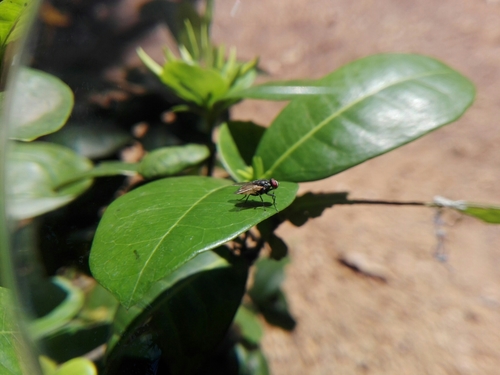
Look for adults on windows, walls, near trash bins, compost piles, animal housing and outdoor food-preparation areas. Eggs and larvae are in moist decaying organic material like manure, garbage or compost.
Best time
Best seen spring through autumn in temperate regions, daytime hours when warm and sunny.
Observation tips
Check trash, compost and animal bedding for larvae. To photograph, use a fast shutter speed to freeze their quick movements and approach slowly; they are easily disturbed and will fly off if threatened.
✨Fun facts
- House flies have taste receptors on their feet and taste food by walking on it.
- They can walk on ceilings and smooth surfaces thanks to sticky pads and tiny claws on their feet.
- A single female can lay several hundred eggs over her life, enabling rapid population growth in warm conditions.
?Frequently asked questions
Are house flies dangerous?
They are not venomous or directly dangerous, but they are mechanical vectors that can spread diseases and contaminate food, so they are a health concern.
Do house flies bite?
No, house flies do not bite to feed. They have sponging mouthparts for liquid food. Other similar flies, like stable flies, do bite.
Why are house flies in my house?
They are attracted to food, garbage, pet waste, compost and decaying organic material. Open doors, unscreened windows and accessible trash provide entry and breeding resources.
How do I get rid of house flies?
Improve sanitation (remove breeding material), seal entry points, use screens, traps or baits, and consider targeted insecticide treatments for severe infestations following label instructions or professional advice.
Where do house flies live and breed?
They breed in moist decaying organic matter such as manure, garbage, compost and food waste. Adults rest on walls, ceilings, vegetation and near food sources.
📷Photos of the house fly
More flies & mosquitoes
This guide was written with AI assistance and fact-checked, last updated 2026-10-09. Identification from photos is never certain: don't handle insects you can't identify, and get medical advice for bites, stings or allergic reactions.