
What kind of fly is this? How to identify flies in and around your house
Most flies look alike at first glance, but the kind of fly you find tells you a lot: where it's breeding, whether it bites, and how to get rid of it. A swarm of shiny green flies means something very different from tiny flies around the sink.
Start with the size and where you see it. Then compare it with the flies below.
Grey flies about 6 mm long: house fly and its lookalikes
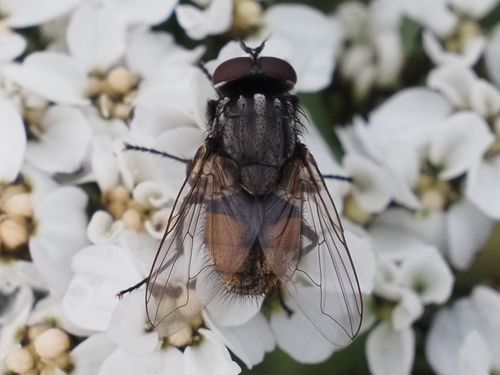
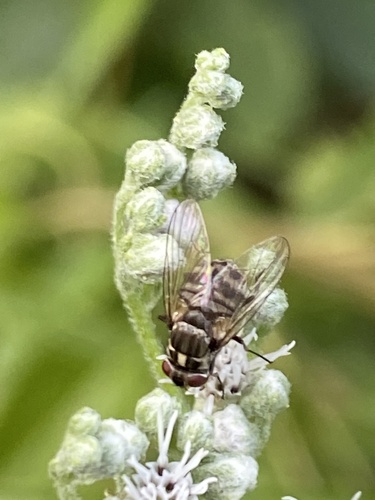
The house fly is grey, about 6-7 mm long, with four dark stripes down the back of the thorax and large reddish eyes. It can't bite: it feeds by dabbing liquid food with a spongy mouth. House flies breed in rubbish, compost, pet waste and manure, so finding many indoors means a breeding site nearby.
The lesser house fly is smaller and slimmer. The easiest clue is how it flies: males circle slowly in the middle of a room, under a light fitting, turning sharply and rarely landing.
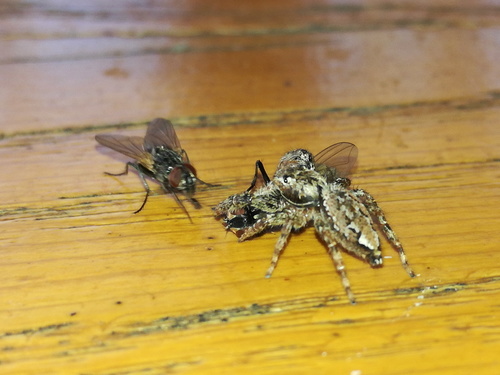
Face flies look almost identical to house flies. In summer they cluster around the eyes and noses of cattle and horses. In autumn they gather on sunny walls and squeeze into attics and wall voids to spend the winter, then wander out on warm days. Like house flies, they don't bite.
The stable fly looks like a house fly but bites. Look for a stiff, pointed mouthpart sticking forward from the head, and a checkered grey abdomen. It bites ankles and legs, mostly outdoors and near livestock, and the bite is sharp and painful.

Shiny green or blue flies: bottle flies
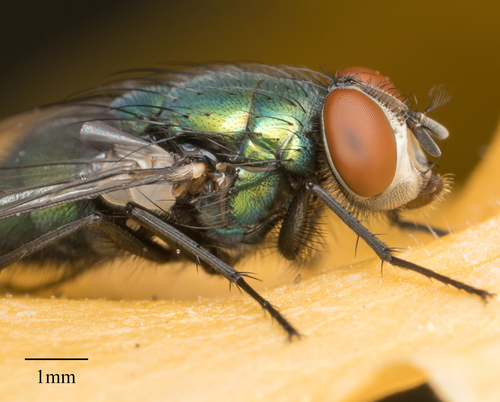
Green bottle flies are bright metallic green, a little bigger than house flies. They lay their eggs on dead animals, meat and rubbish. If several suddenly appear indoors, especially in one room, there's often a dead mouse, bird or other animal in a wall, attic or chimney nearby. The flies stop once the remains have dried out or been removed.
They don't bite, but they carry bacteria from what they've fed on, so keep them away from food.
Tiny flies in the kitchen, bathroom or houseplants
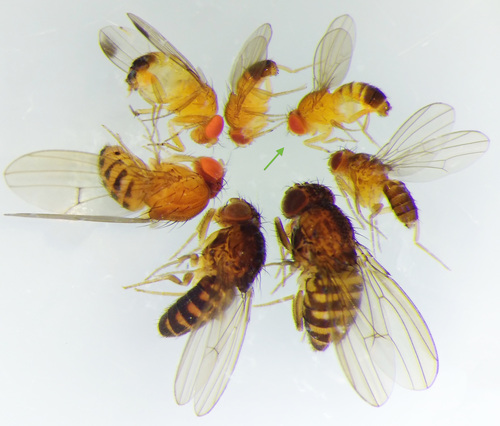
Fruit flies are about 2-3 mm long, tan with bright red eyes, and hover around ripe fruit, fruit bowls, bins and recycling. Remove overripe fruit, rinse bottles and cans, and empty the bin. A small dish of cider vinegar with a drop of washing-up liquid traps the rest.
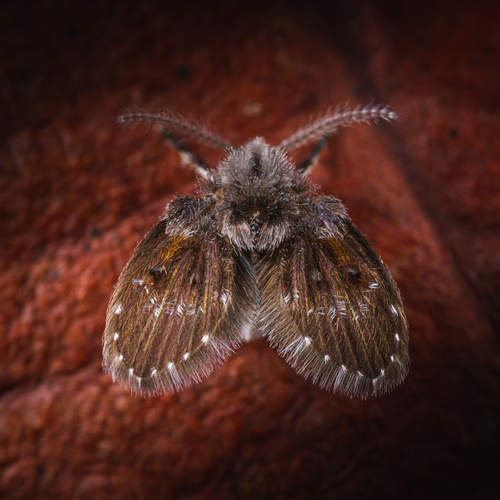
Drain flies (moth flies) are small, fuzzy and grey, with broad, rounded wings held like a roof over the body, so they look like tiny moths. They sit on bathroom walls and breed in the slime inside drains. Cleaning the drain thoroughly with a brush is what gets rid of them; spraying the adults doesn't.
Fungus gnats are tiny, dark, delicate flies with long legs, like miniature mosquitoes. They come from wet houseplant soil, where the larvae feed on fungi. Let the soil dry out between waterings and use yellow sticky traps.
None of these three bite.
Biting flies outdoors: black flies and horse flies
Black flies are not black house flies. They're tiny (2-5 mm), dark and humpbacked, and live near running water, where the larvae grow in streams and rivers. Females bite to feed on blood, often around the head and hairline, and the bites can swell and itch for days. They're most troublesome in late spring and early summer.
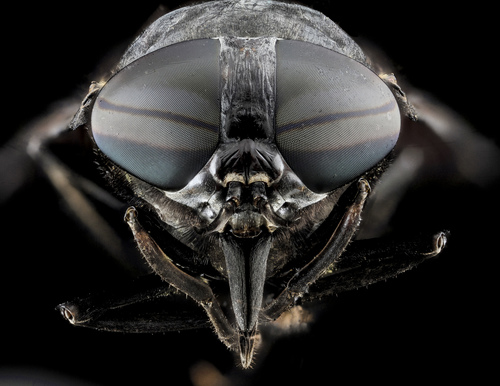
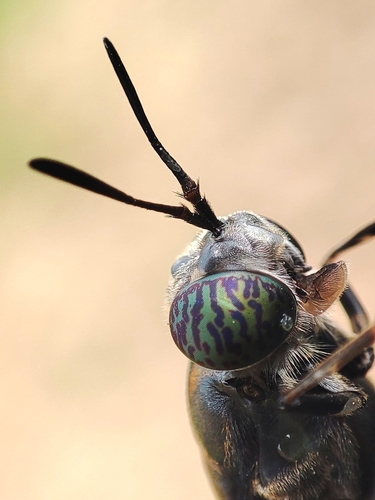
Horse flies are large (often 20-28 mm), heavy flies with huge eyes. Females give a sudden, sharp bite that can bleed a little. They're common near water, livestock and woodland on hot days and rarely come indoors.
Insect repellent, long sleeves and light-coloured clothing help with both.
Flies that look like wasps or bees
The black soldier fly is long, black and wasp-like, with two pale see-through patches at the base of the abdomen. It's common around compost bins, where its larvae help break down waste. It can't bite or sting.
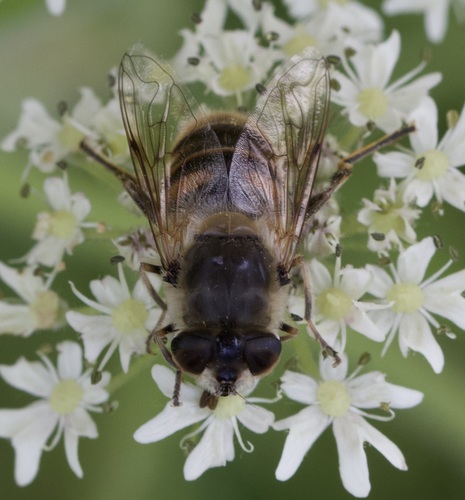
The drone fly is a hoverfly that looks very like a honeybee. Look at the eyes, which are huge and cover most of the head, and the single pair of wings. It hovers over flowers and can't sting.
How to get rid of flies for good
Find where they're breeding. Adult flies only live a few weeks, but they keep coming as long as there's a place for the larvae: rubbish, pet waste, compost, drains, wet soil or a dead animal.
Keep bins closed and empty them often, pick up pet waste, clean drains, and fit screens on windows and doors. Sticky traps and fly swatters deal with the adults that are left.
If you're not sure which fly you've got, take a clear photo from above and compare it with the photos on this page, or identify it from the photo.
?Frequently asked questions
What's the difference between a black fly and a house fly?
A house fly is grey, about 6-7 mm long, with four dark stripes on its back, and it doesn't bite. A black fly is much smaller (2-5 mm), dark and humpbacked, lives near running water, and the females bite to feed on blood.
What's the difference between a horse fly and a house fly?
Horse flies are much bigger, often 20-28 mm long, with very large eyes, and the females give a painful bite. House flies are about 6-7 mm long, grey with stripes on the back, and can't bite.
Why are there suddenly lots of flies in my house?
A sudden swarm usually means flies are breeding nearby. Shiny green or blue flies often come from a dead animal in a wall or attic. Grey flies in autumn may be face flies or cluster flies coming out of the walls where they spend the winter. Tiny flies point to fruit, drains or houseplant soil.
Do house flies bite?
No. House flies have spongy mouthparts and can't bite. If a fly that looks like a house fly bites you, it's probably a stable fly, which has a stiff, pointed mouthpart sticking out in front of its head.
Written by the Insect Scanner team, last updated 2026-10-29. Identification from photos is never certain: don't handle insects you can't identify, and get medical advice for bites, stings or allergic reactions.