
Black fly
Simulium vittatum · Black flies
A very small, fast-flying blood-feeding fly whose larvae live in flowing water and whose adults can form biting swarms that bother people and livestock.
!Is the black fly dangerous?
Only mildly. Female black flies bite to take blood and can cause painful, itchy bites, local swelling, and in heavy exposure allergic reactions or secondary infection from scratching. They are not highly venomous, but large swarms can lead to significant blood loss or stress in livestock. Some black fly species can transmit parasites (e.g. animal filariae); for S. vittatum specifically there are reports of it acting as a vector for certain animal parasites in some regions, but it is not a major vector of human disease in North America. First aid: wash bites with soap and water, apply a cold compress to reduce swelling, use topical anti-itch creams or oral antihistamines for itching, and seek medical care if signs of severe allergic reaction or infection appear.
Pets
Bites can irritate pets and livestock; heavy infestations may cause stress, reduced feeding, or weight loss in livestock. Protect animals with physical barriers (nets) or topical repellents recommended for veterinary use.
📖Overview
Simulium vittatum is a small black fly in a widespread North American species complex. Larvae and pupae develop attached to rocks, vegetation or other submerged substrates in running water; adults emerge from pupae at the water surface. Adult females require a blood meal for egg development and feed mainly on large mammals such as horses and cattle (often inside the ears), and will also bite people. They can form dense, nuisance swarms near streams and rivers in spring and summer. The S. vittatum grouping contains several closely related forms; some local populations are especially abundant and are important biting pests of people and livestock.
🔍How to identify a black fly
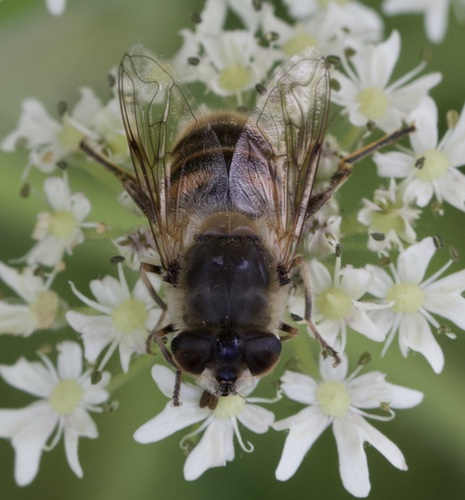
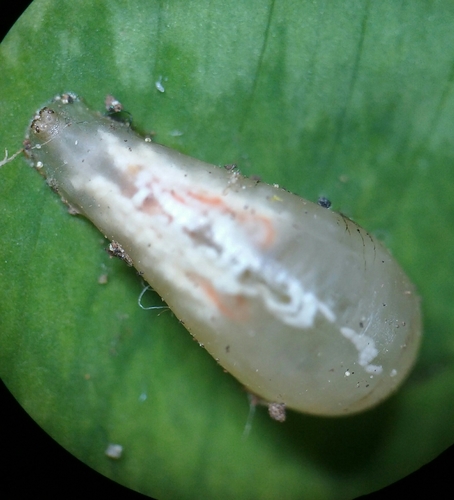
Adults are tiny, compact flies 2-5 mm long with a humped thorax, short stout legs and broad wings. They are generally dark grey to black, sometimes with faint lighter patterning on the thorax. The head bears relatively large eyes and short antennae; females have piercing mouthparts for blood feeding. Larvae are elongate, tapered, and bear a pair of posterior prolegs or a sucker used to cling to submerged surfaces; they have conspicuous filtering fans near the mouth used to capture food from the current. Pupae are enclosed in a streamlined cocoon attached to substrate in flowing water.
- Very small size (2-5 mm) and dark, compact body with a humped thorax.
- Found near streams and rivers; swarms of tiny biting flies indicate black flies rather than mosquitoes.
- Larvae attached to rocks or submerged vegetation with visible filtering fans when examined closely.
- Bites typically on exposed skin of face, neck and hands where they can access capillary blood.
Lookalikes
Other Simulium species Simulium spp.
Closely similar in size and habits; reliable separation usually requires examination of microscopic characters or specialist identification because many Simulium species form complexes.
Biting midges Culicoides spp.
Biting midges (no-see-ums) are smaller (often 1-3 mm) with patterned wings and different resting posture; black flies have broader wings and are more associated with flowing water larval habitats.
Mosquitoes Culicidae
Mosquitoes have longer legs and proboscises and breed in standing water; black flies are stockier, bite in daytime swarms, and larvae require running water.
↻Life cycle
Egg
Females lay eggs on submerged rocks, vegetation, or other objects in flowing water. Eggs hatch in days to a week depending on temperature.
Larva
Larvae attach to substrate in streams and use mouthpart filtering fans to collect organic particles from the current; larval stage lasts days to weeks to months depending on species and water temperature.
Pupa
Pupae develop in cocoons attached to submerged substrates; adults emerge at the water surface.
Adult
Winged adults mate near breeding sites; females seek blood meals to produce eggs while males typically feed on nectar.
🍃Diet and predators
Young eat
Microscopic organic matter, algae and detritus filtered from flowing water.
Adults eat
Males feed on nectar; females require blood meals, mainly from large mammals such as horses and cattle but also from humans, for egg development and may also feed on nectar.
Predators of the young
Fish, predatory aquatic insects (stoneflies, dragonfly larvae) and some crustaceans.
Predators of adults
Birds, bats, dragonflies and other aerial insect predators.
🌱Effect on plants and gardens
Adults do not damage plants; they feed on blood (females) or nectar (males and sometimes females). Larvae are filter feeders that consume microscopic organic matter and algae, having no direct harmful effect on plants.
How to get rid of black flies
Reduce contact: avoid low, damp riparian areas during peak activity, wear long sleeves and head nets, and use EPA-registered insect repellents containing DEET, picaridin or IR3535. For community or livestock problems, control focuses on larval habitats in flowing water using targeted biological larvicides such as Bacillus thuringiensis israelensis (Bti) applied by trained operators and following local regulations. Physical barriers like fine mesh netting and timed movement of animals away from streams at peak biting times also help. Eliminating fast-flowing aquatic habitats is generally impractical and harmful to ecosystems.
📍Where and when to find it
Adults: flying near streams, riverbanks, meadows and around livestock. Larvae and pupae: clinging to rocks, logs or plant stems in fast-flowing sections of streams and rivers.
Best time
Spring through late summer in temperate regions; daytime, especially morning, evening or overcast days when adults are most active.
Observation tips
To photograph adults use a macro lens and shoot near riparian vegetation; to find larvae inspect submerged rocks in riffles and look for small elongate larvae or cocoons attached to substrate.
✨Fun facts
- Black fly larvae have fan-like mouthparts they extend into the current to filter food particles from the water.
- Black fly larvae hold on in fast currents with a ring of tiny hooks set into a silk pad they spin on rocks, and can drift to a new spot on a silk safety line.
- The common name 'buffalo gnat' comes from historical reports of massive attacks on livestock such as bison and cattle.
?Frequently asked questions
Do black flies bite?
Yes. Female black flies bite to obtain blood for egg production. Their bites are often painful and itchy.
Are black fly bites dangerous?
For most people bites cause local pain, itching and swelling. Severe allergic reactions are possible but uncommon. In North America Simulium vittatum is not a major vector of human diseases, though some black fly species can transmit parasites in other regions.
Why are black flies in my yard?
If you live near flowing water such as a stream or river, nearby black fly larvae may be developing there and adults will disperse into surrounding yards, especially during spring and summer.
How can I get rid of black flies?
Personal protection is best: avoid infested areas during peak times, wear long clothing and head nets, and use repellents. Large-scale control targets larvae in streams with licensed biological larvicides (Bti) applied by trained personnel; do not attempt chemical treatment of waterways yourself.
Where do black fly larvae live?
Larvae and pupae develop attached to rocks, vegetation or other submerged objects in well-oxygenated, running water.
More flies & mosquitoes
This guide was written with AI assistance and fact-checked, last updated 2026-10-10. Identification from photos is never certain: don't handle insects you can't identify, and get medical advice for bites, stings or allergic reactions. More about the black fly: iNaturalist.