
Asian tiger mosquito
Aedes albopictus · Mosquitoes
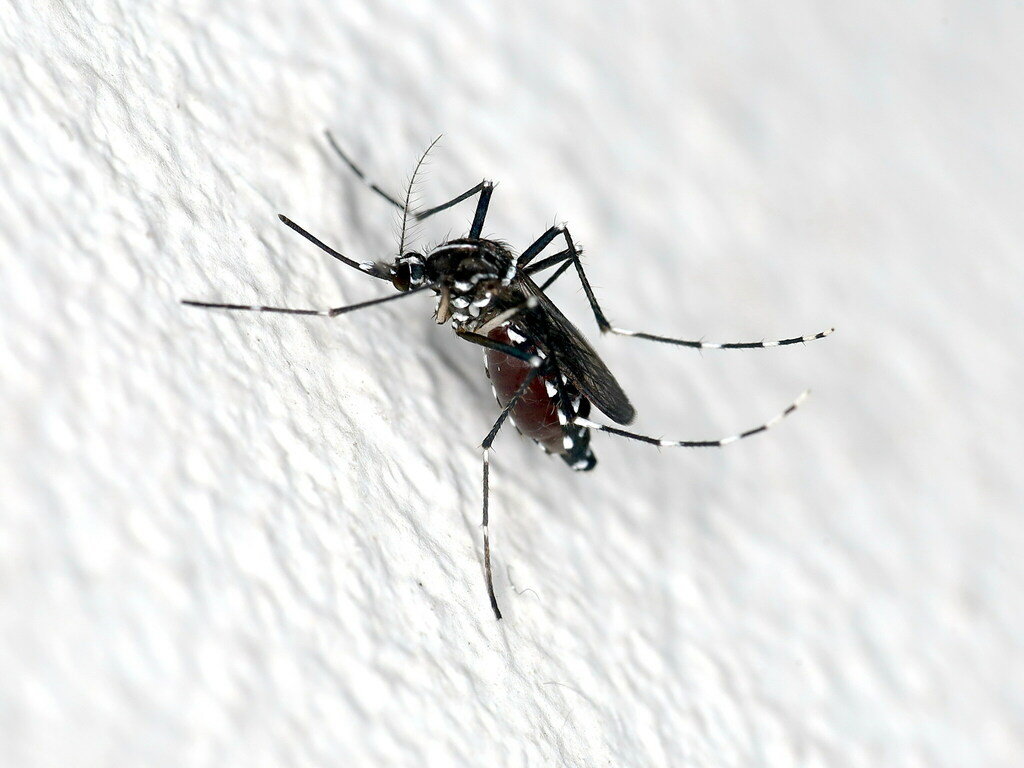
A small, day‑active mosquito with distinctive black-and-white striped legs and body; an invasive species and competent vector of several human viruses.
!Is the asian tiger mosquito dangerous?
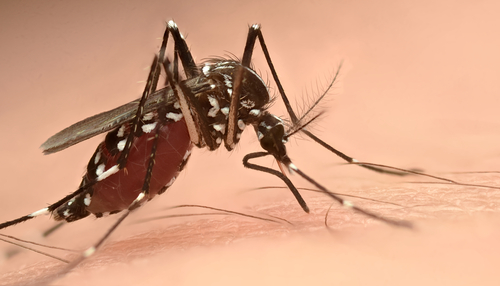
Yes, it can be. Females bite people to obtain blood for egg development; bites are often painful and can cause local itching. Aedes albopictus is a competent vector of dengue, chikungunya, Zika and other arboviruses in some regions. If you are bitten, clean the area with soap and water, apply an antiseptic and use anti-itch measures (cold compress, hydrocortisone cream or oral antihistamine if needed). Seek medical care if you develop fever, rash, severe joint pain, bleeding or other concerning symptoms after travel or known exposure to mosquito-borne disease areas.
Pets
Bites can irritate pets. Pets are generally not affected by the human viruses this species carries, but Aedes albopictus can transmit dog heartworm (Dirofilaria immitis), which also affects cats; keep pets on veterinarian-recommended heartworm prevention. Do not use human insect repellents on pets unless a veterinarian approves them.
📖Overview
Aedes albopictus is a small, aggressive mosquito native to Southeast Asia that has spread worldwide over the last decades. It is strongly associated with human habitations and breeds in small, water-filled containers. Females bite in daylight and can transmit viruses such as dengue, chikungunya and Zika under the right conditions. It is considered an invasive pest in many regions.
🔍How to identify a asian tiger mosquito
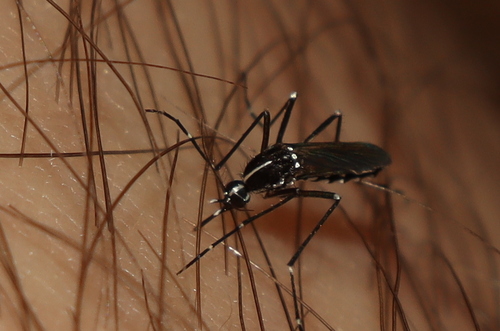
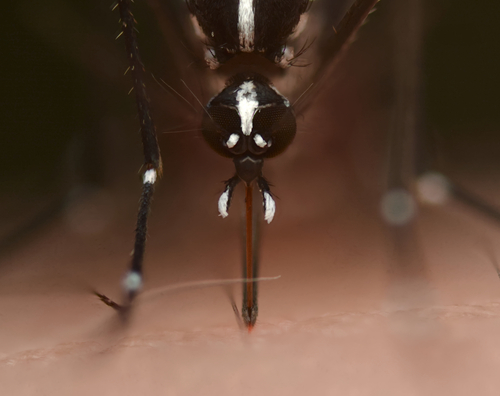
Adults are 5-10 mm long, compact and fast-flying. The most noticeable feature is a single white dorsal stripe running down the center of the thorax and distinct white bands on the dark legs. The body and wings are dark (black to very dark brown) with pale scales forming the contrasting stripes.
- Look for a single white stripe running down the center of the thorax (dorsal white line).
- Check legs for alternating white bands on the dark legs—especially the hind legs.
- Small size (5-10 mm) and day-active biting behavior distinguish it from many other mosquitoes.
- Eggs are laid on container walls just above the waterline and can withstand drying.
Lookalikes
Yellow fever mosquito Aedes aegypti
Aedes aegypti has lyre-shaped pale markings on the thorax and more pronounced white scales on the head and thorax; its pattern of leg banding and overall head shape differ from Aedes albopictus.
Common house mosquito Culex pipiens
Culex species are generally browner, lack the striking dorsal white stripe and leg banding, and are more active at dusk and night rather than during the day.
↻Life cycle
Egg
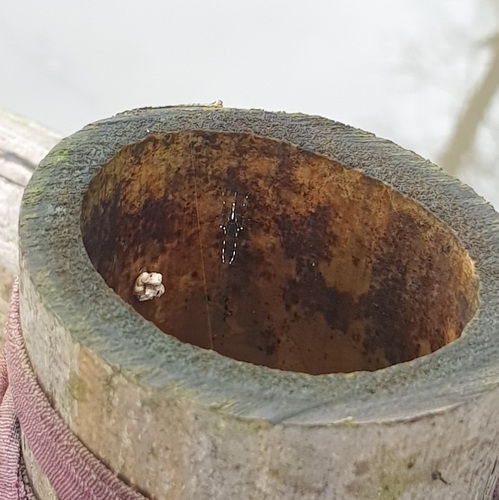
Females lay eggs on damp surfaces at the waterline of small containers; eggs can survive drying for months and hatch when submerged.
Larva
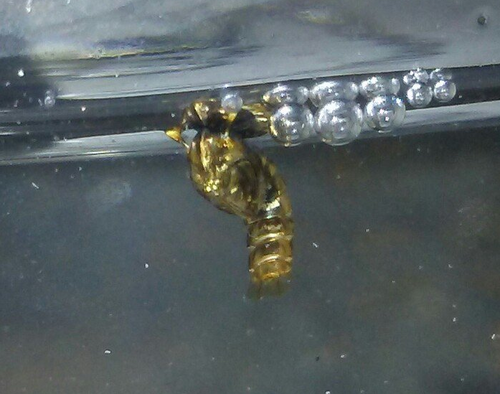
Aquatic larvae (wrigglers) live in small water bodies and feed on organic matter and microorganisms; development takes about 1-2 weeks in warm conditions.
Pupa
Non-feeding pupae (tumblers) develop in the water for 1-3 days before emerging as adults.
Adult
Adults emerge from pupae; males feed on nectar, females seek blood meals to produce eggs and can bite humans and animals during the day.
🍃Diet and predators
Young eat
Detritus, microorganisms and organic matter filtered from water.
Adults eat
Males and females feed on nectar and plant sugars; females also take blood meals from humans and other vertebrates to mature eggs.
Predators of the young
Aquatic predators such as predatory insects, fish and some amphibian larvae.
Predators of adults
Birds, bats, dragonflies, spiders and predatory insects.
🌱Effect on plants and gardens
Does not feed on plants; adults feed on nectar while females take blood meals from vertebrates. Larvae filter organic matter in water and do not affect plants directly.
How to get rid of asian tiger mosquitos
Reduce standing water around homes: empty, scrub or cover containers (flower pot saucers, buckets, tires, bird baths) every 1-2 weeks. Use screen windows and doors, wear long sleeves and use EPA- or local-authority–recommended insect repellents containing DEET, picaridin, IR3535 or oil of lemon eucalyptus on exposed skin. For heavy local infestations, community source-reduction, larvicides (Bacillus thuringiensis israelensis products) in non-drinking water containers, and targeted adulticiding by public health agencies may be used. Avoid indiscriminate indoor fogging; follow local health authority guidance.
📍Where and when to find it
Search around houses, gardens and shaded yards; look for adults resting on vegetation or near breeding containers. Inspect container edges and plant saucers for eggs; check stagnant water for larvae.
Best time
Best observed in warm months (late spring to early autumn in temperate zones) and during daylight hours, especially early morning and late afternoon.
Observation tips
Wear light-coloured clothing and use a fast shutter speed and close focus to photograph fast, small mosquitoes. To find larvae use a small white cup to scoop water from containers and watch for wriggling larvae.
✨Fun facts
- Aedes albopictus eggs can survive months of drought and hatch when they are submerged by rain or water refilling a container.
- Its rapid global spread has been aided by international trade, especially used tires that hold rainwater.
- Unlike many mosquitoes that bite at night, Asian tiger mosquitoes are active and bite during daylight hours.
?Frequently asked questions
Do Asian tiger mosquitoes bite?
Yes. Females bite humans and other mammals during the day to obtain blood needed for egg production. Bites can be irritating and itchy.
Are Asian tiger mosquitoes dangerous?
They are considered a public health concern because they can transmit viruses such as dengue, chikungunya and Zika where those viruses are present. Risk depends on local virus circulation.
Why is it in my house?
They are attracted to areas where people live and breed in small water-holding containers near homes. Indoor presence often means nearby breeding sites or that they entered through open doors or windows.
How do I get rid of Asian tiger mosquitoes?
Eliminate or manage standing water around your property, cover or treat containers, use window screens, wear protective clothing, and apply approved insect repellents. For severe infestations contact local public health or pest control authorities.
Where does the Asian tiger mosquito live?
Native to Southeast Asia, but now established in many tropical, subtropical and parts of temperate regions globally. It lives close to humans and breeds in small, shaded water containers.
📷Photos of the asian tiger mosquito
More flies & mosquitoes
This guide was written with AI assistance and fact-checked, last updated 2026-10-09. Identification from photos is never certain: don't handle insects you can't identify, and get medical advice for bites, stings or allergic reactions.