
Drain fly vs Fungus gnat
These two are easy to mix up. Here's how to tell a drain fly from a fungus gnat, and whether either one bites or stings.
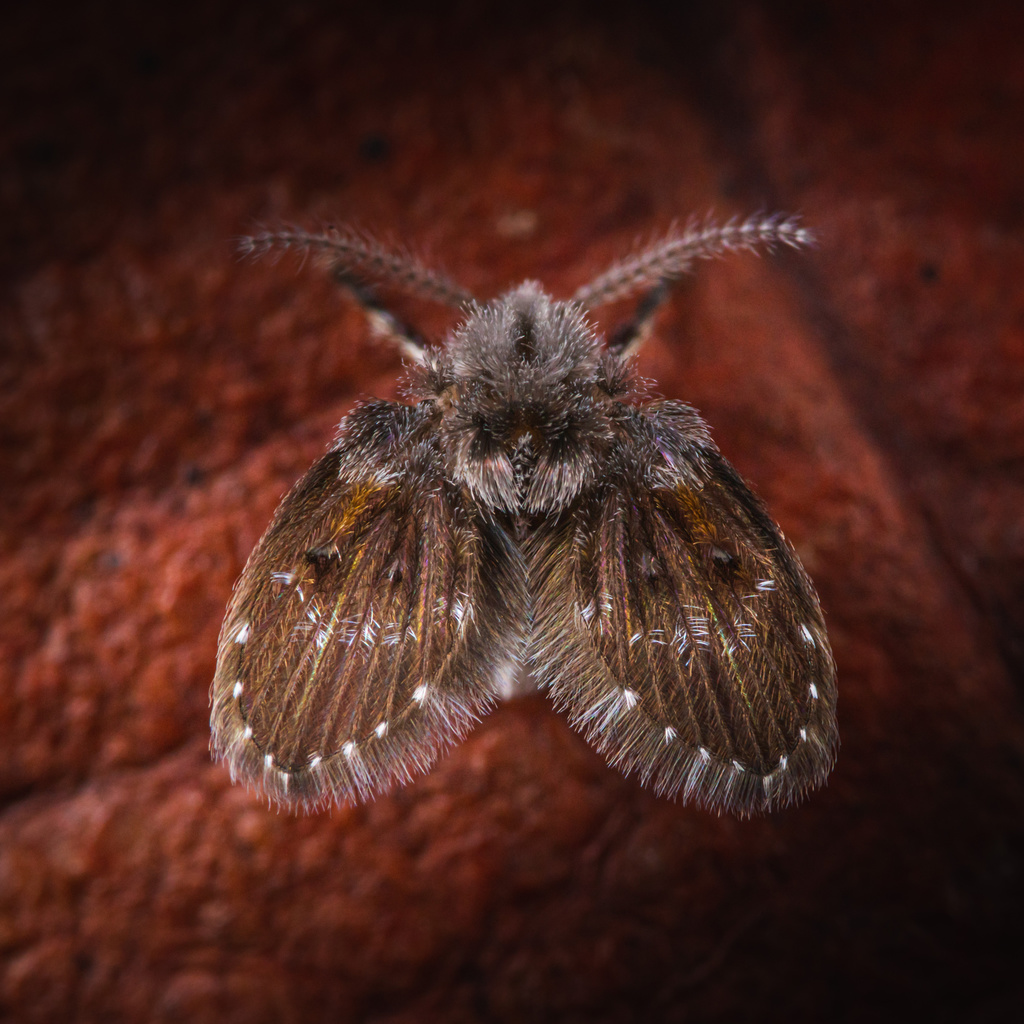
Drain fly
Clogmia albipunctata
Fungus gnat
Bradysia coprophila
≠The key differences
Fungus gnats are more slender, longer-legged and have clear wings with visible venation; they are associated with potted soil rather than drains.
⚖︎Side by side
| Drain fly | Fungus gnat | |
|---|---|---|
| To humans | Nuisance, allergen | Non-toxic |
| Size | 2-5 mm long (body) | 2-4 mm long |
| Colours | Dark grey, Light grey (hairy dusting), Brown (legs and antennae) | Black, Dark gray, Brown |
| Family | Psychodidae | Sciaridae |
| Habitat | Man-made wet habitats: sink and floor drains, sewage traps, septic tanks, drain pipes, grease traps, moist organic buildup in basements and boiler rooms. | Moist, organic-rich soils, potted plants, greenhouses, compost, decaying plant material |
| Range | Cosmopolitan in temperate and tropical regions, commonly found worldwide wherever indoor plumbing provides breeding sites. | Cosmopolitan in temperate regions; common wherever potted plants, greenhouses or decaying organic matter provide habitat |
| Active | Active year-round indoors; most active near dusk and at night. Outdoors in warm climates during spring-summer. | Year-round in heated greenhouses and indoors; spring to fall outdoors in temperate regions, most active in warm, damp conditions and at dusk |
| Pest? | Yes | Yes |
🔍How to spot a drain fly
- Tiny (2-5 mm), densely hairy body and wings giving a fuzzy, moth-like look.
- Broad, rounded wings held roof-like over the body with reduced wing venation.
- Weak, fluttering flight; often walk or hop near drains rather than fly long distances.
- Gather in groups on walls or near the drain where they breed, especially in bathrooms and kitchens.
🔍How to spot a fungus gnat
- Adults are 2-4 mm long, slender, dark-bodied flies with long legs and long multi-segmented antennae.
- Larvae are white or translucent maggots with a dark head capsule, found in the top 1-3 cm of moist potting soil.
- Adults are weak fliers and often seen walking on soil or flying low in swarms near plants or lights.
- Species-level separation from other sciarids requires microscopic examination of adult genitalia; look for general sciarid morphology for field ID.
?Frequently asked questions
What is the difference between a drain fly and a fungus gnat?
Fungus gnats are more slender, longer-legged and have clear wings with visible venation; they are associated with potted soil rather than drains.
Is a drain fly or a fungus gnat more dangerous?
Drain fly: Nuisance, allergen. Fungus gnat: Non-toxic. Drain flies do not bite or sting. Adults do not bite or sting.
Identification from photos is never certain: don't handle insects you can't identify, and get medical advice for bites, stings or allergic reactions.