
Eastern thick-headed fly
Physocephala tibialis · Thick-headed flies
A wasp-mimicking nectar-feeding fly whose larvae are internal parasitoids of bees (especially bumble bees) in eastern North America.
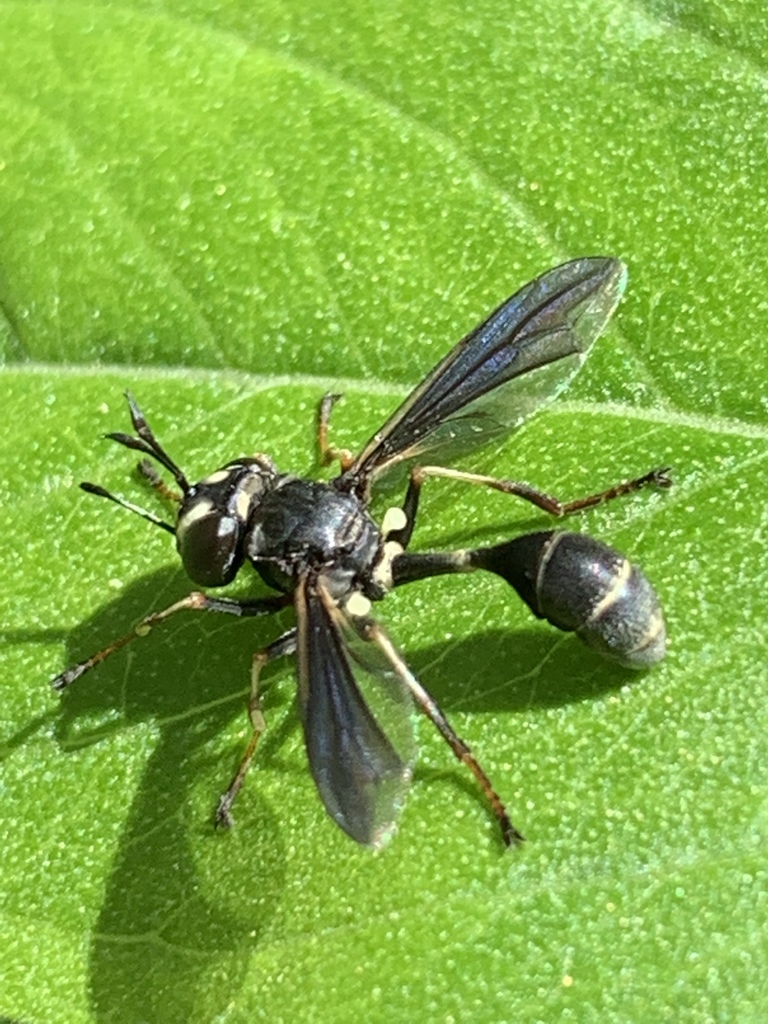
!Is the eastern thick-headed fly dangerous?
No. Physocephala tibialis does not sting or bite people. Adults may land on skin while nectaring but pose no venomous threat. No special first aid is needed beyond normal wound care if accidentally brushed.
Pets
Harmless to pets; flies do not parasitize mammals. No known toxin risk to cats or dogs.
📖Overview
Physocephala tibialis is a species of conopid fly (family Conopidae) common in eastern North America. Adults visit flowers for nectar and pollen and are often wasp-like in appearance. Female flies are parasitoids that lay eggs into foraging bees; the fly larva then develops inside the bee, eventually killing it and pupating inside the dead host's body. Adults are most often seen during the warm months when their bee hosts are active.
🔍How to identify an eastern thick-headed fly
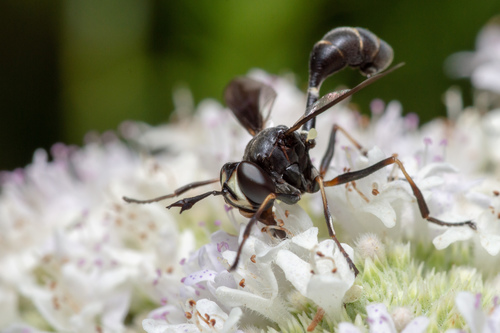
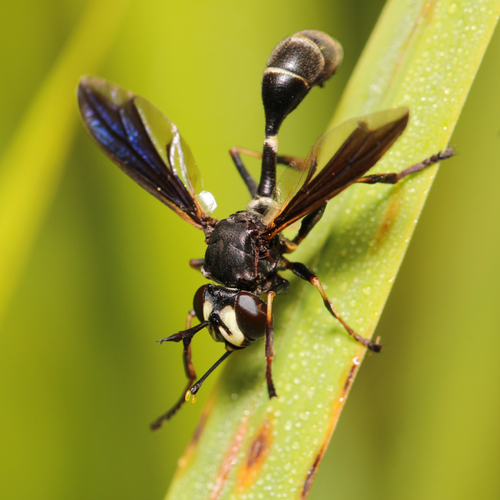
Adults are slender, wasp-mimicking flies with a narrow, waisted base to the abdomen that widens into a curled, club-shaped tip, a large head and a long, slender proboscis. The body is dark reddish-brown to black with a pale yellowish face and pale bands or markings on the abdomen; the front part of each wing is darkened. Antennae are elongate and project forward. Females have a downward-curved abdominal tip adapted for inserting eggs into bees.
- Slender wasp-like body with a narrow waist and a club-shaped, curled abdominal tip; only two wings.
- Long proboscis and flower-visiting behaviour; frequently seen on composite flowers and other nectar sources.
- Dark reddish-brown to black body with a pale face; front edge of the wings darkened.
- Females may be observed intercepting bees on flowers or carrying an extended ovipositor.
Lookalikes
Thick-headed fly (other Physocephala spp.) Physocephala spp.
Other species in the genus are similar in shape and habits; identification often requires close examination of leg and genital features by a specialist.
Thread-waisted wasps Ammophila spp.
True wasps with four wings, long thread-like waists and long antennae, and they can sting; thick-headed flies have only two wings, a shorter waist and short forward-pointing antennae.
↻Life cycle
Egg
The female inserts a single egg into the body of a host bee while it is foraging; the egg hatches inside the host.
Larva (internal parasitoid)
The larva develops inside the living bee, consuming internal tissues; infected bees often become lethargic before dying.
Pupa
The mature larva pupates inside the abdomen of the dead host bee, which often dies in or falls to the soil; the fly overwinters there as a pupa and emerges the following season.
Adult (fly)
Adults feed on nectar and visit flowers; females intercept and oviposit into foraging bees or wasps.
🍃Diet and predators
Young eat
Endoparasitic, feeding on host bee tissues
Adults eat
Nectar and pollen from flowers
Predators of the young
Susceptible to parasitoids, predators that uncover pupae in soil, and micro-organisms
Predators of adults
Birds, predatory insects, and spiders
🌱Effect on plants and gardens
Adults visit a variety of flowering plants for nectar and pollen and can act as incidental pollinators.
📍Where and when to find it
Look for adults on open, nectar-rich flowers, field edges, meadows, and gardens. Watch flowers where bumble bees and honey bees forage; females may be seen intercepting bees.
Best time
Late spring through early autumn, during warm daylight hours when bees are active.
Observation tips
Use a camera with a short telephoto or macro lens to photograph without disturbing bees; watch for the rapid interception behavior of females on flower-visiting bees.
✨Fun facts
- Females actively intercept bees on flowers and can insert an egg into a live bee in a fraction of a second.
- Although the larva kills its individual host, conopid flies are part of natural checks on bee population dynamics and are not considered major threats to healthy pollinator communities.
?Frequently asked questions
Is the Eastern thick-headed fly dangerous?
No. It does not sting or transmit disease to people and is not considered dangerous.
Do Eastern thick-headed flies bite?
No. Adults do not bite people; females do insert eggs into bees but that behavior is directed at insect hosts only.
Why is this fly on flowers in my garden?
Adults feed on nectar and pollen; gardens with flowering plants attract them because those flowers also attract their bee hosts.
Are they harmful to bee populations?
They are natural parasitoids of bees and can kill individual bees, but they are a normal part of ecosystems. In most cases they do not cause major declines in healthy bee populations.
How can I get rid of them?
Control is generally unnecessary. Removing flowers would reduce visits but also harm pollinators. If you have concerns about local managed bees, consult a local entomologist or beekeeper for specific advice; widespread eradication is neither practical nor recommended.
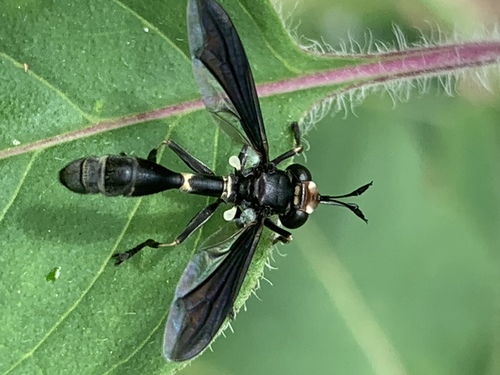
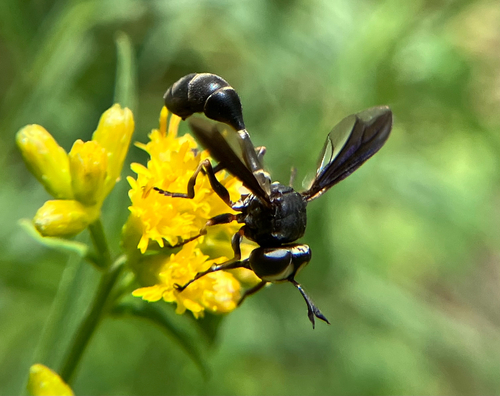
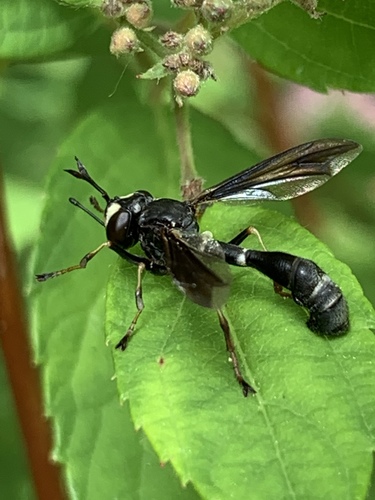
📷Photos of the eastern thick-headed fly
More flies & mosquitoes
This guide was written with AI assistance and fact-checked, last updated 2026-10-10. Identification from photos is never certain: don't handle insects you can't identify, and get medical advice for bites, stings or allergic reactions. More about the eastern thick-headed fly: iNaturalist, Wikipedia.