
Lovebug
Plecia nearctica · March flies
Small black-and-red march fly noted for paired, long-lived mating flights and seasonal swarms that are a nuisance to drivers.
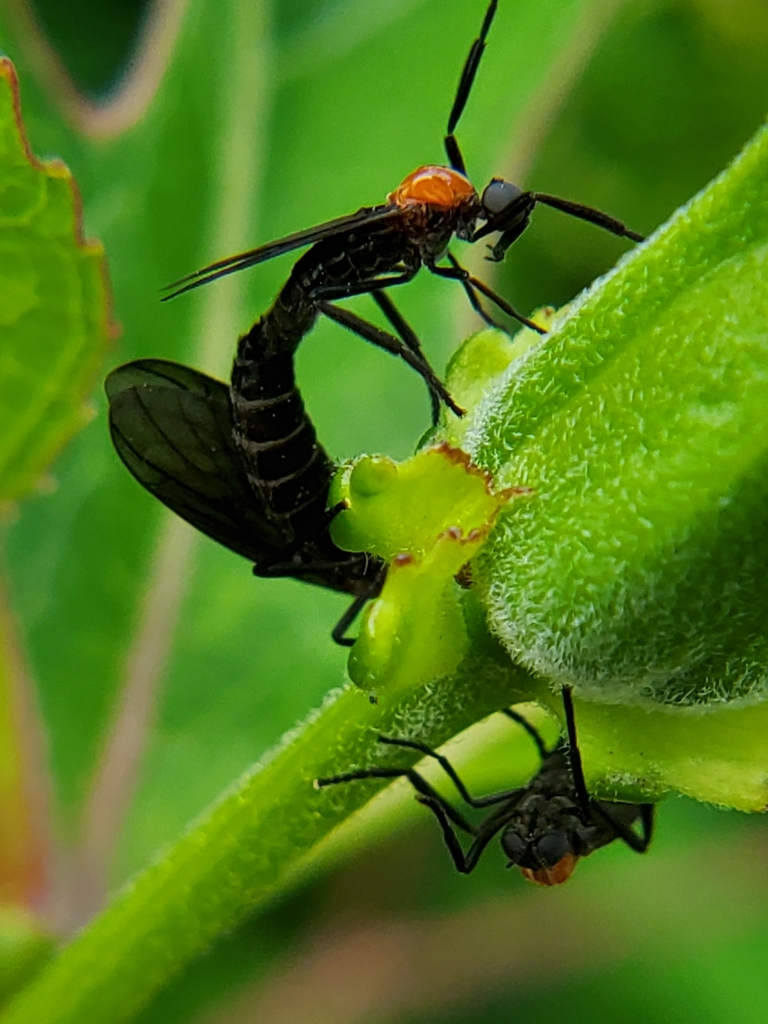
!Is the lovebug dangerous?
No. Lovebugs do not bite or sting and are not venomous. Crushed adults can leave acidic residues and pigments that may stain car paint, windshields and clothing; rinse vehicle surfaces promptly to avoid paint damage. For skin contact, wash with soap and water.
Pets
Generally harmless to pets. Crushed insects on fur could stain, and repeated ingestion of large numbers could cause mild stomach upset but this is uncommon.
📖Overview
Plecia nearctica, commonly called the lovebug, is a small march fly in the family Bibionidae. Adults are most noticeable in large, synchronized swarms during two seasonal peaks; males and females remain joined in copula for hours while flying. Larvae live in soil and feed on decaying plant material, helping break down organic matter. Lovebugs are not dangerous to people or crops, but adult swarms can be a nuisance and stain car paint and radiators when crushed.
🔍How to identify a lovebug
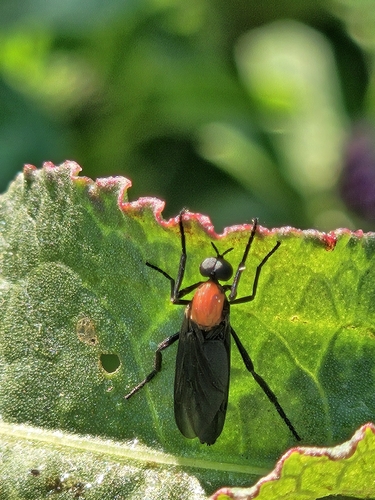
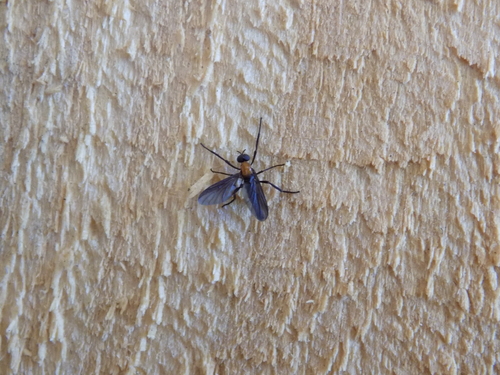
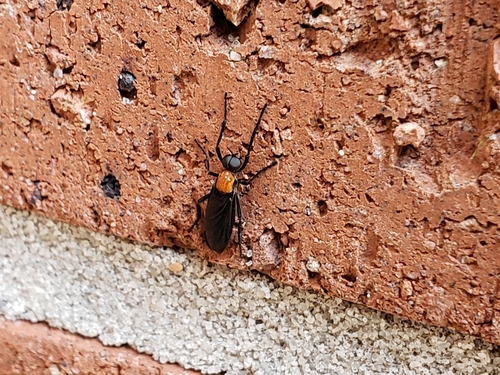
Adults are small (roughly a few millimetres long) with a rounded, humpbacked thorax. The body is mostly black with a distinct red to orange thoracic area in many specimens; wings are clear to slightly smoky. Males are slightly smaller and often more slender than females. In mating pairs the two flies appear permanently attached at the rear for long periods.
- Small humpbacked black fly with a distinct red-orange thorax in many individuals.
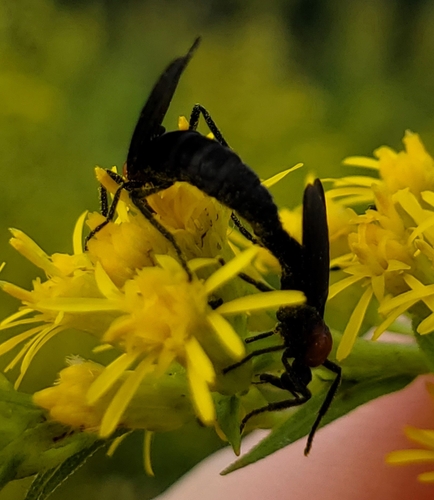
- Adults commonly seen in mating pairs glued together end-to-end while flying.
- Active in large swarms during two seasonal peaks (spring and late summer) in affected regions.
Lookalikes
March fly (other Bibionidae) Various Bibionidae
Other march flies are similar in shape but often lack the distinctive red-orange thorax or the species-specific swarm timing; microscopic or genitalia characters are needed for certain ID.
Fungus gnat Various families (e.g. Sciaridae)
Fungus gnats are more delicate, longer-legged and not typically seen in persistent mating pairs or large daytime swarms.
↻Life cycle
Egg
Females lay eggs in soil or decaying vegetation; eggs hatch in a few days to a couple of weeks depending on conditions.
Larva (maggot)
Soil-dwelling detritivores that feed on decomposing plant material and compost; this stage lasts weeks to months and is the main growth phase.
Pupa
Pupation occurs in the soil; metamorphosis lasts days to weeks before adults emerge.
Adult (fly)
Short-lived, mating-focused adults that form large swarms and are often seen paired in copula for extended periods.
🍃Diet and predators
Young eat
Decaying plant material and organic matter in soil (detritivore).
Adults eat
Adults feed on flower nectar and pollen, visiting plants such as goldenrod and sweet clover, while spending much of their short lives mating.
Predators of the young
Soil predators, ground beetles and parasitic insects.
Predators of adults
Birds, spiders, predatory insects and other aerial insectivores.
🌱Effect on plants and gardens
Larvae feed on decaying plant matter and help recycle nutrients; adults do not cause significant feeding damage to living plants.
📍Where and when to find it
Adults: flying over roadsides, grassy verges, gardens and near lights; often seen in mating pairs. Larvae: in soil rich in decaying leaves, compost and mulch layers.
Best time
Best observed during the two flight peaks in spring (April-May) and late summer (August-September) in the southeastern United States; daytime hours.
Observation tips
Photograph mating pairs from a distance to avoid smearing insects on lenses; bring a macro lens for close detail and watch roadside vegetation for emerging swarms.
✨Fun facts
- Lovebugs are famous for mating while flying: pairs stay joined together for hours, even for a day or more, with the larger female leading in flight.
- Although a nuisance to drivers, the larvae play a helpful role breaking down dead plant material and improving soil.
- Mass emergences can be so dense that insects splatter on car radiators and windshields, which led to local folklore and many practical vehicle-cleaning tips.
?Frequently asked questions
Do lovebugs bite?
No. Lovebugs do not bite or sting.
Are lovebugs harmful to my car?
Crushed lovebugs can leave acidic residues and pigments that may stain paint and clog radiators; rinse cars soon after heavy splattering.
Why are there so many lovebugs at this time of year?
Lovebugs have two annual flight peaks (spring and late summer) when many adults emerge synchronously to mate, producing visible swarms.
Are lovebugs dangerous to plants or crops?
No. Larvae help decompose organic matter and adults do not feed on crops, so they are not an agricultural pest.
How can I keep them out of my house?
They rarely come indoors. Adults are drawn to light-coloured surfaces, heat and vehicle exhaust rather than houses; keep doors closed and screens in place during flight seasons.
How do I get rid of lovebugs on my property?
There is no practical large-scale control for seasonal swarms. Reduce attractants by removing excess decaying vegetation and maintaining tidy compost piles; for cars, hose off insects promptly and use a soft scrub if residue dries.
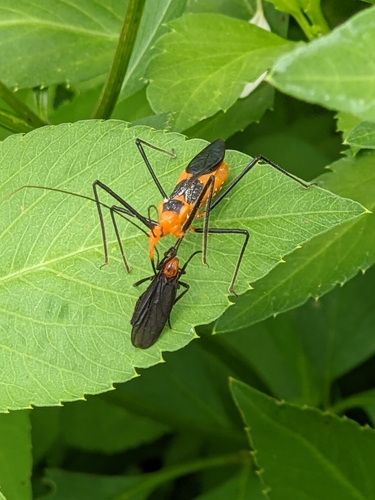
📷Photos of the lovebug
More flies & mosquitoes
This guide was written with AI assistance and fact-checked, last updated 2026-10-10. Identification from photos is never certain: don't handle insects you can't identify, and get medical advice for bites, stings or allergic reactions. More about the lovebug: iNaturalist, Wikipedia.