
Widow skimmer
Libellula luctuosa · Skimmers
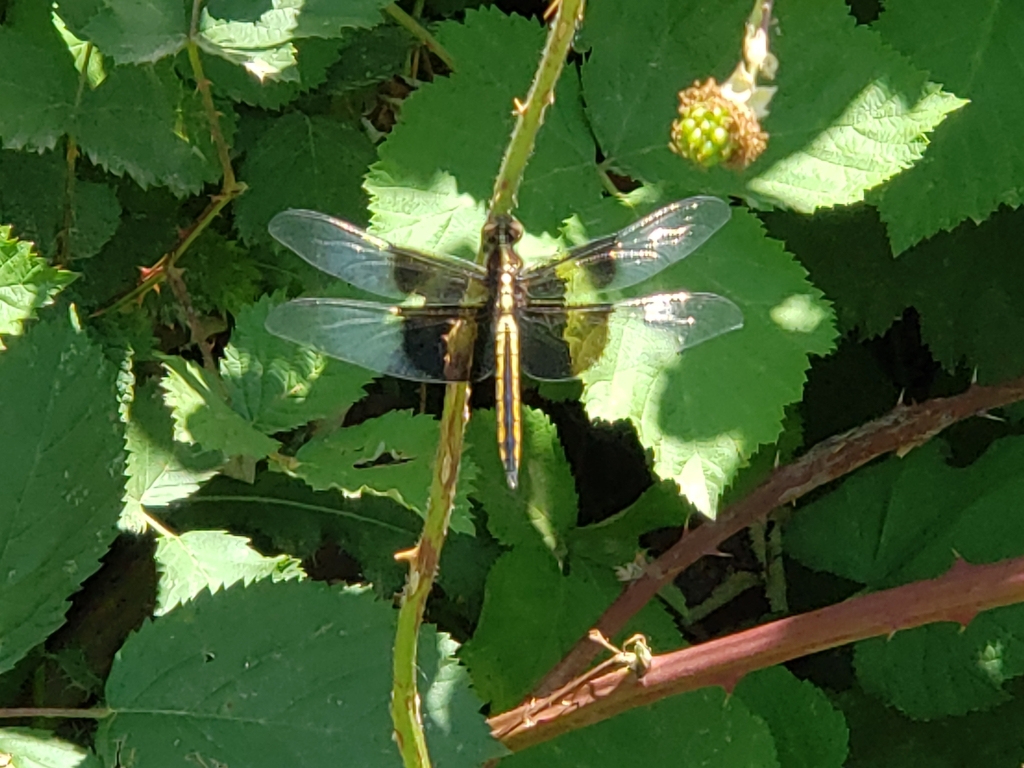
A common North American skimmer dragonfly: males have striking black wing patches and a white pruinescent abdomen, females are brown-yellow and patterned.
!Is the widow skimmer dangerous?
No. Widow skimmers are not venomous and do not pose a medical threat. They can bite if handled roughly, producing a brief pinch but not injecting venom. Wash the area with soap and water if bitten; seek medical care only for unusual reactions or if a wound becomes infected.
Pets
Harmless to pets. Pets may catch dragonflies but the insects do not pose a toxic risk. Supervised pets may temporarily chase or eat them.
📖Overview
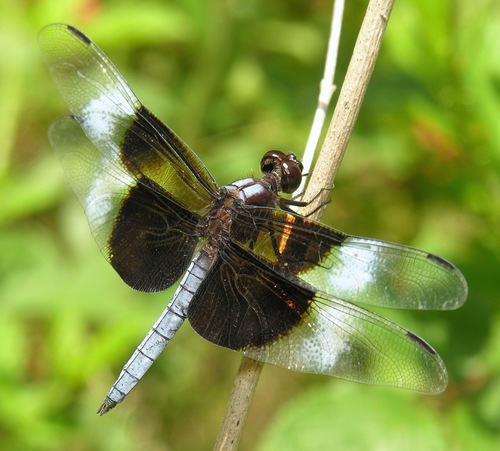
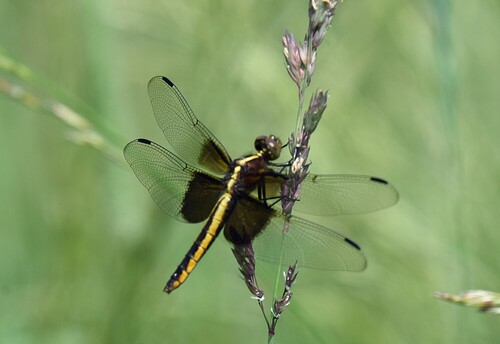
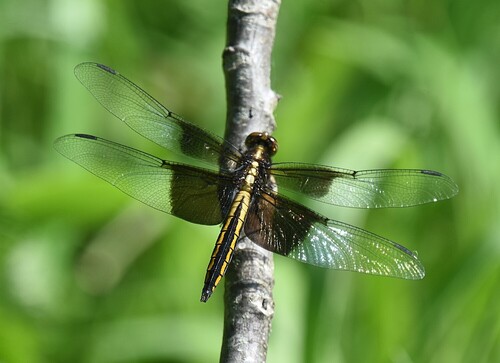
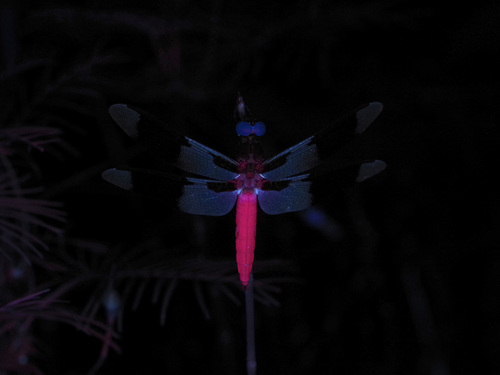
Libellula luctuosa, the widow skimmer, is a medium-large dragonfly found across much of North America. Males have broad dark-brown to black patches on the inner half of each wing followed by a distinctive white band, and develop a powdery white (pruinescent) coating on the abdomen; females and immature males are brown with yellow side stripes, have dark basal wing patches without the white band, and females often have dark wingtips. They perch openly near ponds, lakes and slow streams and are agile aerial predators of small flying insects. Larvae (nymphs) live in the water and are sit-and-wait predators before emerging as adults in spring and summer.
🔍How to identify a widow skimmer
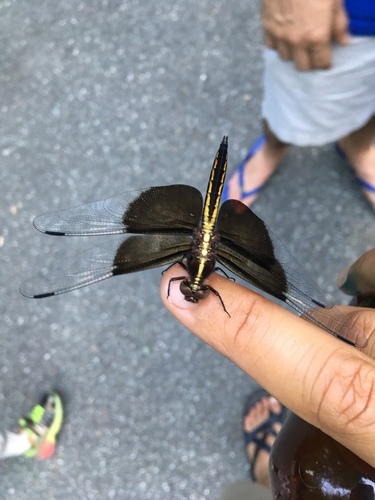
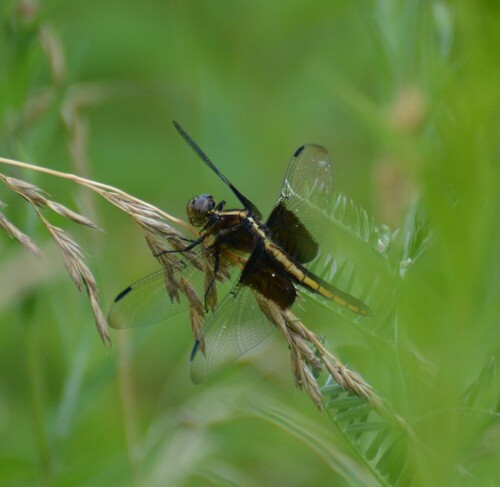
Adult males: dark (nearly black) patches covering the inner half of each wing, followed by a white band, and a white to pale blue pruinescent abdomen that may obscure earlier markings. Head and thorax are darker with pale side stripes sometimes visible. Adult females and immature males: brown body with yellow stripes along the sides of the abdomen; wings have the same dark basal patches but lack the white band, and females often have small dark wingtips. Wings are broad (typical of Libellula skimmers).
- Look for broad dark patches covering the inner half of each wing; in mature males these are followed by a white band.
- Males have a powdery white (pruinescent) abdomen that obscures earlier markings; females are brown with yellow lateral markings.
- Perches openly on exposed twigs, posts or vegetation near water; wings held flat at rest typical of skimmers.
Lookalikes
Common whitetail Libellula lydia
Both males develop a white abdomen, but L. lydia has different wing markings and body shape; widow skimmer has broader black wing bases and a prominent white wing band.
Four-spotted skimmer Libellula quadrimaculata
Four-spotted skimmer has dark spots at the nodus and mid-wing (four spots) rather than the large basal patches and broad white band of the widow skimmer.
↻Life cycle
Egg
Females deposit eggs in or on the surface of water, often while hovering or by dipping the abdomen into the water.
Larva (nymph)
Aquatic nymphs live on pond or lake bottoms among vegetation and detritus, preying on small aquatic invertebrates and tadpoles; development lasts months to over a year depending on conditions.
Adult
Adults emerge from the final nymphal skin at the water edge, expand and harden their wings, then hunt aerially for flying insects and reproduce; adults are the only winged stage.
🍃Diet and predators
Young eat
Aquatic invertebrates, small insect larvae, tiny fish and tadpoles (opportunistic predation).
Adults eat
Flying insects such as mosquitoes, flies, small moths and midges; they catch prey in flight.
Predators of the young
Fish, aquatic insects (large beetles), amphibians and larger invertebrate predators.
Predators of adults
Birds, bats, larger dragonflies, spiders (catching them in webs) and frogs.
🌱Effect on plants and gardens
Adults do not feed on plants and do not damage gardens; larvae live among submerged vegetation where they prey on aquatic invertebrates.
📍Where and when to find it
Adults: perched on exposed twigs, boardwalk posts or floating vegetation near ponds and lakes. Nymphs: in submerged vegetation and detritus along pond margins.
Best time
Best observed from late spring through late summer on warm sunny days, during mid-morning to late afternoon when they hunt actively.
Observation tips
Approach slowly and photograph from a low angle to capture wing patterns; binoculars and patience help—they often return to the same perch.
✨Fun facts
- The 'white' look of males comes from pruinescence, a waxy powder on the abdomen surface that develops with age.
- Wing patterns are useful for quick field ID because they remain visible even when body pruinescence obscures color.
- Widow skimmers are strong fliers and often defend small territories over sunlit water.
?Frequently asked questions
Are widow skimmers dangerous?
No. They are not venomous and do not pose a health risk. They may bite if handled, but the bite is only a brief pinch.
Do widow skimmers bite people?
Only rarely and only if handled or trapped; bites are harmless and not venomous.
Why is a widow skimmer in my yard?
If you have a pond, slow-moving water or wetland nearby, widow skimmers hunt there for flying insects and use nearby perches—yards with water features commonly attract them.
How can I get rid of widow skimmers?
They are beneficial predators of pests like mosquitoes. If their presence is unwanted, removing standing water will make the area less attractive, but control is usually unnecessary and not recommended.
Where do widow skimmers live?
They live around ponds, marshes, lakes and slow streams with vegetation across much of the United States and southern Canada.
📷Photos of the widow skimmer
More dragonflies & damselflies
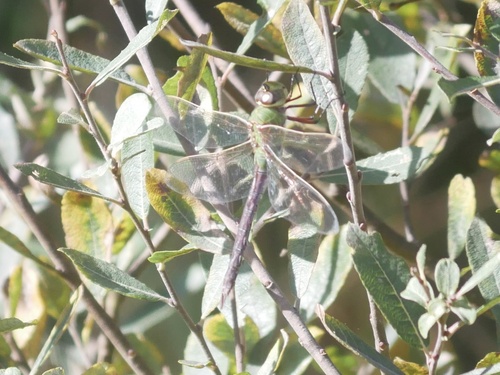
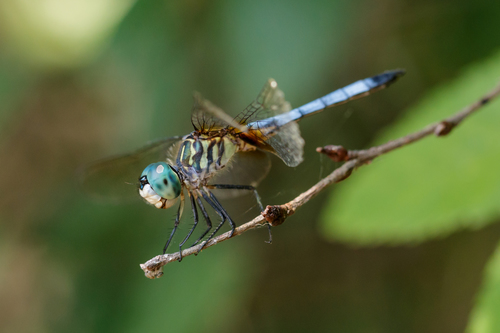
This guide was written with AI assistance and fact-checked, last updated 2026-10-10. Identification from photos is never certain: don't handle insects you can't identify, and get medical advice for bites, stings or allergic reactions. More about the widow skimmer: iNaturalist, Wikipedia.