
Ebony jewelwing
Calopteryx maculata · Broad-winged damselflies
A large, showy damselfly of eastern North America with iridescent metallic body and characteristically dark wings in males.
!Is the ebony jewelwing dangerous?
No. Ebony jewelwings do not have venom and do not pose a threat to people. They can grasp the skin with their legs and may give a very rare, harmless nip if handled roughly. No special first aid is needed beyond cleaning the area if the skin is broken.
Pets
Not dangerous to cats, dogs or other pets. Small pets might catch and eat them, but the insects are not toxic; however, consumption could cause minor stomach upset.
📖Overview
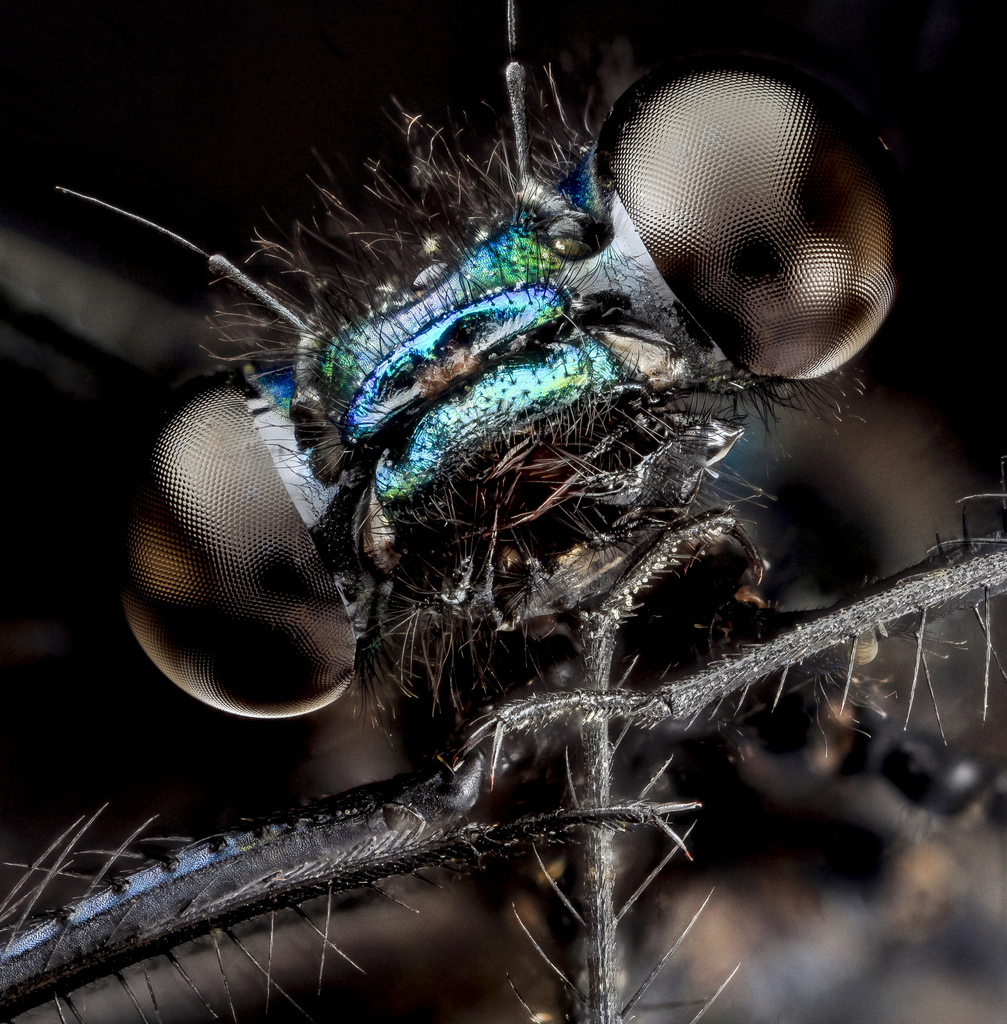
Calopteryx maculata is a large, conspicuous damselfly often found along clean, slow-moving streams and rivers in eastern North America. Males are notable for their entirely dark (ebony) wings and brilliant metallic body; females are slightly duller and usually show a pale or smoky wing with a distinct white spot near the tip. Adults hunt small flying insects; larvae are aquatic predators that live in stream vegetation and detritus. They are not dangerous to people and are indicators of relatively healthy freshwater habitats.
🔍How to identify an ebony jewelwing
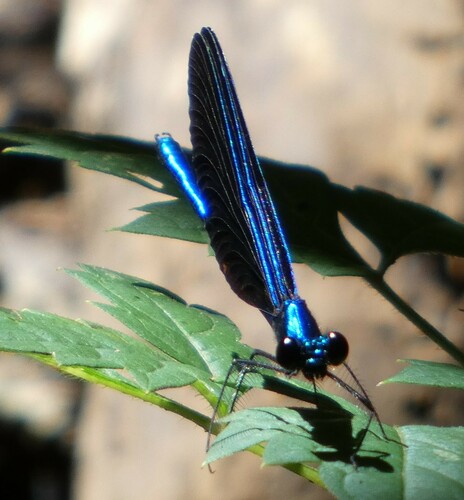
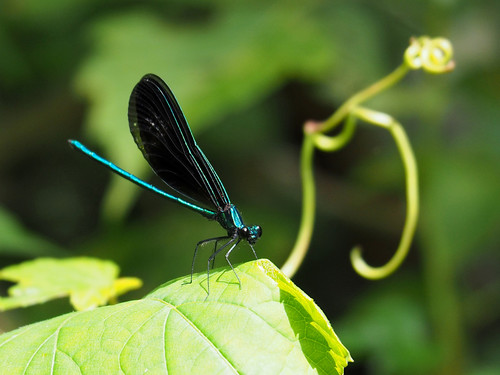
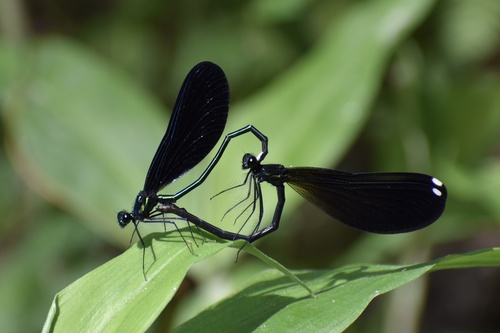
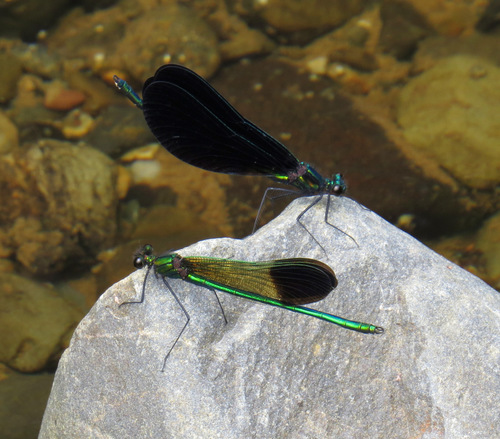
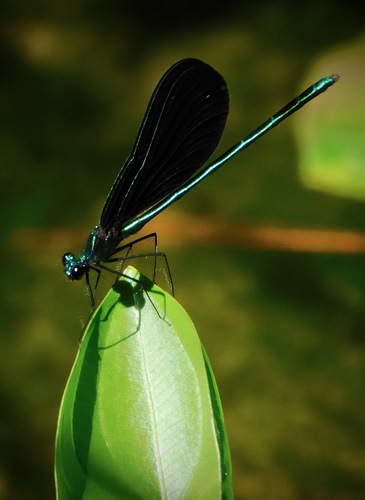
Adult males have a long, slender body with strong metallic blue-green iridescence and uniformly dark, opaque wings that give the common name 'ebony jewelwing.' Females are similar in size with metallic green or bronze bodies but their wings are translucent smoky brown and typically bear a conspicuous small white or pale spot near the tip of each wing. Both sexes have a relatively broad wing base compared with many damselflies and hold their wings together above the body at rest.
- Male: metallic blue-green body with entirely dark, opaque wings (no pale spot).
- Female: metallic green/bronze body with smoky wings and a small white spot near each wing tip.
- Large size for a damselfly with relatively broad wings held together above the body when at rest.
- Habitat: commonly found fluttering and perching along shaded streams and rivers.
Lookalikes
River jewelwing Calopteryx aequabilis
River jewelwing males have clear wings with only the outer third to half dark, rather than entirely dark wings, and usually live along larger, more open streams and rivers, mostly farther north.
Sparkling jewelwing Calopteryx dimidiata
Sparkling jewelwing is smaller and more slender, males have mostly clear wings with small dark tips, and it lives along sandy streams of the southeastern coastal plain.
↻Life cycle
Egg
Females lay eggs in submerged or emergent aquatic plants or on debris along streams. Eggs typically hatch in weeks to months depending on temperature.
Nymph (naiad)
Aquatic nymphs are predatory, living among vegetation and detritus; they grow through multiple molts over months to a year before emerging.
Adult (imago)
Adults are terrestrial aerial predators that mate and disperse; after mating the female oviposits and the cycle repeats.
🍃Diet and predators
Young eat
Aquatic invertebrates and small aquatic organisms; predatory on mosquito larvae, other insect larvae and small crustaceans.
Adults eat
Small flying insects such as mosquitoes, midges, flies and other soft-bodied aerial prey.
Predators of the young
Fish, aquatic insects (giant water bugs, dragonfly nymphs), amphibians and some aquatic birds.
Predators of adults
Birds, spiders, larger dragonflies, frogs and bats.
🌱Effect on plants and gardens
Adults do not damage plants; larvae live among aquatic vegetation but do not harm healthy plant communities.
📍Where and when to find it
Adults perch on stems and leaves near stream margins; nymphs are in submerged vegetation and under rocks in shallow flowing water.
Best time
Late spring through summer on sunny days, especially late morning to mid-afternoon.
Observation tips
Look for males perched on low vegetation above water and for females ovipositing in submerged plants; use a telephoto or macro lens to capture wing and body detail without disturbing them.
✨Fun facts
- Male ebony jewelwings beat their wings and display to defend territories and attract females.
- Their presence is a good indicator of clean, well-oxygenated freshwater.
- Despite the name 'jewelwing' the iridescence is due to microscopic structure on the cuticle, not pigment alone.
?Frequently asked questions
Do ebony jewelwing damselflies bite?
They do not bite people as a defensive behaviour; they can grasp fingers with their legs and may give a very rare, harmless nip if handled roughly.
Are ebony jewelwings poisonous or dangerous?
No. They are not venomous or poisonous and do not pose a health risk to people or pets.
Why is an ebony jewelwing in my yard?
You may have suitable habitat nearby: shady streams, slow-moving rivers or wetlands. Adults patrol and hunt over nearby vegetation and will perch on plants at the water's edge.
How can I attract ebony jewelwings to my garden?
Provide or restore a clean, slow-flowing stream or pond with native riparian vegetation and sunny perches; avoid pollution and heavy pesticide use.
How do I get rid of them?
They are beneficial predators and usually do not need removal. If they are unwanted indoors, gently catch them in a jar and release outside near water. Eliminating nearby water will remove habitat but is not recommended for ecological reasons.
Where do ebony jewelwings live?
They live along clean, slow to moderate flowing streams and rivers with abundant vegetation in eastern North America.
📷Photos of the ebony jewelwing
More dragonflies & damselflies
This guide was written with AI assistance and fact-checked, last updated 2026-10-10. Identification from photos is never certain: don't handle insects you can't identify, and get medical advice for bites, stings or allergic reactions. More about the ebony jewelwing: iNaturalist, Wikipedia.