
Eastern forktail
Ischnura verticalis · Narrow-winged damselflies
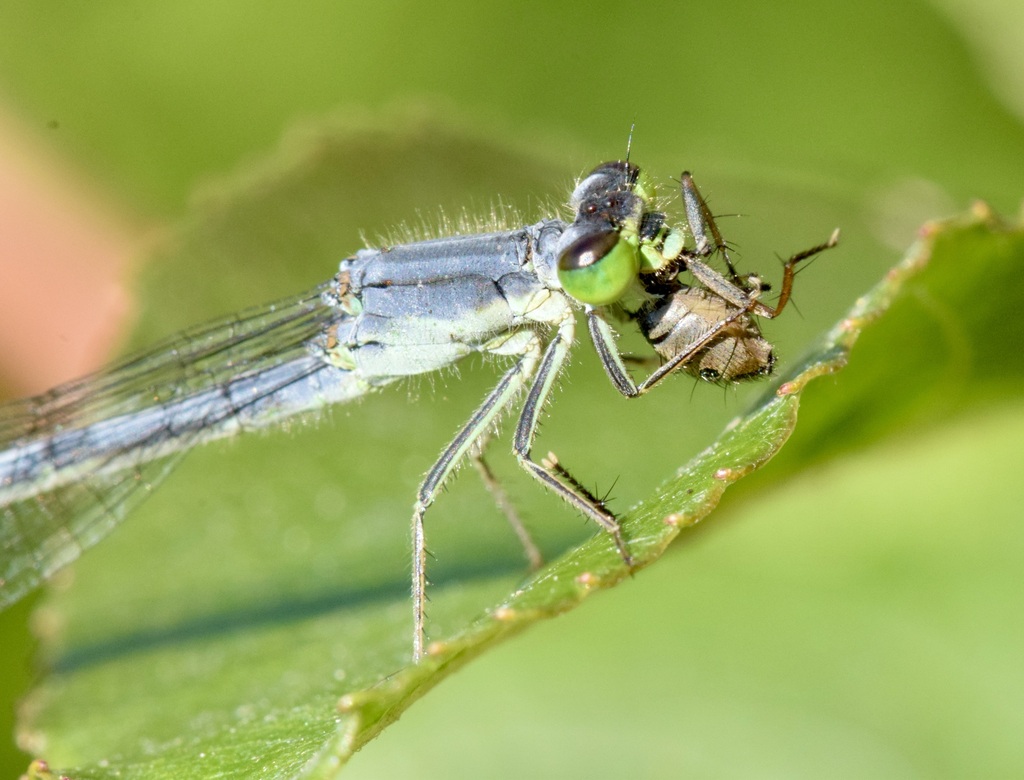
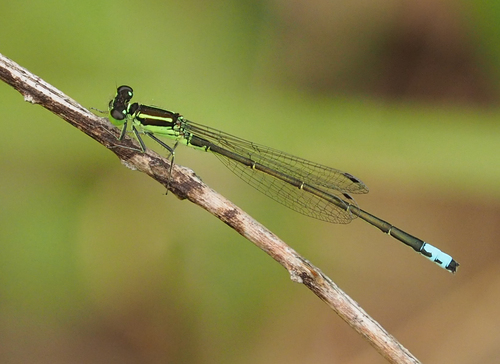
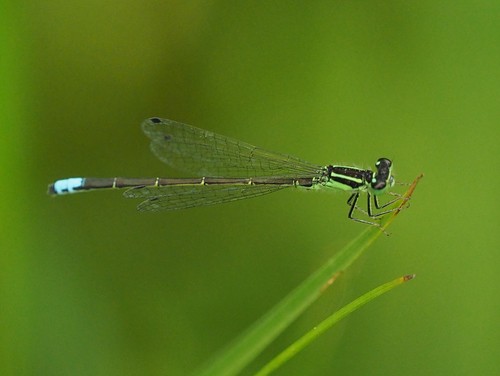
A small, common damselfly of eastern North America; males are green and black with a blue abdomen tip, while young females are bright orange and mature to a powdery blue-gray.
!Is the eastern forktail dangerous?
No. Eastern forktail damselflies do not bite or sting people. They are harmless to handle gently; if grabbed they may try to escape but do not have venom.
Pets
Not dangerous to pets. Small size means they are not a threat; pets may occasionally catch them but there is no toxicity risk.
📖Overview
Ischnura verticalis, the Eastern forktail, is a small pond and marsh damselfly found across much of eastern North America. It favours still or slow water with vegetation and is commonly seen perched on emergent plants. Adults hunt tiny flying insects and the aquatic larvae feed on small aquatic invertebrates. Females are color-polymorphic: young females are bright orange and black and mature to a dusky, powdery blue-gray, while a minority look like males. Males are green and black with a blue tip to the abdomen.
🔍How to identify an eastern forktail
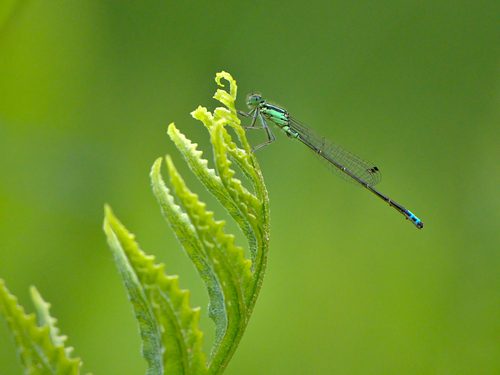
Adults are slender damselflies with delicate, narrow wings held together above the abdomen when at rest. Males have a green-and-black striped thorax and a mostly black abdomen with a bright blue tip (segments 8 and 9). Young females are bright orange with black markings and mature to a dusky, powdery blue-gray; some females are colored like males. The common name refers to a small forked projection on the tip of the male's abdomen.
- Small, slender damselfly with wings held together over the abdomen when at rest
- Males have a green-and-black striped thorax and a black abdomen with a bright blue tip
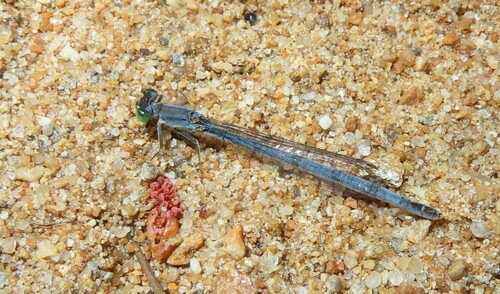
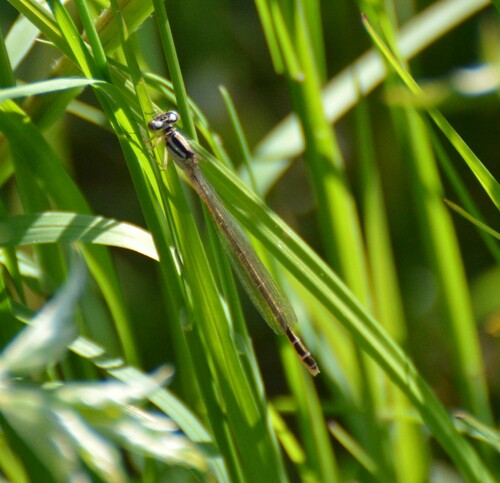
- Young females are bright orange and black; mature females become dusky blue-gray with a powdery coating
- Males have a small forked projection on top of the abdomen tip
Lookalikes
Familiar Bluet Enallagma civile
Familiar bluet males have a blue thorax and a largely blue abdomen with black rings; eastern forktail males have a green thorax and a mostly black abdomen with only the tip blue.
Fragile forktail Ischnura posita
Fragile forktail is smaller and more delicate, has broken, exclamation-mark-shaped pale shoulder stripes on the thorax, and males lack the bright blue abdomen tip.
↻Life cycle
Egg
Laid by the female into submerged or floating plant stems; eggs hatch into aquatic nymphs.
Nymph (naiad)
Aquatic stage that lasts weeks to over a year depending on climate; predatory on small aquatic invertebrates.
Adult (imago)
Terrestrial, winged stage that emerges from the water; adults fly, mate, and lay eggs over several weeks to months.
🍃Diet and predators
Young eat
Aquatic invertebrates (small crustaceans, insect larvae, etc.)
Adults eat
Small flying insects such as mosquitoes, midges and other tiny flies
Predators of the young
Fish, larger aquatic insects, amphibians
Predators of adults
Birds, larger dragonflies, spiders and insectivorous bats
🌱Effect on plants and gardens
Does not feed on plants; larvae and adults are predators of small aquatic and flying invertebrates and do not damage vegetation.
📍Where and when to find it
Adults perch on emergent vegetation and pond margins; look for larvae in submerged vegetation and among detritus in shallow water.
Best time
Spring through early autumn, warm daylight hours when adults are active.
Observation tips
Use a telephoto or macro lens to photograph perched individuals; approach slowly and watch vegetation edges where they hunt and rest.
✨Fun facts
- Young female eastern forktails are bright orange and later turn powdery blue-gray, so females can look very different from males and from each other.
- The common name 'forktail' refers to a small forked projection at the tip of the male's abdomen.
?Frequently asked questions
Are Eastern forktail damselflies dangerous?
No. They do not sting or transmit disease and are harmless to people.
Do Eastern forktail damselflies bite?
They may nibble if handled roughly but do not have bites of medical concern; they are essentially harmless.
Why is an Eastern forktail in my house?
Occasional indoor sightings happen when adults are attracted to light or fly in from nearby water; they do not live indoors and usually find their way back outside.
How can I get rid of them?
Best approach is gentle capture (cup and paper) and release outdoors near water. Avoid pesticides, which are unnecessary and harmful to beneficial insects.
Where does the Eastern forktail live?
It lives at ponds, marshes, ditches and slow streams with vegetation across eastern and central North America.
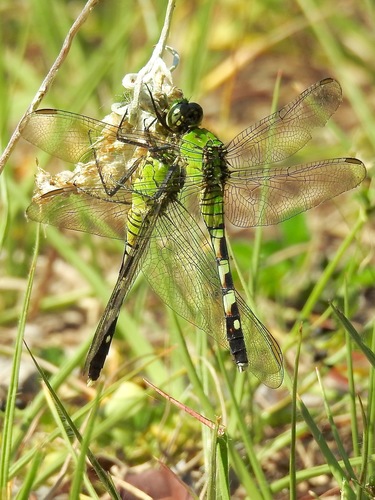
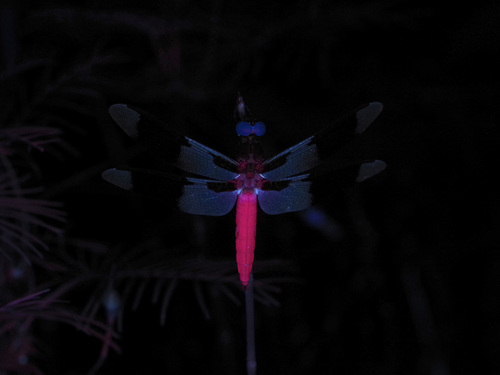
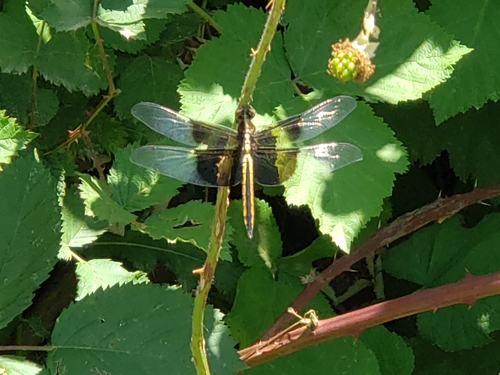
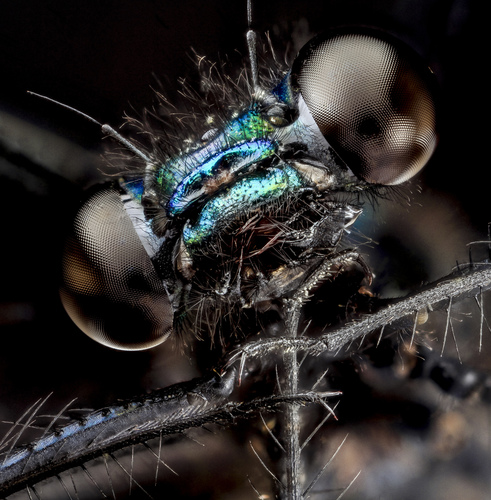
📷Photos of the eastern forktail
More dragonflies & damselflies
This guide was written with AI assistance and fact-checked, last updated 2026-10-10. Identification from photos is never certain: don't handle insects you can't identify, and get medical advice for bites, stings or allergic reactions. More about the eastern forktail: iNaturalist, Wikipedia.