
Eastern forktail vs Familiar bluet
These two are easy to mix up. Here's how to tell an eastern forktail from a familiar bluet, and whether either one bites or stings.
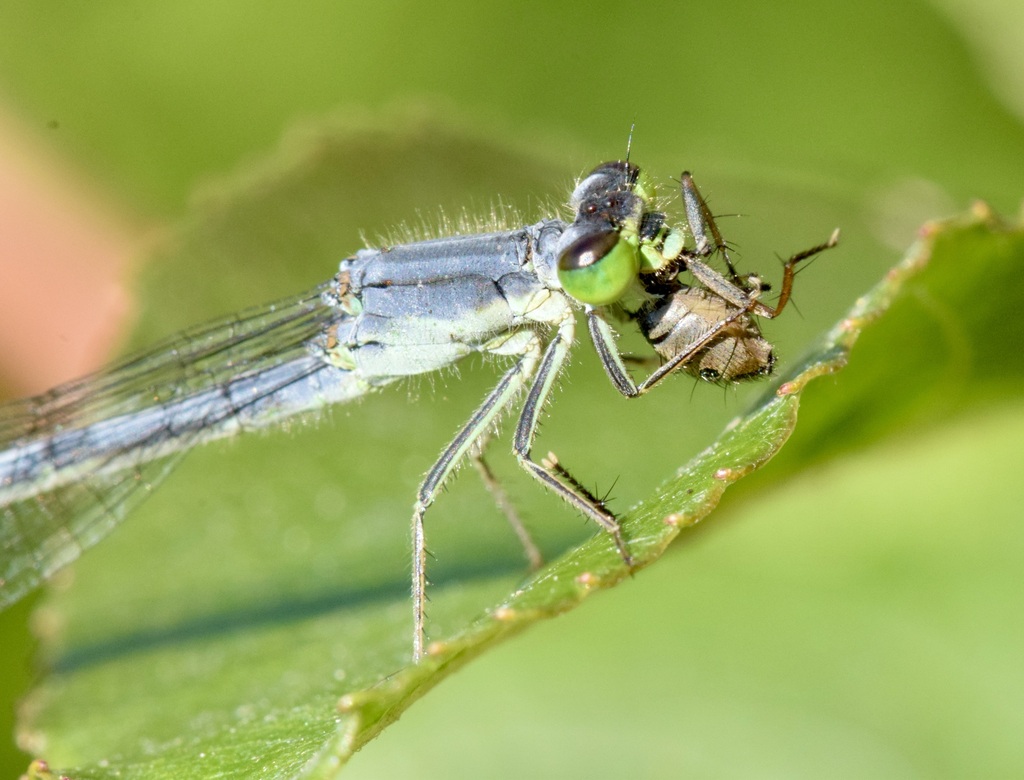
Eastern forktail
Ischnura verticalis
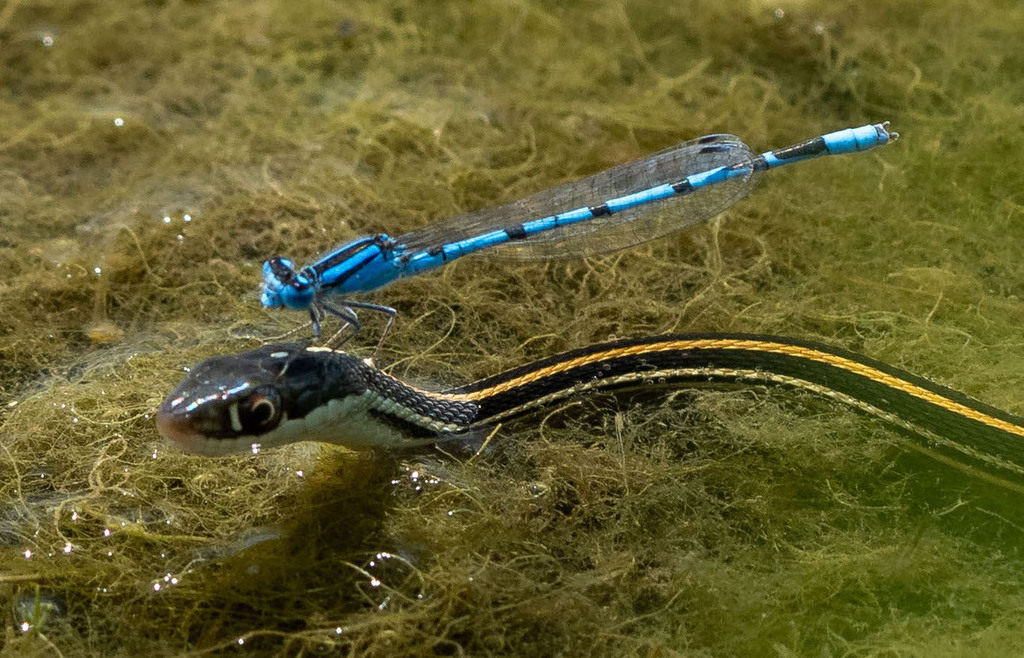
Familiar bluet
Enallagma civile
≠The key differences
Familiar bluet males have a blue thorax and a largely blue abdomen with black rings; eastern forktail males have a green thorax and a mostly black abdomen with only the tip blue.
⚖︎Side by side
| Eastern forktail | Familiar bluet | |
|---|---|---|
| To humans | Non-toxic | Non-toxic |
| Size | 21-33 mm body length | About 29-39 mm body length |
| Colours | Blue, Black, Green, Orange | Sky blue, Black, Tan, White (underside markings) |
| Family | Coenagrionidae | Coenagrionidae |
| Habitat | Ponds, marshes, slow streams and ditches with emergent and submerged vegetation | Ponds, lakes, marshes and slow-moving streams with standing vegetation and open sunny perches |
| Range | Eastern and central North America, widespread in suitable freshwater habitats | Widespread across much of North America, from southern Canada through the United States and Mexico into Central America and the Caribbean |
| Active | Spring through early autumn; most active in warm daylight hours | Spring through late summer (varies by latitude); most active in warm daylight hours |
| Pest? | No | No |
🔍How to spot an eastern forktail
- Small, slender damselfly with wings held together over the abdomen when at rest
- Males have a green-and-black striped thorax and a black abdomen with a bright blue tip
- Young females are bright orange and black; mature females become dusky blue-gray with a powdery coating
- Males have a small forked projection on top of the abdomen tip
🔍How to spot a familiar bluet
- Small damselfly with slim body and wings held together above the body when at rest
- Male: bright sky-blue with black stripes on the thorax, black markings on the middle abdominal segments and an almost all-blue abdomen tip
- Female: variable — blue form resembles males; common tan form is brownish with darker markings
- Found perched on emergent vegetation at ponds, lakes and slow streams; size about 29-39 mm
?Frequently asked questions
What is the difference between an eastern forktail and a familiar bluet?
Familiar bluet males have a blue thorax and a largely blue abdomen with black rings; eastern forktail males have a green thorax and a mostly black abdomen with only the tip blue.
Is an eastern forktail or a familiar bluet more dangerous?
Eastern forktail: Non-toxic. Familiar bluet: Non-toxic. Eastern forktail damselflies do not bite or sting people. Familiar bluets do not sting and are not poisonous.
Identification from photos is never certain: don't handle insects you can't identify, and get medical advice for bites, stings or allergic reactions.