
Four-spotted chaser vs Broad-bodied chaser
These two are easy to mix up. Here's how to tell a four-spotted chaser from a broad-bodied chaser, and whether either one bites or stings.
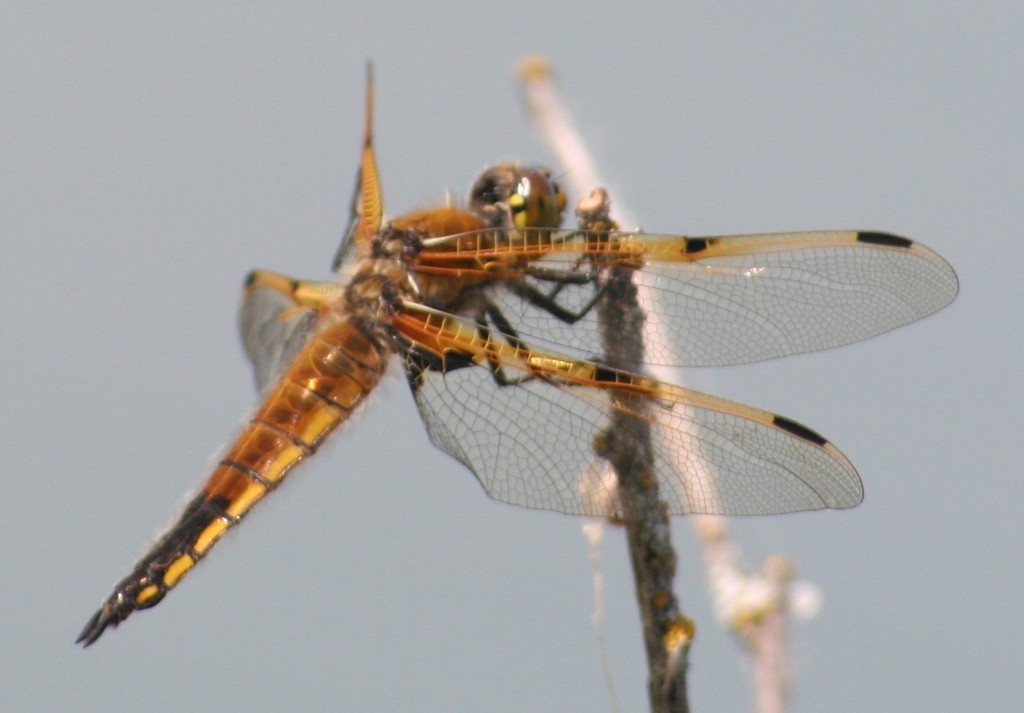
Four-spotted chaser
Libellula quadrimaculata
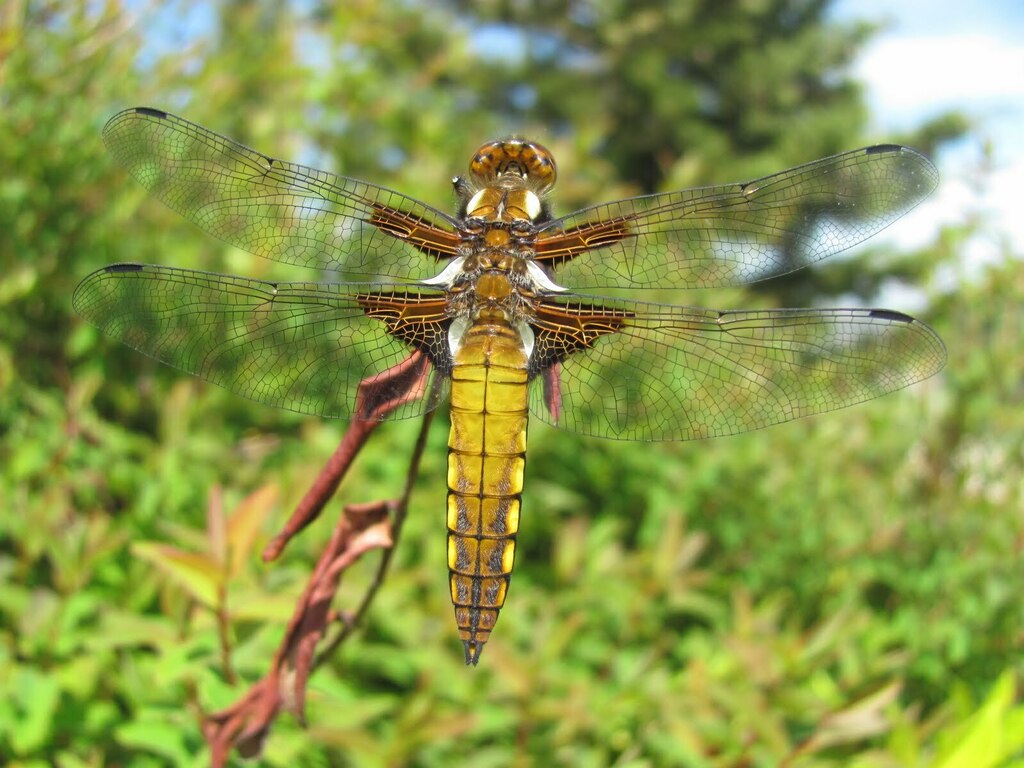
Broad-bodied chaser
Libellula depressa
≠The key differences
Broad-bodied chaser has a much broader, flattened abdomen (powder blue in males, yellow-brown in females), dark patches at the base of all four wings and no spots at the nodus.
Has four distinct dark spots at the wing nodes (one on each wing) and a narrower abdomen; lacks the male powder-blue broad abdomen of L. depressa.
⚖︎Side by side
| Four-spotted chaser | Broad-bodied chaser | |
|---|---|---|
| To humans | Non-toxic | Non-toxic |
| Size | About 39-48 mm body length; wingspan about 70-85 mm | Body length 39-48 mm, wingspan about 70-80 mm |
| Colours | Brown, Black, Pale yellow, Blue-grey (pruinescence) | Powder blue, Warm brown, Golden yellow, Black |
| Family | Libellulidae | Libellulidae |
| Habitat | Still or slow-flowing freshwater: ponds, marshes, fens, ditches and sheltered lake margins with emergent vegetation | Slow-flowing rivers, ponds, lakes, gravel pits and still-water margins with open sunny banks and sparse emergent vegetation |
| Range | Holarctic: widespread across Europe, temperate and boreal Asia, and northern North America (including much of Canada and northern United States) | Widespread across Europe into western Asia and parts of North Africa |
| Active | Spring to late summer; in cool regions often appears early in the season. Active by day, most active in warm, sunny conditions | Spring to late summer (often April to August in much of its range); diurnal (active in daylight, especially warm sunny days) |
| Pest? | No | No |
🔍How to spot a four-spotted chaser
- Look for a dark spot at the nodus (mid-point) of each wing — four spots total (one on each wing).
- Stocky dragonfly with a dark triangular patch at the base of each hindwing in addition to the nodal spots.
- Olive-brown body with yellow sides and a black-tipped abdomen; males and females look alike.
- Perches flat with wings outstretched on emergent vegetation or bare stems near still water.
🔍How to spot a broad-bodied chaser
- Male with broad, flattened powder-blue abdomen and yellow sides; females and immatures brown with yellow lateral patches
- Broad abdomen compared with similar-sized dragonflies
- Dark basal patches on the wings, especially hind wings, and a dark pterostigma
- Perches on bare ground or low vegetation near water; often seen resting with wings held flat
?Frequently asked questions
What is the difference between a four-spotted chaser and a broad-bodied chaser?
Broad-bodied chaser has a much broader, flattened abdomen (powder blue in males, yellow-brown in females), dark patches at the base of all four wings and no spots at the nodus. Has four distinct dark spots at the wing nodes (one on each wing) and a narrower abdomen; lacks the male powder-blue broad abdomen of L. depressa.
Is a four-spotted chaser or a broad-bodied chaser more dangerous?
Four-spotted chaser: Non-toxic. Broad-bodied chaser: Non-toxic. Four-spotted chasers are not dangerous to people. Not dangerous.
Identification from photos is never certain: don't handle insects you can't identify, and get medical advice for bites, stings or allergic reactions.