
Broad-bodied chaser
Libellula depressa · Skimmers and chasers
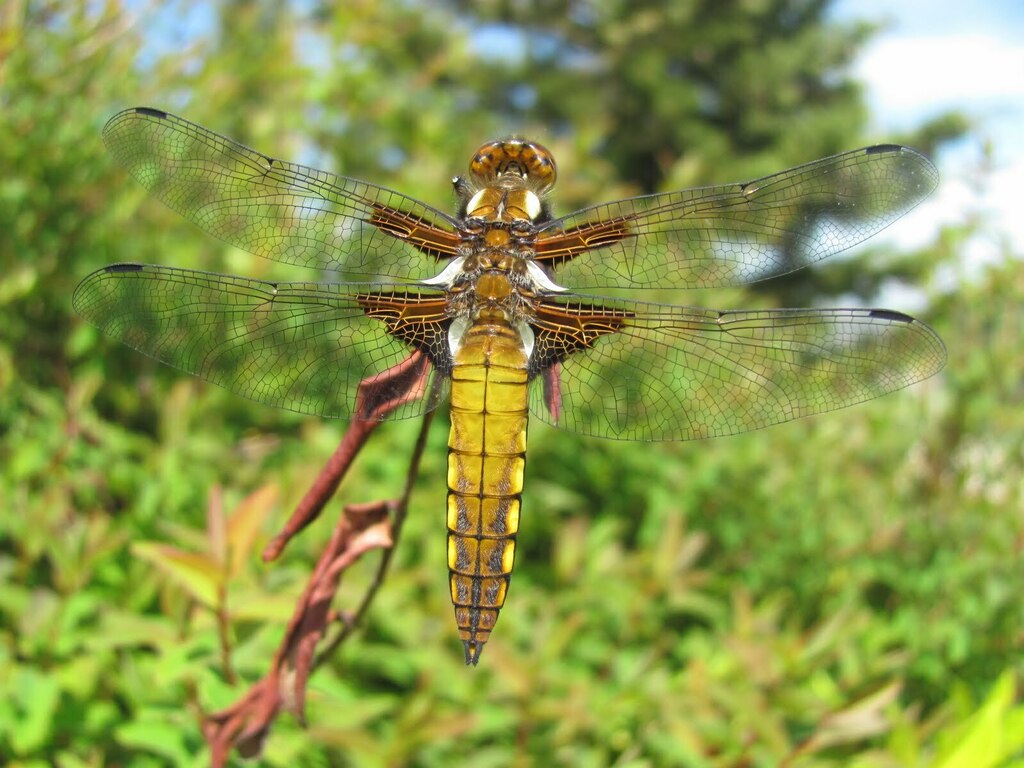
A common medium-sized European dragonfly; males have a broad, powder-blue abdomen and females are brown with yellow markings.
!Is the broad-bodied chaser dangerous?
No. Not dangerous. Adults can bite gently if handled, causing only minor pain or skin pinching; they are not venomous. Wash any minor wound and monitor for irritation or infection.
Pets
Harmless to pets. Cats or dogs may catch adults but the insects do not pose a toxin risk; avoid letting pets eat many insects to reduce gastrointestinal upset.
📖Overview
Libellula depressa is a widespread dragonfly across much of Europe and parts of western Asia and North Africa. It favours still or slow-flowing waters with open, sunny banks where adults patrol and perch. Males are territorial, often defending short perches near water; females are less conspicuous and spend more time ovipositing.
The species is a voracious aerial insect predator as an adult and its aquatic larvae (nymphs) hunt in vegetation and sediment. Larval development typically takes one to three years depending on temperature and food supply. Adults are common from spring into late summer and are among the first dragonflies to appear at small ponds in warmer regions.
🔍How to identify a broad-bodied chaser
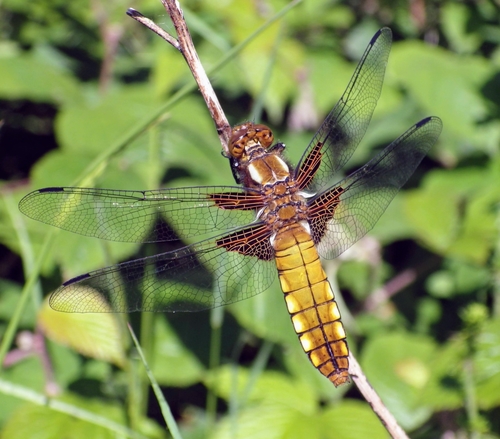
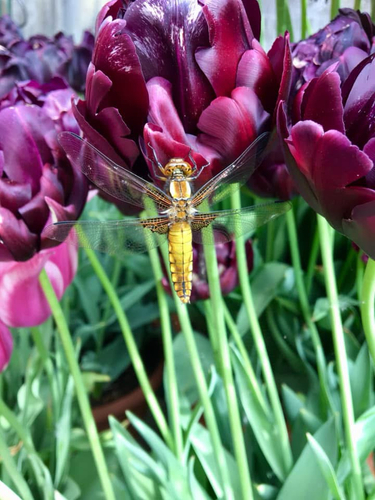
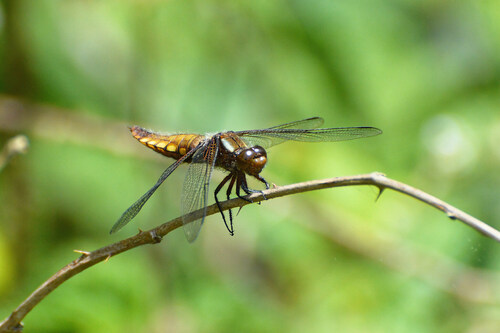
Adult males have a notably broad, flattened abdomen that becomes powder blue (pruinose) when mature, with the sides of the abdomen remaining yellow. Females and immature males are warm brown with bold yellow or orange lateral abdominal patches. Both sexes have broad wings with a dark patch at the base (particularly obvious on the hind wings) and a dark pterostigma. The abdomen is comparatively wide compared with many other dragonflies.
- Male with broad, flattened powder-blue abdomen and yellow sides; females and immatures brown with yellow lateral patches
- Broad abdomen compared with similar-sized dragonflies
- Dark basal patches on the wings, especially hind wings, and a dark pterostigma
- Perches on bare ground or low vegetation near water; often seen resting with wings held flat
Lookalikes
Four-spotted chaser Libellula quadrimaculata
Has four distinct dark spots at the wing nodes (one on each wing) and a narrower abdomen; lacks the male powder-blue broad abdomen of L. depressa.
Black-tailed skimmer Orthetrum cancellatum
Male has a more cylindrical abdomen that is uniformly blue with a darker tail segment; L. depressa has a broader, flattened abdomen with yellow sides and darker wing bases.
↻Life cycle
Egg
Laid by the female into or just above water on floating vegetation or directly into the water; eggs hatch into aquatic larvae.
Nymph (larva)
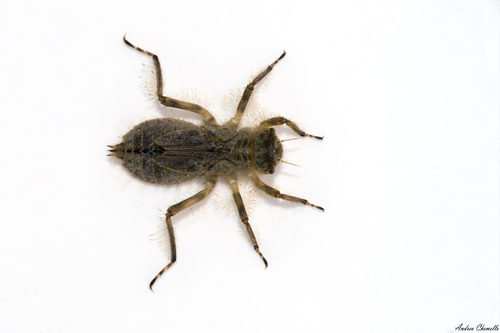
Aquatic, predatory nymphs live among vegetation or in shallow sediment and feed on invertebrates and small tadpoles or fish fry; they grow over one to three years through multiple molts.
Adult (imago)
Winged, aerial predator that emerges directly from the final aquatic nymph (there is no pupal stage); mates and females oviposit near or on water. Adults are typically present for several weeks to a few months.
🍃Diet and predators
Young eat
Aquatic invertebrates, small insect larvae, and occasionally small fish or tadpoles
Adults eat
Flying insects such as mosquitoes, midges, flies and small moths
Predators of the young
Fish, amphibians, larger aquatic invertebrates and water beetles
Predators of adults
Birds, larger dragonflies, frogs and spiders (catching resting individuals)
🌱Effect on plants and gardens
Does not feed on plants; adults are beneficial predators of pest insects such as mosquitoes and flies.
📍Where and when to find it
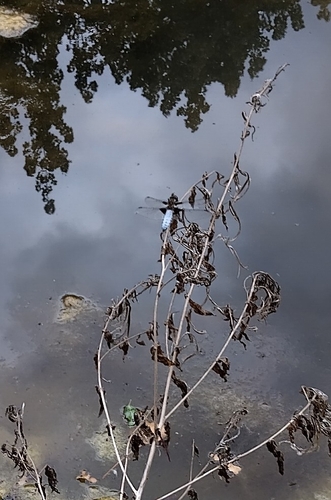
Adults: perch on bare ground, rocks or low vegetation near pond and lake margins. Larvae: in marginal vegetation and shallow sediment of ponds and slow waters.
Best time
April to August in much of Europe; best on warm, sunny days and in mid-morning to late afternoon.
Observation tips
Watch sunny banks and short perches near water; use a telephoto or zoom lens rather than approaching closely, and wait patiently as males return to the same perch.
✨Fun facts
- Males develop the powder-blue 'pruinescence' (a dusty-looking bloom) as they mature; it can rub off if the insect is handled.
- They are among the first dragonflies to appear in spring at ponds in warmer parts of their range.
- The broad, flattened abdomen is a distinctive shape that inspired the common name.
?Frequently asked questions
Do broad-bodied chasers bite?
They can nip if handled, but bites are rare and not venomous; any pinch is minor and not medically significant.
Are broad-bodied chasers harmful to humans or pets?
No. They do not carry disease or venom. They are beneficial predators that help reduce nuisance insects.
Why is a dragonfly in my house?
Adults may accidentally fly indoors when chasing prey or attracted to light; they prefer being near water and will usually find a way back outside if given an opening.
How do I get rid of dragonflies at my pond?
They are beneficial, so control is not recommended. To reduce numbers naturally, avoid excessive shallow warm edges and manage fish populations (fish eat larvae). Physical removal is impractical and unnecessary.
Where do broad-bodied chasers live?
They favour sunny, still or slow-flowing waters such as ponds, lakes, marshes and slow rivers with open banks and sparse vegetation across Europe, parts of western Asia and North Africa.
📷Photos of the broad-bodied chaser
More dragonflies & damselflies
This guide was written with AI assistance and fact-checked, last updated 2026-10-10. Identification from photos is never certain: don't handle insects you can't identify, and get medical advice for bites, stings or allergic reactions. More about the broad-bodied chaser: iNaturalist, Wikipedia.