
Common green darner
Anax junius · Darners
A large, fast-flying dragonfly of ponds, marshes and fields, often migratory and easily recognized by a green thorax and long slender abdomen.
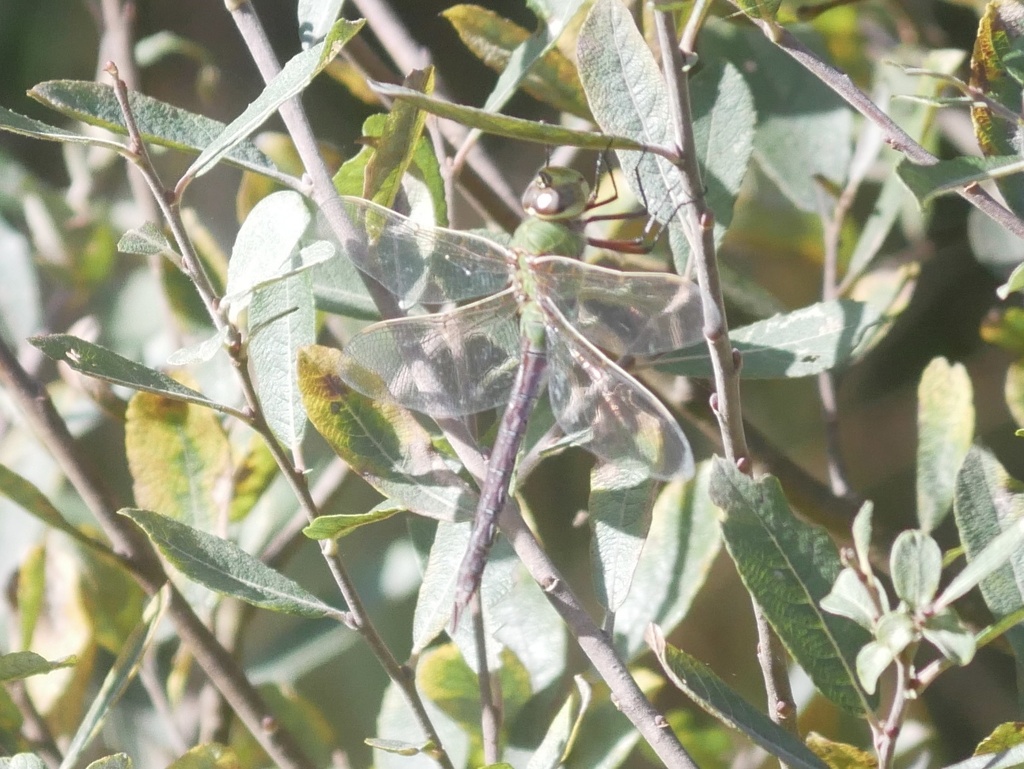
!Is the common green darner dangerous?
No. Not dangerous. They do not have venom. A dragonfly may nip if handled roughly but bites are rare and only cause minor, short-lived pain at most. If bitten, clean the site with soap and water and apply first-aid as for a minor scrape.
Pets
Not poisonous to pets. Unlikely to be targeted by or harmful to dogs or cats; pets may catch and eat dragonflies but that poses minimal risk beyond minor digestive upset in some cases.
📖Overview
Anax junius is one of North America's most widespread and familiar dragonflies. Adults are large, powerful fliers that patrol ponds, lakes and wetland edges feeding on flying insects. Many populations undertake seasonal north-south movements (migrations) in spring and autumn. Larvae (nymphs) live in freshwater and are active aquatic predators before emerging as adults.
This species is commonly seen near still or slow-moving water but also forages well away from water across fields and roads. They are not aggressive to people and play a useful role controlling pest insects such as mosquitoes and flies.
🔍How to identify a common green darner
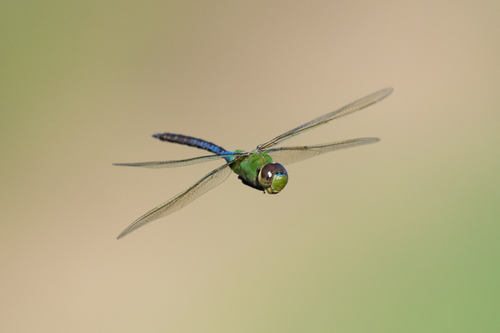
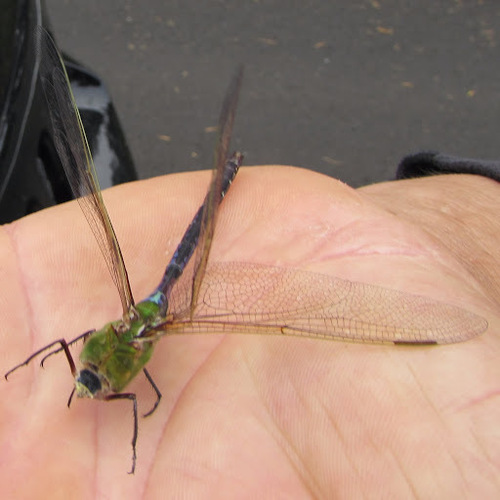
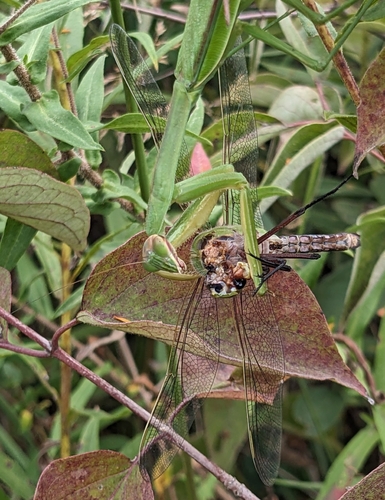
Adults have a bright green thorax and a long abdomen; in mature males the abdomen is largely bright blue with a darker dorsal stripe, while females usually have a reddish-brown to purplish or greenish abdomen. A distinctive 'bullseye' mark (a dark spot ringed with blue or yellow) sits on top of the face. Eyes are large and meet on top of the head; wings are clear, often with an amber tint, and a narrow tan pterostigma near each tip. Immature males resemble females and lack the bright blue abdomen.
- Large size and long slender abdomen relative to many other dragonflies
- Bright green thorax and a 'bullseye' mark on the face; mature males have a mostly blue abdomen
- Clear wings with a narrow tan pterostigma near the tips and eyes that meet on top of the head
- Habit of patrolling over water and open fields with strong, direct flight
Lookalikes
Comet darner Anax longipes
Also has a green thorax, but mature males have a bright red abdomen and the species has longer legs; less widespread, mainly in the eastern and southeastern United States.
Shadow darner Aeshna umbrosa
Generally darker overall with different thoracic striping and less bright green thorax; markings on the abdomen differ in pattern.
Canada darner Aeshna canadensis
Similar size but with a different pattern of thoracic and abdominal markings and without the characteristic green thorax and blue abdominal tip combination of A. junius.
↻Life cycle
Egg
Female lays eggs in or near water, often on submerged vegetation or floating debris. Eggs hatch in days to weeks depending on temperature.
Nymph (aquatic)
Aquatic nymphs are predatory, living in ponds and marshes for several months to a couple of years depending on local conditions, molting multiple times as they grow.
Adult (dragonfly)
After the final molt, adults emerge and fly. Adults feed on flying insects, mate, and females lay eggs to start the next generation; adults may migrate seasonally.
🍃Diet and predators
Young eat
Aquatic invertebrates, small tadpoles and even small fish when large nymphs
Adults eat
Flying insects such as mosquitoes, flies, moths, bees and other small aerial insects
Predators of the young
Fish, aquatic insects (large beetles), amphibians and birds
Predators of adults
Birds, larger dragonflies, spiders (that catch them), and bats
🌱Effect on plants and gardens
Does not feed on plants; adults reduce populations of flying insects (including pests) and nymphs eat aquatic invertebrates.
📍Where and when to find it
Adults: flying over ponds, lakes, marsh edges, fields and roads. Nymphs: in submerged vegetation, muddy or sandy bottoms of still or slow water.
Best time
Warm months (spring through autumn); daytime, especially late morning to afternoon on sunny days.
Observation tips
Watch open water margins and flying 'patrol' routes; use a zoom lens or binoculars to observe without disturbing. Early morning exuviae (shed skins) on emergent plants indicate recent emergences.
✨Fun facts
- Common green darners are one of the most frequently observed migratory dragonflies in North America; individuals can travel many kilometers.
- They are powerful fliers and can be seen hunting well away from water, even over roads and fields.
- Nymphs are voracious aquatic predators that sit and ambush prey using a mask-like lower jaw that shoots forward to capture it.
?Frequently asked questions
Do common green darners bite people?
They rarely bite; an adult may nip if handled but bites are uncommon and not medically significant.
Are common green darners poisonous or dangerous?
No. They are not venomous and pose no real danger to people or pets.
Why is a green darner in my yard away from water?
Adults often hunt for flying insects far from water and may rest on vegetation in fields, gardens or even buildings while foraging or migrating.
How can I attract green darners to my garden?
Provide or protect a pond or other still water with aquatic vegetation for breeding, and avoid broad-spectrum insecticides so their insect prey remain available.
How do I get rid of dragonflies if I don't want them?
They are beneficial predators; the humane option is exclusion and habitat change (remove standing water) but removing dragonflies is generally unnecessary and not recommended.
Where do common green darners migrate?
Many move seasonally between northern breeding areas and southern overwintering regions in the United States and Mexico; migration routes vary and can be multi-generational.
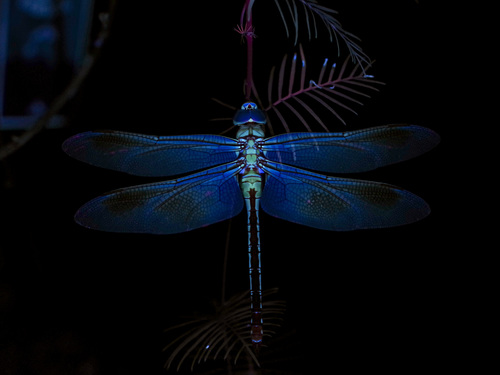
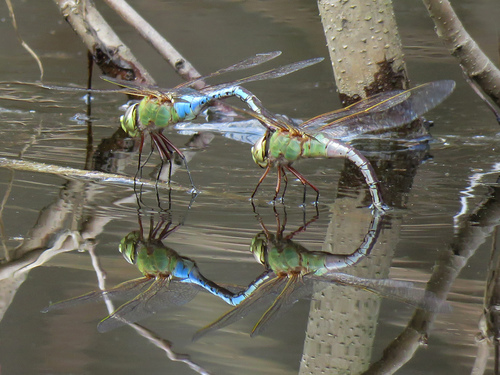
📷Photos of the common green darner
This guide was written with AI assistance and fact-checked, last updated 2026-10-09. Identification from photos is never certain: don't handle insects you can't identify, and get medical advice for bites, stings or allergic reactions.