
Blue dasher
Pachydiplax longipennis · Skimmers
A common North American pond-dwelling dragonfly: males are powdery blue, bold fliers and excellent mosquito predators near still water.
!Is the blue dasher dangerous?
No. Blue dashers do not bite people except in extreme, rare handling situations; any bite would be a mild pinch only. They are not venomous and pose no disease risk. No special first aid is normally required; wash area with soap and water if skin is broken.
Pets
Not harmful to pets. Small pets could theoretically catch and eat adults but dragonflies are not toxic.
📖Overview
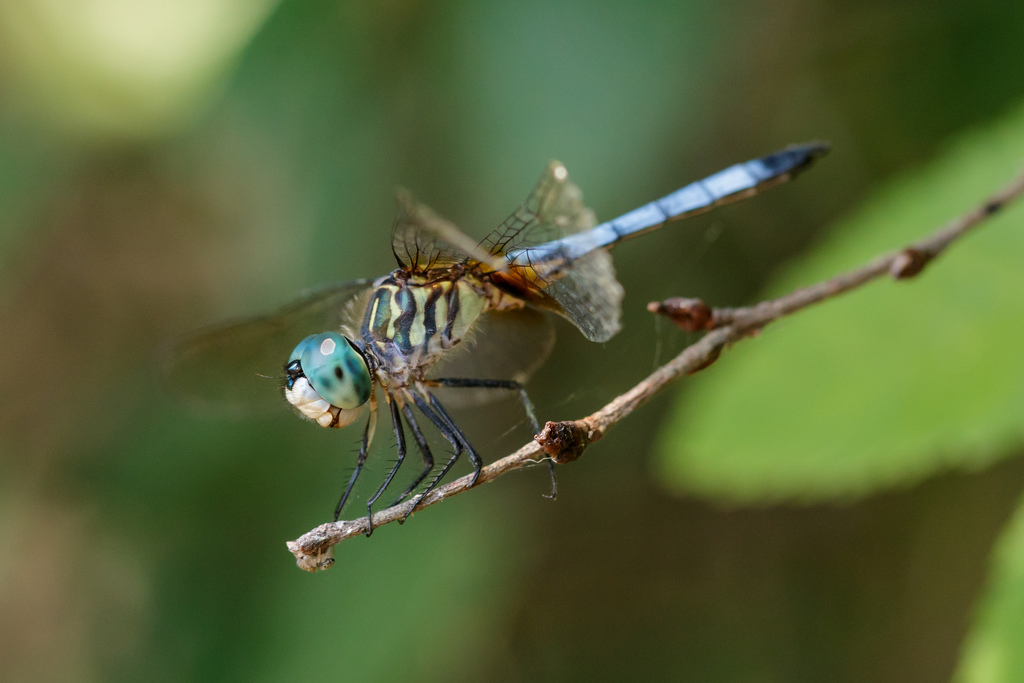
Pachydiplax longipennis, the blue dasher, is a widespread skimmer dragonfly found at ponds, marshes and slow streams across much of North America. Males have a conspicuous powder-blue abdomen with a black tip; females and young males have brown-and-yellow striped bodies. They perch openly on emergent vegetation or mud and aggressively chase small flying insects; larvae (naiads) are aquatic predators.
🔍How to identify a blue dasher
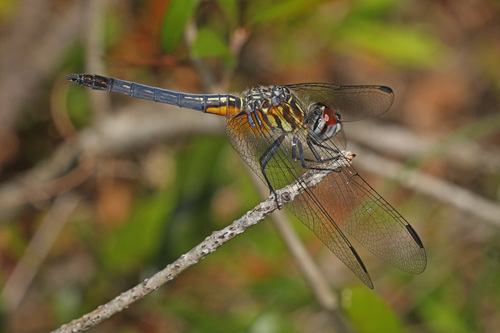
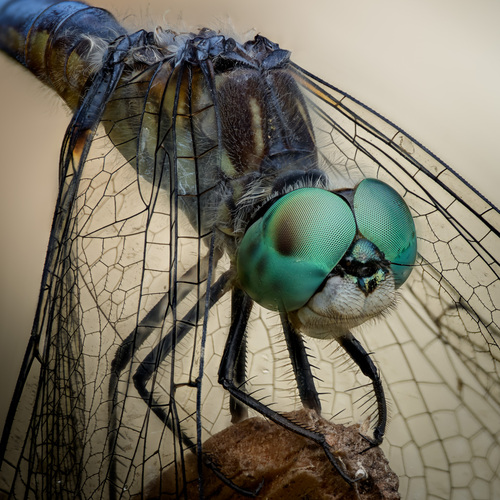
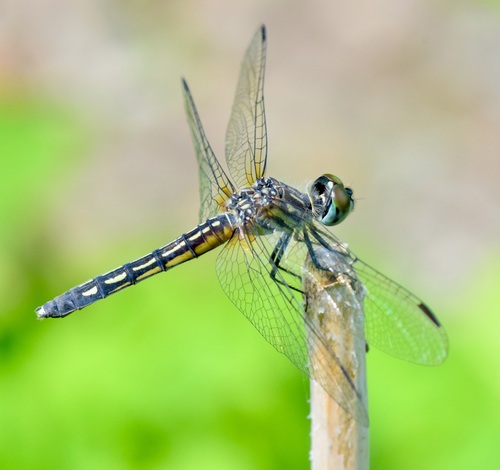
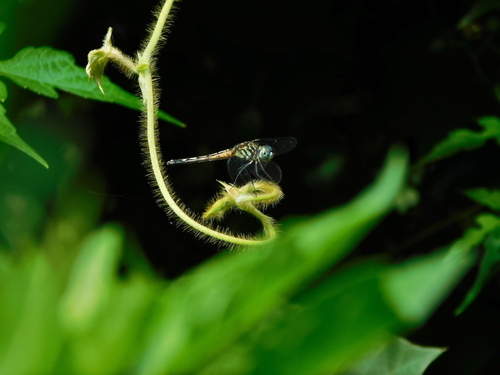
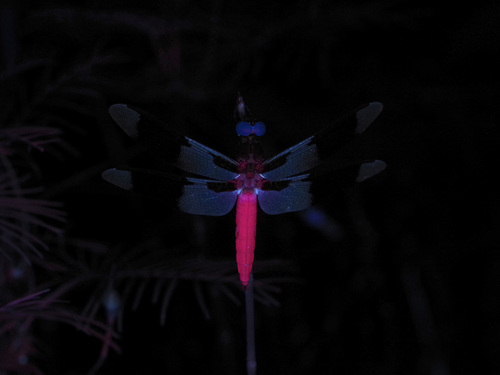
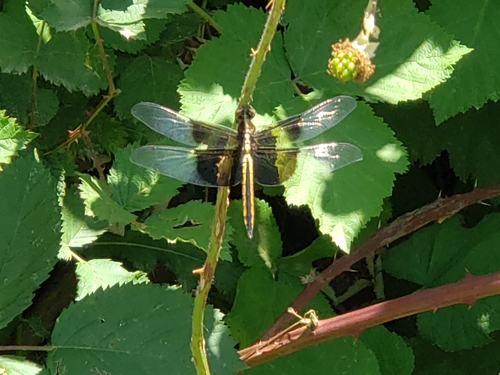
Adult males have a powder-blue abdomen with a black tip, a dark brown thorax with yellowish stripes, a white face and metallic blue-green eyes. Wings are clear, often with a faint amber wash, and have dark pterostigmas near the tips. Females and young males have a brown thorax with yellow stripes, a dark abdomen with yellow dashes along the sides, and reddish-brown eyes; older females may become partly pruinose (bluish-gray).
- Males: powder-blue abdomen with a black tip, striped dark thorax, white face and metallic green eyes
- Females and young males: brown-and-yellow striped thorax and dark abdomen with yellow dashes
- Perches on plant stems or bare ground with abdomen slightly raised; wings clear with small dark pterostigma
Lookalikes
Eastern pondhawk Erythemis simplicicollis
Male eastern pondhawks are powder-blue on the thorax as well as the abdomen, have a green face and white appendages, and lack the black abdomen tip; female pondhawks are bright green with black bands on the abdomen.
Common whitetail Plathemis lydia
Male whitetails have a broad, chalky-white abdomen and a wide black band across the middle of each wing; blue dashers have a slimmer blue abdomen and clear wings.
↻Life cycle
Eggs
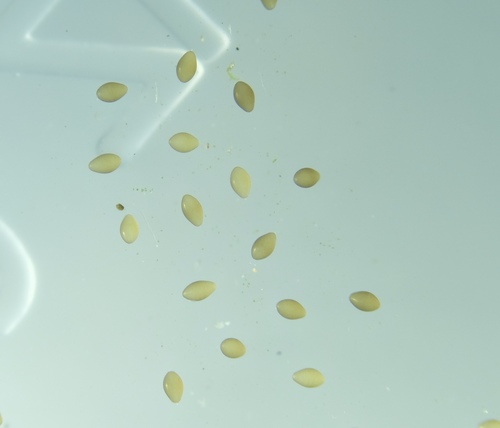
Laid by the female on or just below the water surface, often as she flies and dips her abdomen; eggs hatch after days to weeks depending on temperature.
Nymph (naiad)
Aquatic, sit-and-wait predators that live among submerged vegetation or mud; feed on aquatic invertebrates, tadpoles and small fish. Naiads grow through multiple instars and may overwinter in colder regions.
Adult
Terrestrial, aerial predators that mate and lay eggs near water; adults patrol territories and live for weeks to months.
🍃Diet and predators
Young eat
Aquatic invertebrates, small tadpoles and fish fry
Adults eat
Flying insects such as mosquitoes, midges, small flies and other small arthropods
Predators of the young
Fish, larger aquatic insects, amphibians and aquatic spiders
Predators of adults
Birds (swallows, kingbirds), frogs, spiders and larger dragonflies
🌱Effect on plants and gardens
Blue dashers do not feed on plants; adults eat flying insects (including mosquitoes and midges) and larvae eat aquatic invertebrates and small tadpoles or fish fry. They are useful biological control agents for nuisance insects.
📍Where and when to find it
Adults perch on emergent stems, rocks or bare ground near ponds, marsh edges and slow streams; larvae are found among submerged vegetation and mud.
Best time
Late spring through early autumn, mid-morning to late afternoon on warm sunny days.
Observation tips
Look for bold, perched males near the water surface; use a telephoto or macro lens from a short distance and approach slowly—they are tolerant but will dart away if disturbed.
✨Fun facts
- On hot days blue dashers point their abdomen straight up toward the sun (the 'obelisk' posture), which reduces the body area heated by sunlight.
- Females usually lay eggs alone, tapping the water surface with the abdomen, while the male often hovers nearby to guard her from rivals.
- Blue dashers are among the earliest and most common dragonflies at small, disturbed ponds and roadside ditches.
?Frequently asked questions
Are blue dashers dangerous to people?
No. They do not have venom and will not intentionally harm people. They may only pinch if handled roughly.
Do blue dashers bite?
Bites are exceedingly rare and would be a mild, mechanical pinch. They are not venomous.
Why is a blue dasher in my yard or house?
They are attracted to still water and gardens with ponds or water features where they hunt insects. They sometimes fly into houses through open doors or windows but do not live indoors.
How can I get rid of blue dashers?
They are beneficial predators—avoid killing them. To keep them out of the house, close windows or use screens. If inside, gently guide them outdoors with a cup and paper or open a window and allow them to leave.
Where do blue dashers breed?
At ponds, marshes, roadside ditches and slow-moving water with emergent vegetation. Females oviposit by dipping the abdomen into the water.
📷Photos of the blue dasher
More dragonflies & damselflies
This guide was written with AI assistance and fact-checked, last updated 2026-10-10. Identification from photos is never certain: don't handle insects you can't identify, and get medical advice for bites, stings or allergic reactions. More about the blue dasher: iNaturalist, Wikipedia.