
Eastern pondhawk
Erythemis simplicicollis · Dragonflies
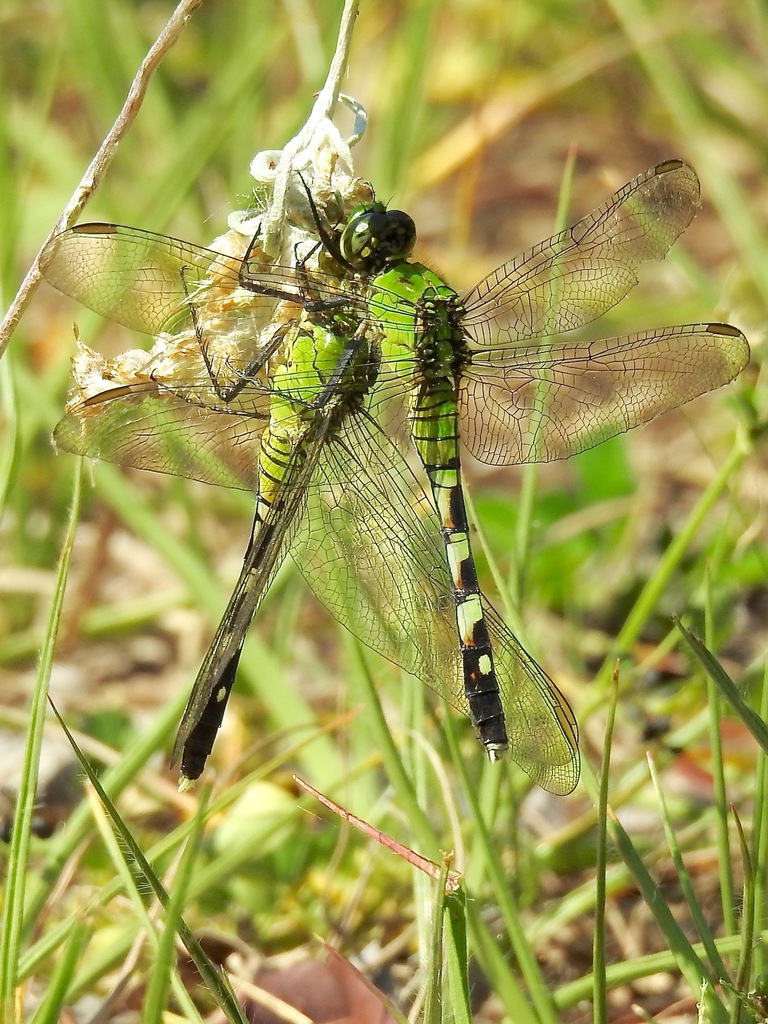
A widespread green and blue dragonfly of ponds and marshes; males turn powdery blue while females and juveniles are bright green.
!Is the eastern pondhawk dangerous?
No. Not dangerous to people. They do not sting; they may bite if handled roughly but any bite is minor and non-venomous. Wash the area if skin is broken and seek medical care only if there is an unusual reaction.
Pets
Not a threat to pets. Pets might catch and eat adults, which is harmless but could upset a small pet's stomach; nymphs are aquatic and not normally encountered by pets.
📖Overview
The Eastern pondhawk is a small to medium-sized dragonfly common across eastern North America. It hunts flying insects around still or slow water and perches low on vegetation. Males develop an overall powdery blue pruinescence while keeping a green face, while females and immature males remain bright green with dark markings. They are agile fliers frequently seen patrolling pond edges, ditches, and marshes.
This species is adaptable to human-modified habitats and often colonizes small garden ponds and stormwater retention ponds. Life cycle stages include aquatic nymphs that live in vegetation or sediment and voraciously feed on other aquatic invertebrates and even small tadpoles or fish fry. Adults are effective aerial predators of mosquitoes, midges, and flies.
🔍How to identify an eastern pondhawk
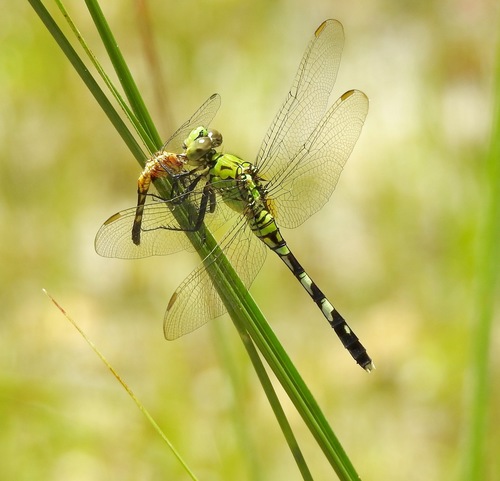
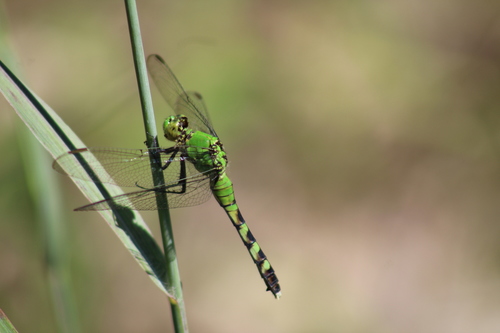
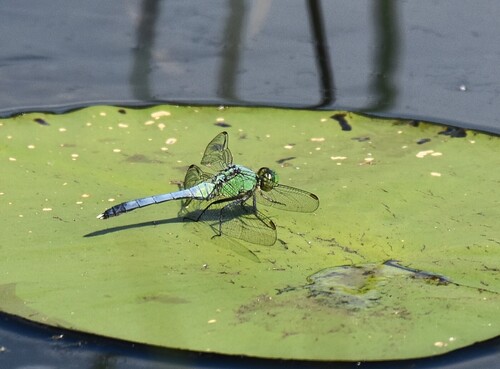
Adult males are powdery to sky blue over the thorax and abdomen with a green face, white appendages at the abdomen tip and clear wings; the pruinescence covers the earlier green coloring. Females and immature males are vivid leaf-green with black bands on the rear half of the abdomen; wings are clear with slight amber at the base in some individuals. They are medium-sized, compact skimmers with broad hindwings.
- Male adults: powder-blue body (pruinose), including the thorax, with a green face and clear wings.
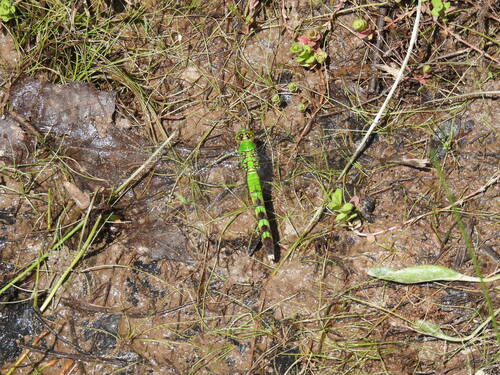
- Females and immature males: bright leaf-green body with black bands on the abdomen.
- Perches low near the water on emergent vegetation and makes short, agile flights while hunting.
Lookalikes
Blue dasher Pachydiplax longipennis
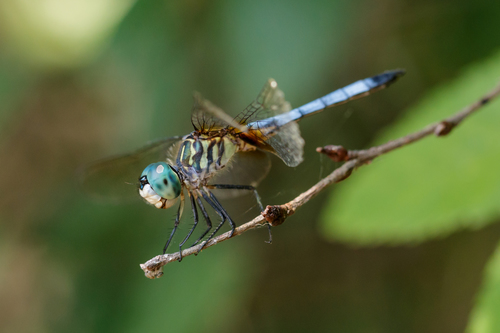
Male blue dashers have a brown-and-yellow striped thorax, a white face, metallic green eyes and a black-tipped abdomen; male pondhawks are blue on the thorax too and have a green face.
Widow skimmer Libellula luctuosa
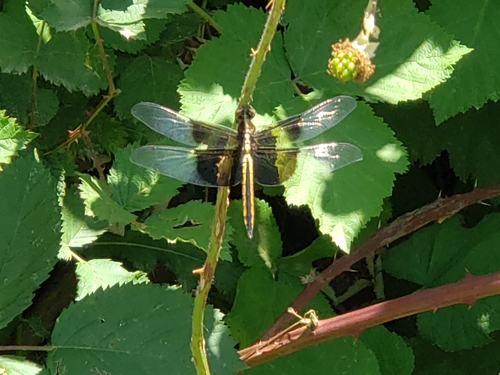
Widow skimmers are larger and males have broad dark wing bands; females are more patterned and overall bulkier than Eastern pondhawks.
↻Life cycle
Egg
Females lay eggs alone by tapping the water surface, often among floating vegetation, while the male guards from nearby.
Nymph (aquatic)
Aquatic predatory nymphs live among vegetation or sediment, molt multiple times while feeding on aquatic insects, small crustaceans, tadpoles or fish fry.
Adult (dragonfly)
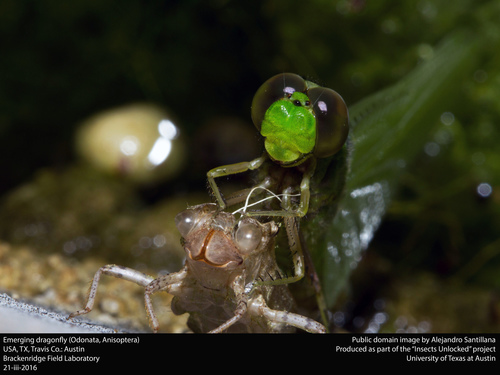
Adults emerge from the final nymphal molt, harden wings and body, then hunt flying insects; adults mate and females return to water to lay eggs.
🍃Diet and predators
Young eat
Aquatic invertebrates, small crustaceans, tadpoles and very small fish
Adults eat
Flying insects such as mosquitoes, midges, flies and small bees
Predators of the young
Fish, larger aquatic invertebrates (predatory insects), amphibians and waterbirds
Predators of adults
Birds, larger dragonflies, spiders and bats
🌱Effect on plants and gardens
Do not damage plants; adults use vegetation for perching and females lay eggs by dipping into water near vegetation.
📍Where and when to find it
Adults: perched low on emergent stems and shrubs near ponds and marsh edges. Nymphs: in submerged vegetation and shallow margins of ponds.
Best time
Warm months (late spring through early autumn); daytime, especially mid-morning to late afternoon on sunny days.
Observation tips
Walk slowly along pond edges and scan low vegetation. Use a telephoto or macro lens to avoid disturbing perched individuals; photograph males to show pruinescence and females for contrast.
✨Fun facts
- Eastern pondhawks are fierce predators that regularly catch other dragonflies and damselflies, sometimes prey nearly as large as themselves.
- They are among the most commonly seen dragonflies around backyard ponds and are effective daytime mosquito predators.
- Males change from green to blue as they mature because of a powdery coating called pruinescence.
?Frequently asked questions
Are Eastern pondhawks dangerous?
No. They are not venomous or dangerous to people. They do not sting and rarely bite; any bite is minor.
Do Eastern pondhawks bite?
Only if handled roughly; bites are uncommon and not medically significant.
Why are Eastern pondhawks around my house?
They are attracted to standing water such as garden ponds, bird baths, ditches or stormwater basins where they hunt and lay eggs.
How can I get rid of them?
They are beneficial predators of nuisance insects. If you must discourage them, reduce standing water and dense emergent vegetation, but consider installing refuges for other wildlife instead.
Where do Eastern pondhawks live?
They live around ponds, marshes, slow streams and other still waters across eastern and central North America; adaptable to small artificial ponds.
📷Photos of the eastern pondhawk
More dragonflies & damselflies
This guide was written with AI assistance and fact-checked, last updated 2026-10-10. Identification from photos is never certain: don't handle insects you can't identify, and get medical advice for bites, stings or allergic reactions. More about the eastern pondhawk: iNaturalist, Wikipedia.