
Azure damselfly
Coenagrion puella · Narrow-winged damselflies
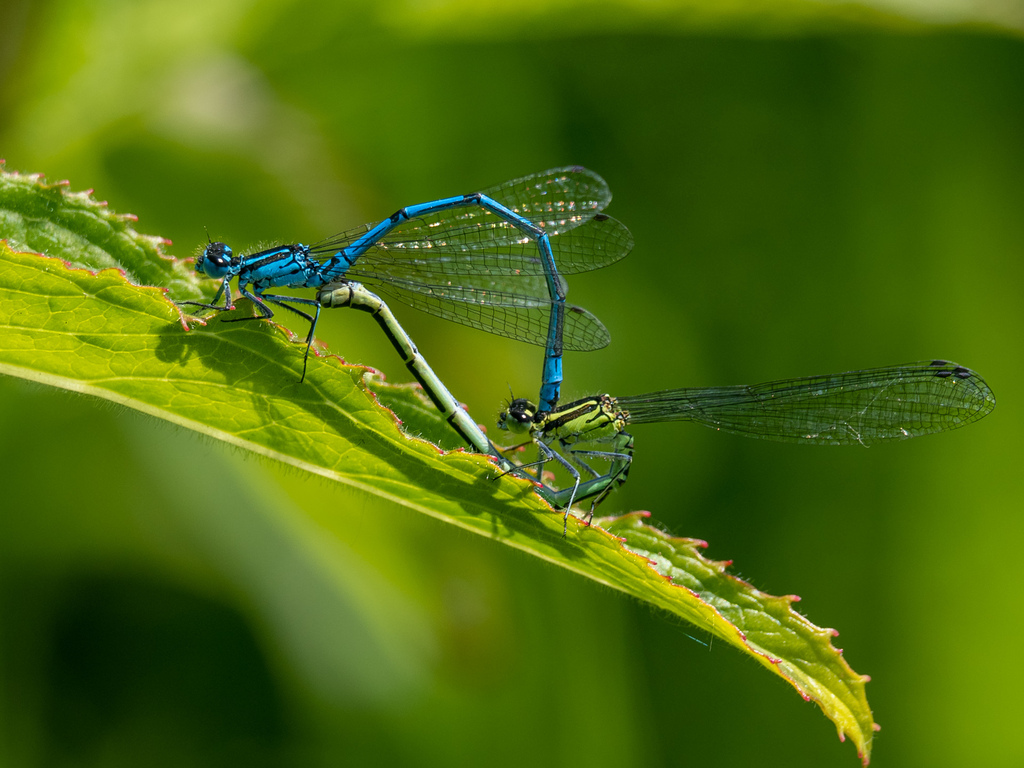
A common small blue damselfly of still and slow waters in Europe, males blue and black, females variable in colour.
!Is the azure damselfly dangerous?
No. Azure damselflies do not have venom harmful to people. They can only deliver tiny, harmless pinprick bites if handled roughly; avoid grabbing them. No diseases are transmitted to humans.
Pets
Harmless to pets. Pets may eat adults if they catch them, but damselflies are not toxic.
📖Overview
Coenagrion puella is a widespread, medium-sized damselfly found across much of Europe in ponds, lakes, ditches and slow-moving rivers with plenty of emergent vegetation. Males are a vivid sky-blue with bold black dorsal markings; females occur in several colour forms ranging from green or brown to male-like blue. Adults hunt small flying insects; larvae are aquatic predators that develop among submerged plants. They are harmless to people and beneficial as insect predators.
🔍How to identify an azure damselfly
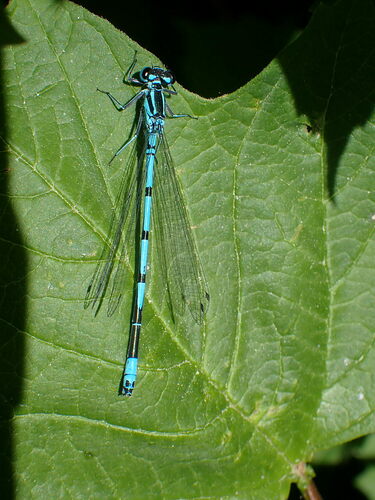
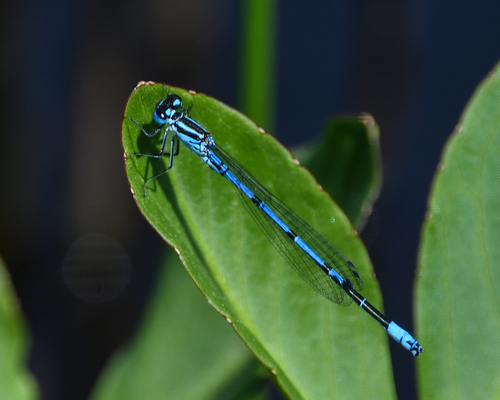
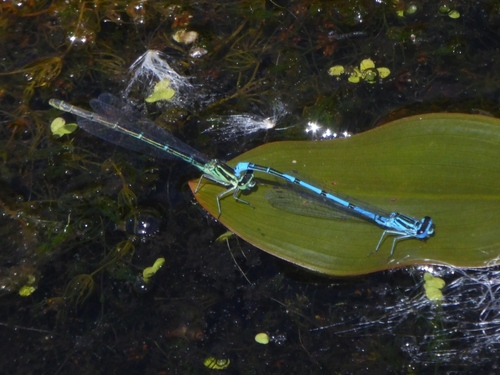
Adult males are bright blue with black dorsal patterns along the abdomen and a distinctive black 'U' or anchor-shaped marking on the second abdominal segment. The thorax has paired black stripes on a blue background. Females show colour polymorphism: common forms are green/olive with brown markings or brownish; some females (androchrome) resemble males. Wings are clear, narrow, and held together above the body when perched.
- Male: bright sky-blue body with bold black dorsal markings and a distinctive black mark on abdominal segment 2.
- Female: variable—look for the thoracic stripe pattern and shape of abdominal markings rather than colour alone.
- Size and habit: small, narrow damselfly often perched with wings together above the body over aquatic vegetation.
- Compare the pattern on segment 2 and the thorax stripes to separate from similar blue damselflies.
Lookalikes
Variable damselfly Coenagrion pulchellum
Very similar; male C. pulchellum has more black on the abdomen, a goblet- or Y-shaped mark on segment 2 and broken or very thin pale stripes on the top of the thorax, whereas C. puella has a U-shaped mark and complete blue thoracic stripes.
Blue-tailed damselfly Ischnura elegans
Smaller and has a distinctive blue spot at the tail tip (segment 8 or 9) in males; females often show distinctly different colour forms.
Common blue damselfly Enallagma cyathigerum
Similar blue-and-black look; male E. cyathigerum has a club- or mushroom-shaped spot on segment 2 rather than a U, and only one black stripe on the side of the thorax.
↻Life cycle
Egg
Females insert eggs into submerged plant stems or other aquatic vegetation; eggs hatch into aquatic larvae.
Nymph (larva)
Aquatic nymphs are predatory, living among submerged plants for several months and usually overwintering before emerging the following year.
Adult (imago)
Adults emerge from the water, mate, and the female lays eggs; adults are aerial predators and are commonly seen perched on vegetation.
🍃Diet and predators
Young eat
Aquatic invertebrates: insect larvae, small crustaceans and other tiny aquatic animals.
Adults eat
Small flying insects such as mosquitoes, midges and other small Diptera and aerial invertebrates.
Predators of the young
Fish, aquatic insects (e.g. larger dragonfly larvae), amphibians.
Predators of adults
Birds, spiders, larger dragonflies and predatory insects.
🌱Effect on plants and gardens
Larvae live among submerged vegetation but do not damage plants; adults hunt insects and do not feed on plants.
📍Where and when to find it
Adults: perched on emergent vegetation at pond and lake margins, ditches and slow rivers. Larvae: among submerged plants and sediment in the same waters.
Best time
May to September, during warm daylight hours (late morning to afternoon) on calm, sunny days.
Observation tips
Approach slowly and photograph from a low angle; a telephoto or 200 mm equivalent lens helps. Look for perched individuals on reeds and water-side vegetation rather than chasing in flight.
✨Fun facts
- Female azure damselflies come in several colour forms, including green or brown and sometimes male-like blue (androchrome).
- Damselflies are among the most ancient groups of flying insects; their relatives date back hundreds of millions of years.
- Azure damselflies often perch in large numbers on marginal vegetation when weather is warm and calm.
?Frequently asked questions
Are azure damselflies dangerous?
No. They are harmless to people and pets; they do not have venom and cause no significant injuries.
Do azure damselflies bite?
They can nip if roughly handled but bites are tiny and not medically significant. Avoid grabbing them.
Why is this damselfly near my pond?
They breed in still or slow water with vegetation; adults hunt small flying insects above and around ponds and lay eggs in submerged plants.
How can I encourage azure damselflies in my garden?
Provide a small pond or raft of aquatic plants, keep some marginal vegetation and avoid using pesticides; calm water and native plants attract them.
How do I tell an azure from similar blue damselflies?
Check the black pattern on abdominal segment 2 (azure has an anchor or 'U' shaped mark) and the thoracic stripe pattern rather than colour alone.
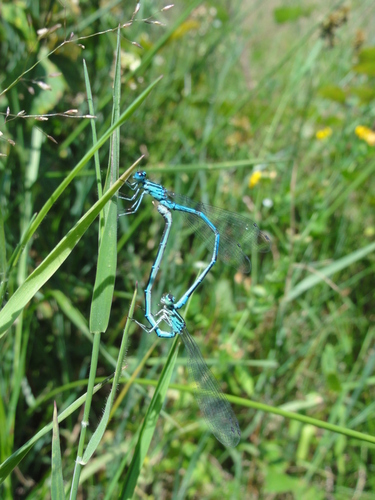
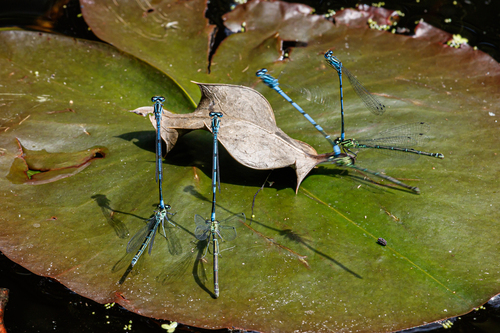
📷Photos of the azure damselfly
More dragonflies & damselflies
This guide was written with AI assistance and fact-checked, last updated 2026-10-10. Identification from photos is never certain: don't handle insects you can't identify, and get medical advice for bites, stings or allergic reactions. More about the azure damselfly: iNaturalist, Wikipedia.