
Common whitetail
Plathemis lydia · Skimmers
A widespread North American dragonfly: males have a distinctive powdery white abdomen, females are brown-striped; common at ponds and marshes.
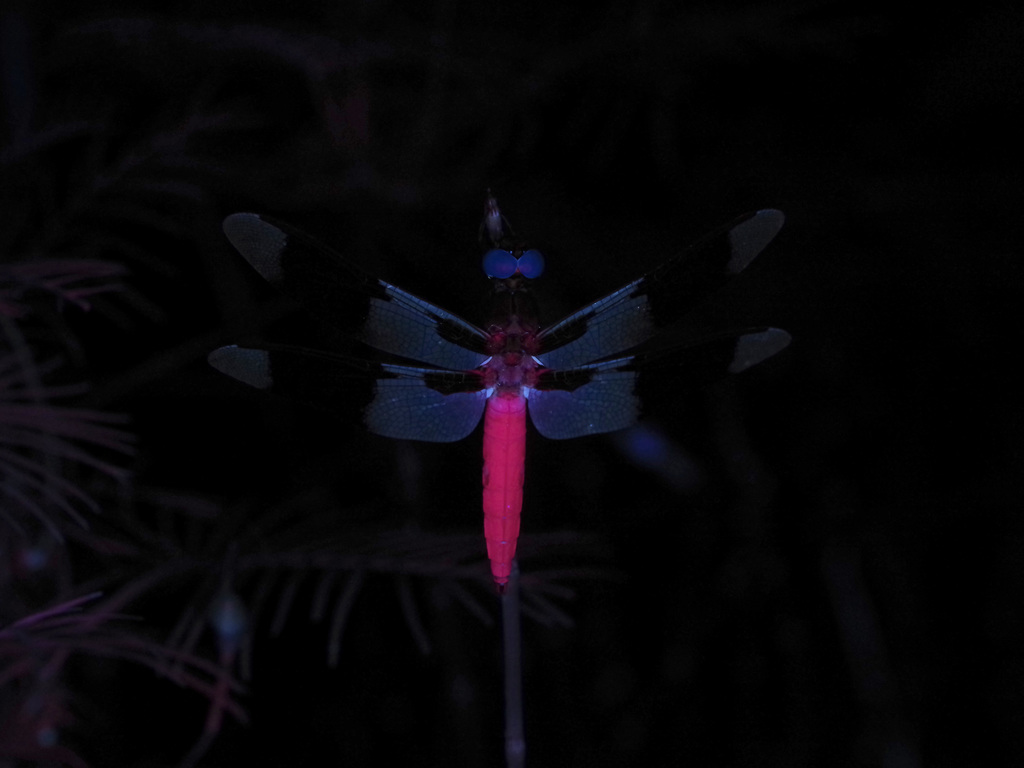
!Is the common whitetail dangerous?
No. Common whitetails are not venomous and pose no medical threat. They may nip if handled roughly, but bites are rare and only cause a minor pinch at most. No special first aid is usually required beyond cleaning the area if the skin is broken.
Pets
Harmless to pets; pets may catch them while playing but the dragonfly is not poisonous. Superficial mouth contact is unlikely to cause harm.
📖Overview
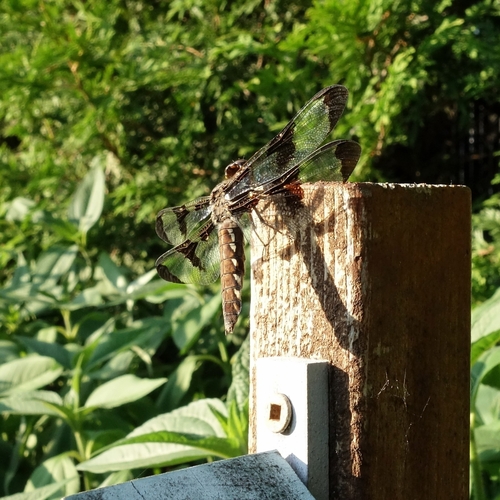
Plathemis lydia is a medium-sized dragonfly in the skimmer family commonly seen around still or slow water across much of North America. Males are very distinctive in mature plumage, with a broad, powdery white abdomen used in territorial displays. Females and immature males have a brown abdomen with pale side spots and three dark spots on each wing. Adults hunt flying insects and are often seen perched on vegetation near water.
These dragonflies are territorial and often perch with their wings held flat. Females lay eggs alone by tapping the water surface, usually while the male guards them from nearby. Larvae are aquatic predators that live in vegetation or sediment for several months to years before emerging as adults.
🔍How to identify a common whitetail
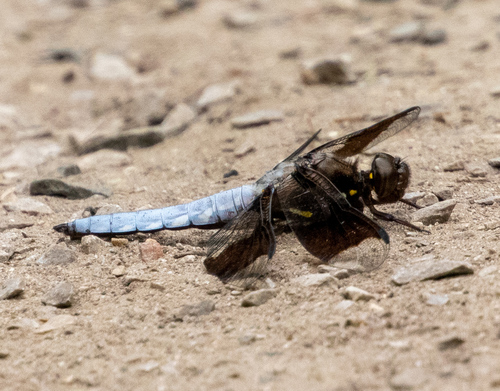
Adult males: broad, chalky white (pruinose) abdomen; each wing has a wide black band across the middle and a dark patch at the base, with clear areas between. Adult females and immature males: brown abdomen with a row of pale yellowish-white dashes along each side; each wing has three dark spots (at the base, middle and tip). Body and wings give a stocky, broad-winged look compared with some other dragonflies.
- Mature males have a strongly pruinose (powdery) white abdomen contrasted with a darker thorax.
- Females and immature males have a brown abdomen with pale side dashes and three dark spots on each wing.
- Males have a wide black band across the middle of each wing plus a dark base; overall stocky skimmer build.
- Perches on emergent vegetation or flat surfaces near still water; males often hold territory.
Lookalikes
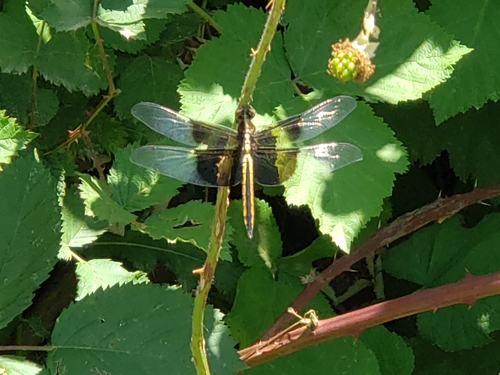
Widow skimmer Libellula luctuosa
Widow skimmer males have dark color covering the whole inner third of each wing (not a separate mid-wing band) followed by a white band, and a slimmer, bluish-gray abdomen.
Twelve-spotted skimmer Libellula pulchella
Twelve-spotted skimmer is larger; mature males have three dark spots on each wing separated by white spots and lack the chalky white abdomen. Females resemble female whitetails but have a continuous pale stripe along each side of the abdomen rather than a row of separate dashes.
↻Life cycle
Egg
Females lay eggs by tapping the water surface, usually while the male guards from nearby; eggs hatch into aquatic nymphs.
Nymph (naiad)
Nymphs are aquatic predators that live in vegetation or sediment for months to a year or more, feeding on insect larvae, small crustaceans and sometimes tadpoles.
Adult (dragonfly)
Adults emerge from the water, dry their wings and become aerial predators; they mate and females lay the eggs of the next generation.
🍃Diet and predators
Young eat
Aquatic invertebrates, insect larvae, small crustaceans, occasionally tadpoles
Adults eat
Small flying insects such as mosquitoes, flies, midges and other small dipterans
Predators of the young
Fish, larger aquatic insects, amphibians and aquatic predators
Predators of adults
Birds, spiders, frogs and larger dragonflies
🌱Effect on plants and gardens
Does not damage plants; adults help control flying insect populations and larvae feed on aquatic invertebrates that can include mosquito larvae.
📍Where and when to find it
Adults: perched on vegetation or flying over ponds, marshes, ditches and slow streams. Larvae: in pond vegetation, leaf litter or soft sediments underwater.
Best time
Late spring through early fall; warm sunny days and midday to afternoon are peak activity times.
Observation tips
Approach slowly, use a telephoto or long lens for photos, and look for males perched flat on low vegetation near water. Early morning after emergence, adults rest on nearby stems and are easier to photograph.
✨Fun facts
- Male common whitetails turn white as they mature, as a waxy, powdery coating called pruinescence builds up on the abdomen.
- Males defend territories over water by chasing rivals and raising their bright white abdomens as a threat signal.
- After mating, the male usually hovers nearby and chases off other males while the female lays her eggs.
?Frequently asked questions
Do common whitetail dragonflies bite?
They are not aggressive toward people. Handling may result in a rare, harmless nip but they do not bite to feed on humans.
Are common whitetails poisonous or dangerous?
No. They are non-venomous and pose no health risk to people or pets.
Why is a dragonfly in my house?
They sometimes fly indoors chasing prey or seeking shelter, especially if windows are open. Gently guiding them outside is the best option.
How can I attract common whitetails to my pond?
Provide sunny open water with emergent vegetation and perches, avoid heavy fish stocking and reduce pesticide use to support aquatic larvae and prey insects.
How long do they live?
Larvae usually spend 1-2 years in the water; adults live for several weeks to a few months during the flight season.
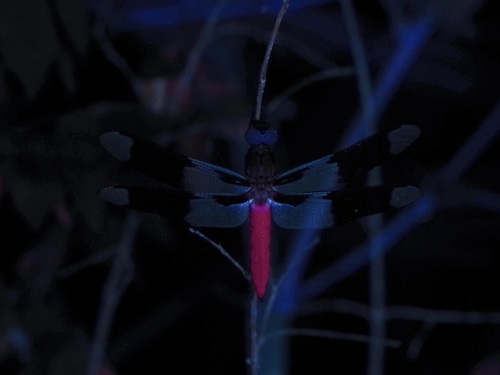
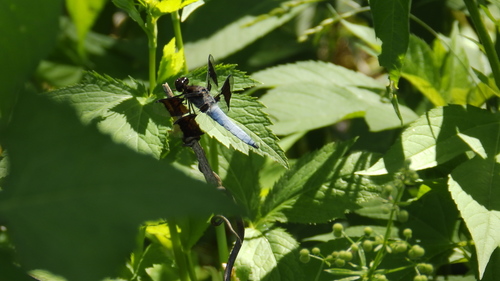
📷Photos of the common whitetail

More dragonflies & damselflies
This guide was written with AI assistance and fact-checked, last updated 2026-10-10. Identification from photos is never certain: don't handle insects you can't identify, and get medical advice for bites, stings or allergic reactions. More about the common whitetail: iNaturalist, Wikipedia.