
Twelve-spotted skimmer
Libellula pulchella · Skimmers
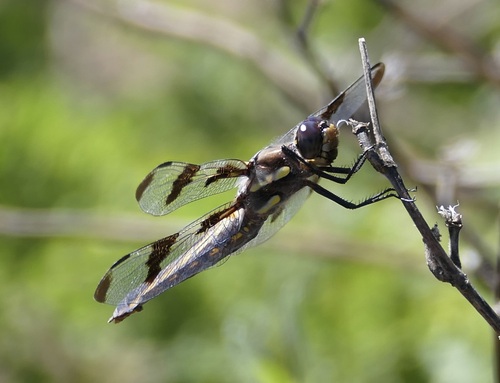
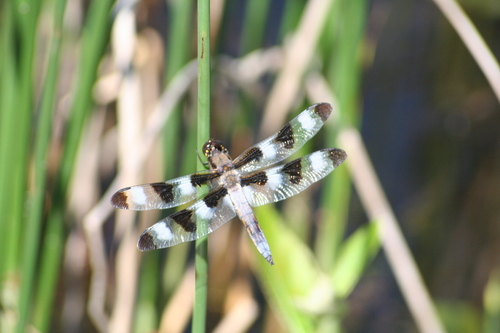
A medium-sized North American dragonfly whose wings show a distinctive pattern of black spots (twelve total); males add white patches between the spots.
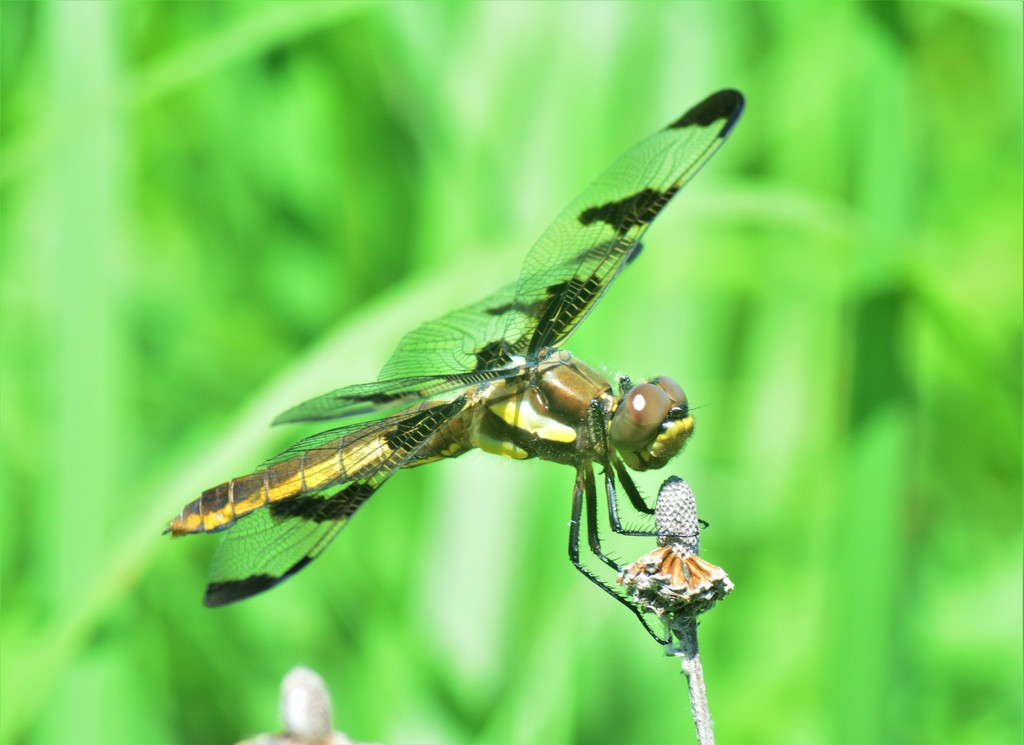
!Is the twelve-spotted skimmer dangerous?
No. Twelve-spotted skimmers are not harmful to people. They do not sting; they can nip with their mandibles if handled roughly, which may pinch but is not venomous. No special first aid is required beyond cleaning any minor bite wound.
Pets
Harmless to pets. They are too small to cause injury; if a pet eats one it is not toxic, though it may cause mild stomach upset in some animals.
📖Overview
Libellula pulchella is a common skimmer dragonfly across much of North America, often seen patrolling sunny ponds, lakes and slow streams. Males are conspicuous in summer because of a striking wing pattern: a series of black spots on each wing that total twelve, with pale (white) areas between them that give a checkered look. Females and immature males are browner and less contrasting. Both sexes are agile aerial predators, feeding on flies, mosquitoes and other small flying insects.
This species prefers open, still or slow-moving waters with emergent vegetation where males perch and defend territories. Nymphs (aquatic larvae) live in the water for several months to a few years depending on location and temperature, then emerge as adults in warm months.
🔍How to identify a twelve-spotted skimmer
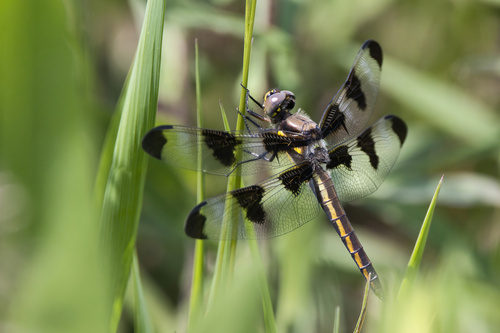
Adults are medium-sized dragonflies with broad, rounded hindwings typical of Libellula skimmers. Each of the four wings bears three dark spots (at the base, the middle and the tip), adding up to twelve prominent dark marks in total. Mature males also show chalky white patches between some of the dark spots, producing a black-and-white contrasted wing pattern. The abdomen of mature males is brown, becoming dusted with pale grey-white pruinosity with age; females and immature males have brown or golden abdomens with yellowish lateral markings. Eyes meet broadly at the top of the head as in many libellulid dragonflies.
- Count the dark blotches: three on each wing (base, middle and tip), twelve in total across the four wings.
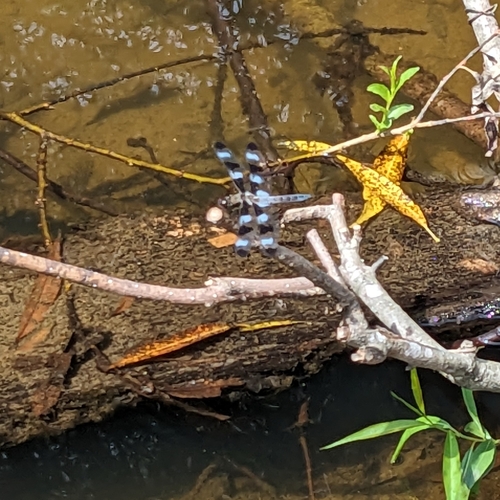
- Males show pale white patches between some black spots, giving a checkered black-and-white wing pattern.
- Body size medium-large (about 50-57 mm); females and immature males are browner with yellowish markings rather than the contrasty black and white of mature males.
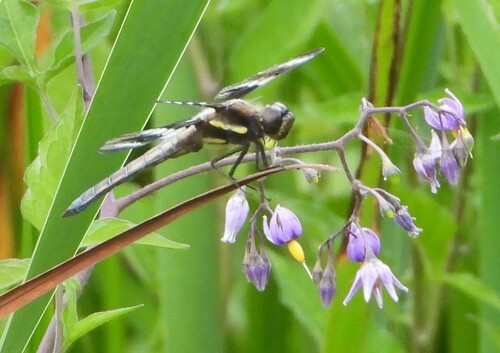
- Habitat: look over sunny, open ponds, lakes and marsh edges where males perch on emergent vegetation or bare twigs.
Lookalikes
Widow skimmer Libellula luctuosa
Widow skimmers have a broad dark band covering the inner half of each wing (with a white band beyond it in males) and clear wing tips, whereas twelve-spotted skimmers have three separate dark spots on each wing, including a dark tip.
Four-spotted skimmer Libellula quadrimaculata
Four-spotted skimmer has only four dark spots (one near the nodus on each wing) and lacks the additional spots and white checkered pattern of the twelve-spotted skimmer.
↻Life cycle
Egg
Laid by females on or just below the water surface in vegetation or debris. Eggs hatch to aquatic nymphs.
Nymph (aquatic)
Predatory aquatic stage that lives among submerged vegetation and mud; feeds on aquatic invertebrates and small tadpoles or fish fry. This stage lasts months to over a year depending on climate.
Adult
Terrestrial, winged stage. Adults emerge from the final nymphal skin at water margins, then fly, feed, mate and lay eggs over several weeks to months.
🍃Diet and predators
Young eat
Aquatic invertebrates, small crustaceans, insect larvae, occasionally tiny fish or tadpoles
Adults eat
Flying insects such as mosquitoes, flies, midges, small moths and other small aerial prey
Predators of the young
Fish, larger aquatic invertebrates, aquatic beetles, and predatory amphibians
Predators of adults
Birds, spiders (catching them at rest), larger dragonflies, and some bats
🌱Effect on plants and gardens
Does not damage plants; adults hunt over vegetation and nymphs live among aquatic plants but do not eat them.
📍Where and when to find it
Adults: perched on emergent vegetation, bare twigs or rocks over ponds, lakes and marsh edges. Nymphs: among submerged plants, detritus and mud in the same waters.
Best time
Late spring through summer into early autumn; best observed on warm, sunny days and during midday when they are most active.
Observation tips
Use a telephoto or zoom lens from a short distance to avoid disturbing territorial males; look for perches near open water and watch for short hunting flights.
✨Fun facts
- The name "twelve-spotted" comes from the twelve prominent dark wing spots visible on adults.
- Males often perch in the same sunny territories and will chase away intruders, making them easy to observe.
- Dragonflies like Libellula pulchella are excellent natural mosquito predators and can eat dozens of small insects per day.
?Frequently asked questions
Are twelve-spotted skimmers dangerous?
No. They are harmless to people and pets; they do not sting and only bite defensively if handled, which is not venomous.
Do twelve-spotted skimmers bite?
They can give a minor pinch with their jaws if grabbed, but they do not have venom and bites are rare and not medically significant.
Why is this dragonfly around my pond?
They hunt flying insects over open water and use emergent plants for perching, mating and egg-laying, so ponds and lakes are ideal habitat.
How can I attract twelve-spotted skimmers to my yard?
Provide a small pond or water feature with open sunny areas, native aquatic plants and shallow edges; avoid heavy use of pesticides so their insect prey is available.
How do I get rid of them if I don't want them?
They are beneficial predators and normally not a nuisance. If removal is desired, avoid harming them: reduce standing water and insect prey to make the area less attractive, but consider that they help control mosquitoes.
📷Photos of the twelve-spotted skimmer
More dragonflies & damselflies
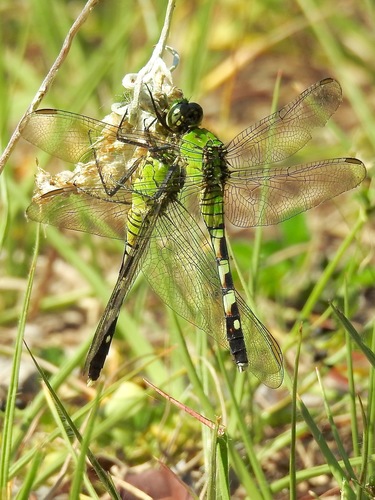
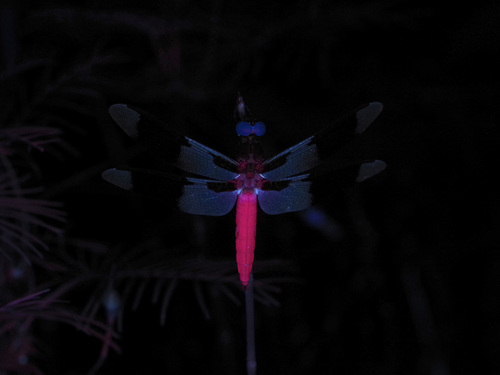
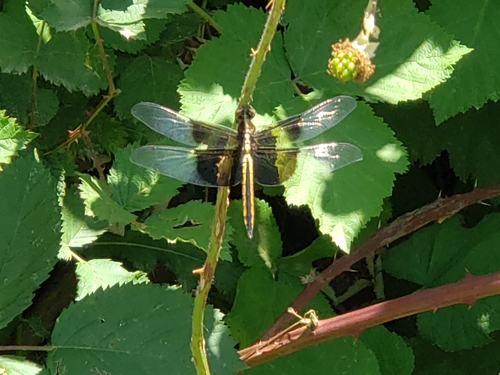
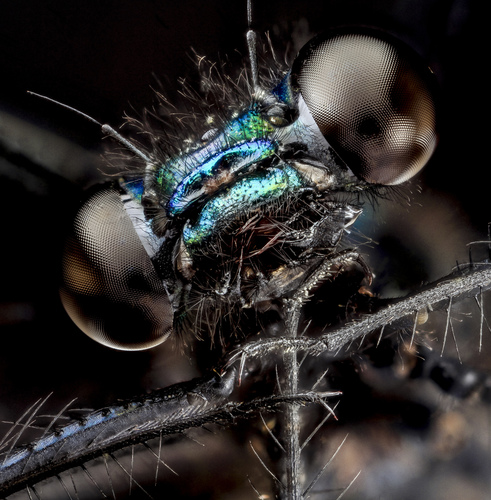
This guide was written with AI assistance and fact-checked, last updated 2026-10-10. Identification from photos is never certain: don't handle insects you can't identify, and get medical advice for bites, stings or allergic reactions. More about the twelve-spotted skimmer: iNaturalist, Wikipedia.