
Emperor dragonfly
Anax imperator · Darner dragonflies
A large, fast-flying dragonfly common at ponds and lakes across Europe, Africa and parts of western Asia, known for the male's bright blue abdomen and territorial patrolling.
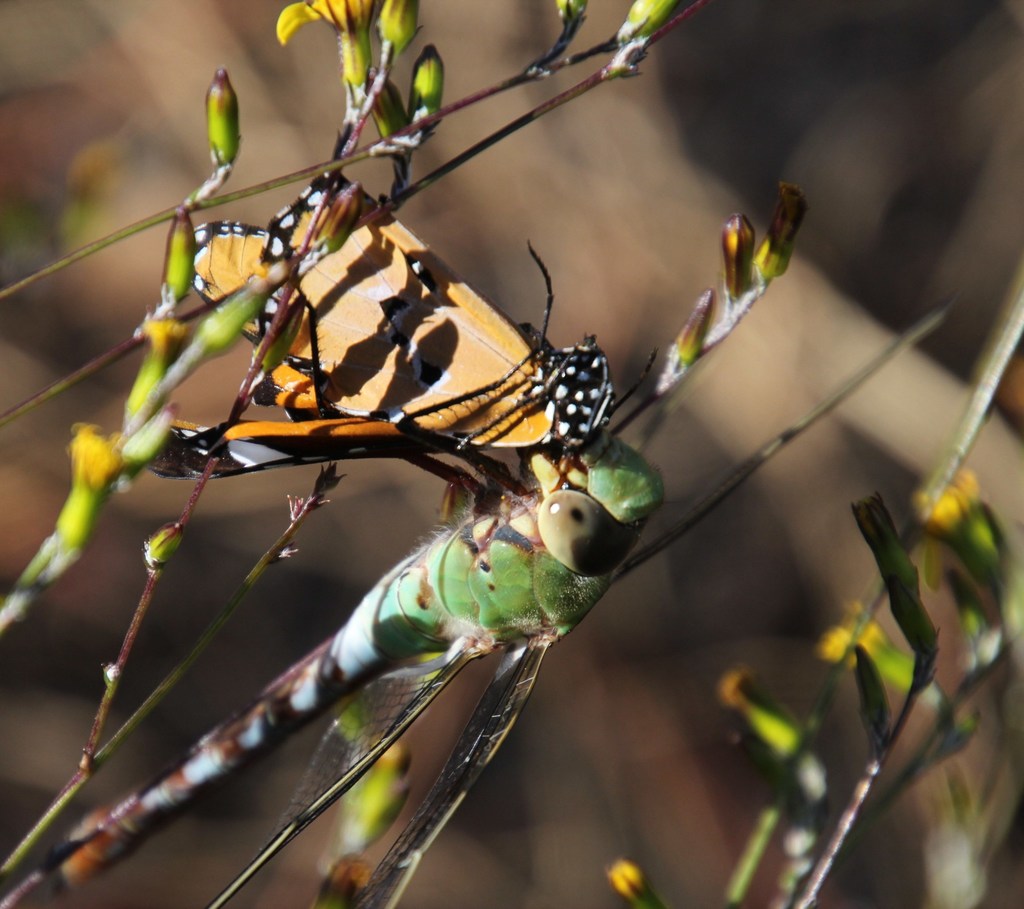
!Is the emperor dragonfly dangerous?
No. Not dangerous or venomous. Adults do not sting. They can give a mild bite if handled roughly, but bites are rare and cause only minor, short-lived discomfort. No special first aid is usually needed beyond cleaning the area if the skin is broken.
Pets
Generally harmless to pets. Small pets or poultry might catch and eat a dragonfly if given the opportunity, but dragonflies are not toxic and do not pose a health risk to pets.
📖Overview
Anax imperator is a large and conspicuous dragonfly frequently seen patrolling the margins of still or slow-moving freshwater. Males are territorial, often guarding stretches of water and chasing intruders; females visit for egg-laying. Larvae are aquatic predators that live in vegetation or sediment for one or two years before emerging as adults. It is widespread and common across much of Europe, Africa and parts of western and central Asia.
🔍How to identify an emperor dragonfly
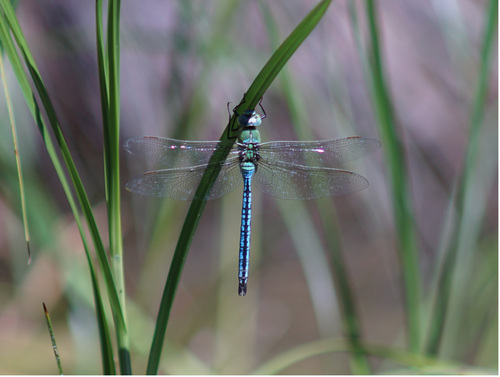
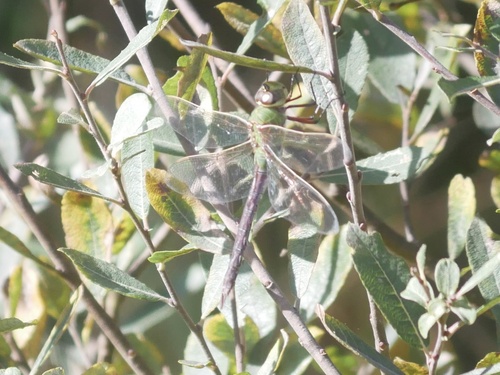
Adults are large (much bigger than most common pond dragonflies). Males have a sky-blue abdomen with a black line along the top and an apple-green thorax; females usually have a green abdomen (sometimes blue) with similar patterning. Both sexes have clear wings, often tinged yellowish with age, with a yellow-brown pterostigma near the wing tip. Eyes meet at the top of the head. The abdomen is often held slightly drooping in flight.
- Very large dragonfly: body length about 66-84 mm and wingspan ~95-110 mm
- Male with sky-blue abdomen with a black dorsal line plus green thorax; female usually green
- Clear wings with yellow-brown pterostigma and eyes that meet on the head
- Often seen patrolling in steady flight over open water and perching on emergent stems
Lookalikes
Lesser emperor Anax parthenope
Smaller, with a brownish abdomen and only a blue 'saddle' at the base of the abdomen, and a dull brownish-green thorax; the emperor male has an all-blue abdomen and bright green thorax.
Vagrant emperor Anax ephippiger
Smaller and mostly brownish-yellow, with a blue saddle at the base of the abdomen in males; a highly migratory species that occurs in Europe mainly as a visitor.
↻Life cycle
Egg
Females lay eggs in submerged vegetation or directly into water; eggs hatch into aquatic larvae after days to a few weeks depending on temperature.
Larva (nymph)
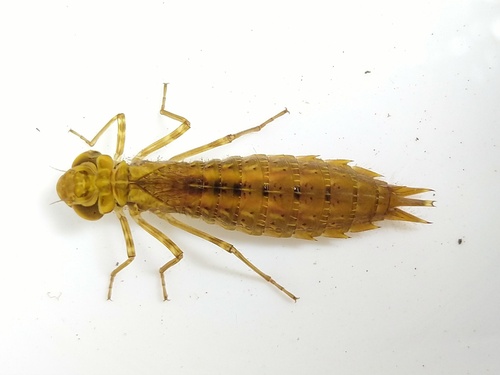
Aquatic predatory nymphs live among vegetation or sediment, hunting invertebrates and sometimes small vertebrates; this stage typically lasts 1-2 years with several molts.
Adult (imago)
After final molt, adults emerge, expand their wings and fly. Adults are aerial predators, mate, and the female lays eggs to complete the cycle.
🍃Diet and predators
Young eat
Aquatic invertebrates, insect larvae, small crustaceans; larger nymphs may take tadpoles and very small fish
Adults eat
Flying insects such as midges, flies, butterflies and occasionally other dragonflies
Predators of the young
Fish, amphibians, aquatic beetles and larger predatory aquatic insects
Predators of adults
Birds (swallows, flycatchers), frogs, spiders (catching them at rest), and larger dragonflies
🌱Effect on plants and gardens
Adults prey on flying insects (midges, flies and others), so they benefit gardens and wetland habitats; larvae feed on aquatic invertebrates and small tadpoles or fish fry, influencing local aquatic communities.
📍Where and when to find it
Adults patrol over open water, pond margins, reedbeds and sunny garden ponds. Nymphs are found in submerged vegetation or shallow margins of ponds and lakes.
Best time
Best seen from late spring through summer and into early autumn on warm, sunny days; mid-morning to late afternoon are peak activity times.
Observation tips
Use a telephoto lens or long zoom because they are skittish and fast. Watch perches on emergent stems and follow regular patrol routes where a male holds territory.
✨Fun facts
- Emperor dragonflies are powerful fliers and can fly large patrol routes while hunting or defending territory.
- Unlike many dragonflies, emperor females usually lay their eggs alone, inserting them into floating or submerged plants while the male is not guarding them.
- They are powerful predators of flying insects and can catch and eat prey as large as butterflies and other dragonflies.
?Frequently asked questions
Do emperor dragonflies bite?
They are not aggressive toward people. An emperor dragonfly can give a mild bite if handled roughly, but bites are rare and not medically significant.
Are emperor dragonflies harmful to humans or pets?
No. They are non-venomous and pose no health risk. Pets may eat them but there is no toxicity.
Why is an emperor dragonfly in my garden?
If you have a pond, water feature or wetland nearby, it provides habitat and hunting grounds. They visit gardens to feed and for females to lay eggs in suitable water.
How can I attract emperor dragonflies to my pond?
Provide a sunny pond with varied depths, native submerged and emergent plants for egg-laying and nymph shelter, and avoid fish that eat nymphs. Minimise pesticide use.
How long do emperor dragonflies live?
Adults live a few weeks. The aquatic larval stage lasts much longer, commonly 1-2 years depending on environment.
📷Photos of the emperor dragonfly
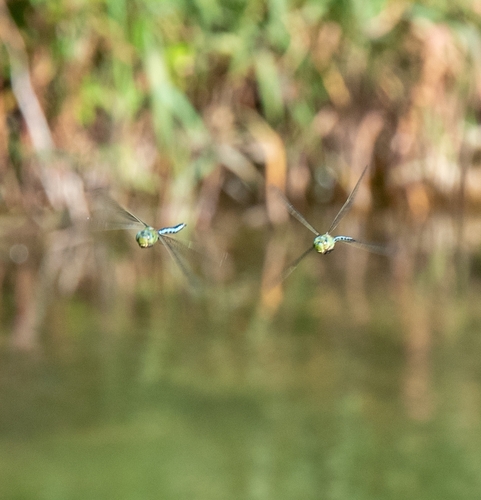
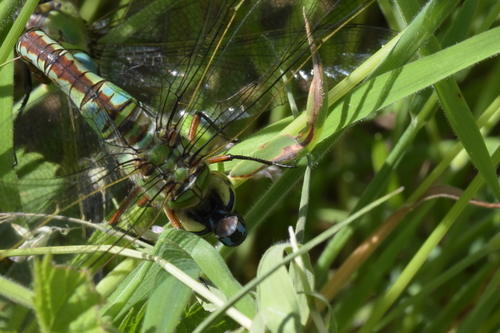
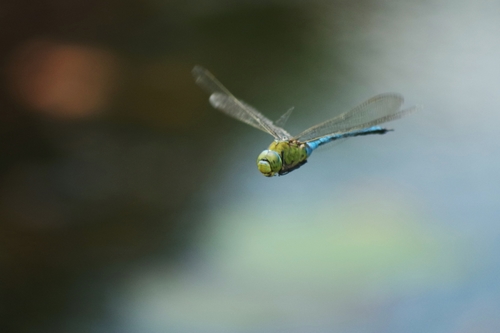
More dragonflies & damselflies
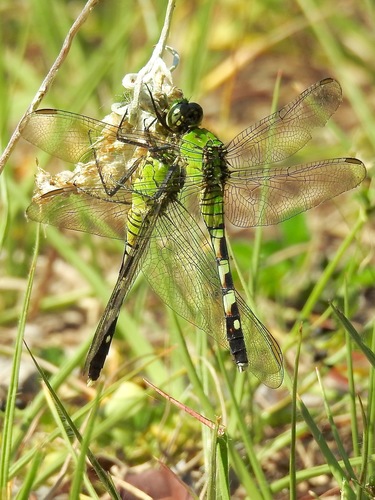
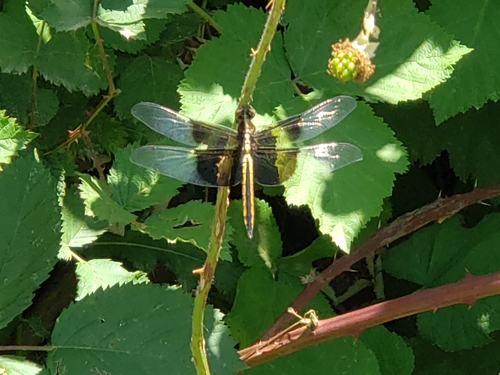
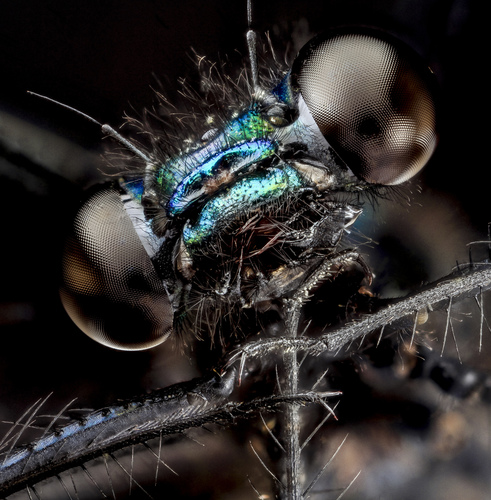
This guide was written with AI assistance and fact-checked, last updated 2026-10-10. Identification from photos is never certain: don't handle insects you can't identify, and get medical advice for bites, stings or allergic reactions. More about the emperor dragonfly: iNaturalist, Wikipedia.