
Widow skimmer vs Twelve-spotted skimmer
These two are easy to mix up. Here's how to tell a widow skimmer from a twelve-spotted skimmer, and whether either one bites or stings.
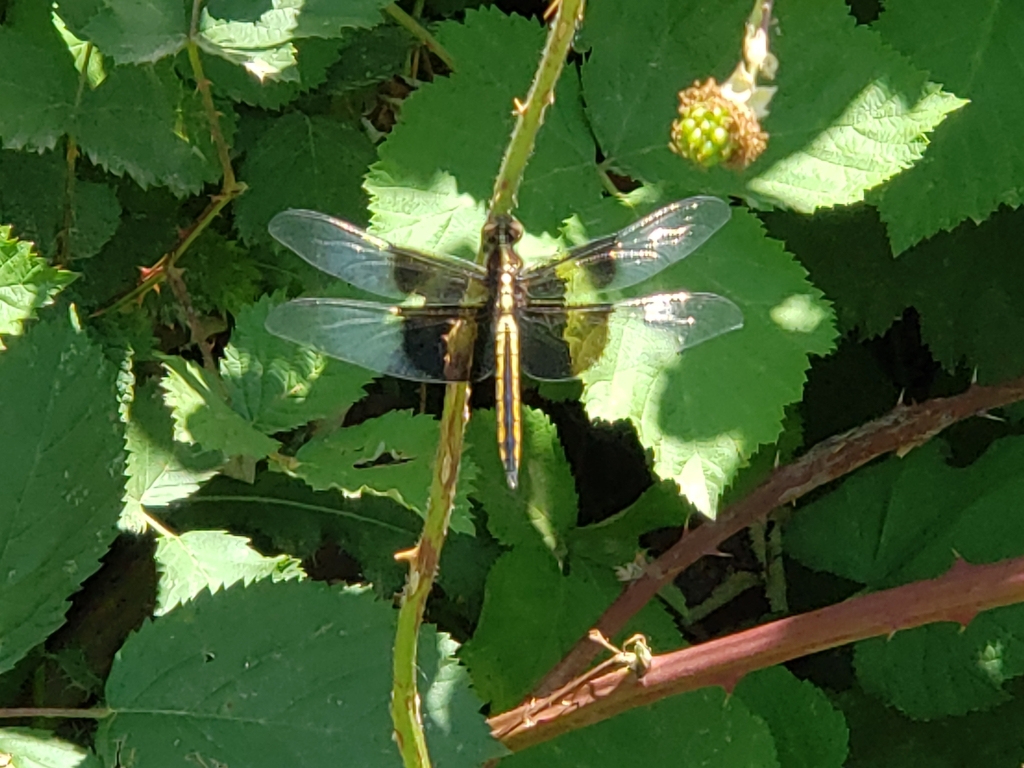
Widow skimmer
Libellula luctuosa
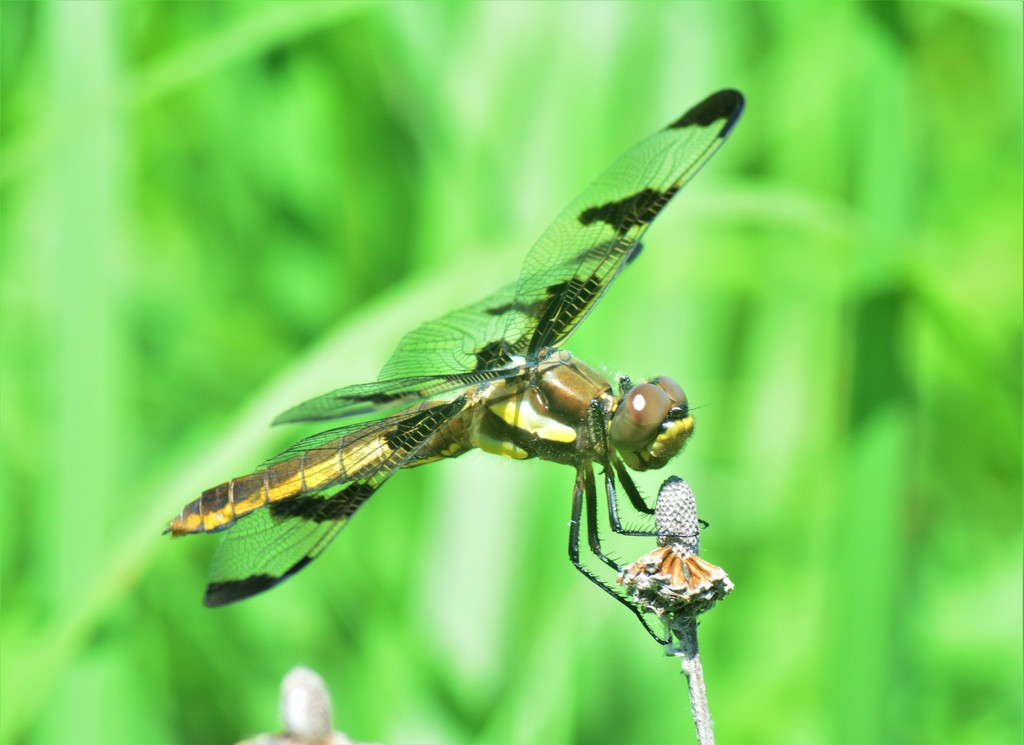
Twelve-spotted skimmer
Libellula pulchella
≠The key differences
Widow skimmers have a broad dark band covering the inner half of each wing (with a white band beyond it in males) and clear wing tips, whereas twelve-spotted skimmers have three separate dark spots on each wing, including a dark tip.
⚖︎Side by side
| Widow skimmer | Twelve-spotted skimmer | |
|---|---|---|
| To humans | Non-toxic | Non-toxic |
| Size | Body length 40-55 mm; wingspan about 80-95 mm | Body length about 50-57 mm; wingspan about 80-95 mm |
| Colours | Black, White, Brown, Yellow, Pale blue-grey (pruinescence) | Black, Dark brown, Pale white, Golden brown (female markings) |
| Family | Libellulidae | Libellulidae |
| Habitat | Still or slow-moving freshwater: ponds, marshy lakeshores, oxbow lakes, slow streams with emergent vegetation and open perches nearby. | Ponds, lakes, marshes and slow streams with open sunny areas and emergent vegetation |
| Range | Widespread across much of the United States and southern Canada; ranges from southern Canada south through much of the U.S., less common in far western arid regions. | Widespread across much of Canada and the United States; generally absent from the far north and extreme arid regions |
| Active | Mainly spring through late summer; most active during warm daylight hours. | Late spring through summer and into early autumn; most active in warm, sunny weather during the day |
| Pest? | No | No |
🔍How to spot a widow skimmer
- Look for broad dark patches covering the inner half of each wing; in mature males these are followed by a white band.
- Males have a powdery white (pruinescent) abdomen that obscures earlier markings; females are brown with yellow lateral markings.
- Perches openly on exposed twigs, posts or vegetation near water; wings held flat at rest typical of skimmers.
🔍How to spot a twelve-spotted skimmer
- Count the dark blotches: three on each wing (base, middle and tip), twelve in total across the four wings.
- Males show pale white patches between some black spots, giving a checkered black-and-white wing pattern.
- Body size medium-large (about 50-57 mm); females and immature males are browner with yellowish markings rather than the contrasty black and white of mature males.
- Habitat: look over sunny, open ponds, lakes and marsh edges where males perch on emergent vegetation or bare twigs.
?Frequently asked questions
What is the difference between a widow skimmer and a twelve-spotted skimmer?
Widow skimmers have a broad dark band covering the inner half of each wing (with a white band beyond it in males) and clear wing tips, whereas twelve-spotted skimmers have three separate dark spots on each wing, including a dark tip.
Is a widow skimmer or a twelve-spotted skimmer more dangerous?
Widow skimmer: Non-toxic. Twelve-spotted skimmer: Non-toxic. Widow skimmers are not venomous and do not pose a medical threat. Twelve-spotted skimmers are not harmful to people.
Identification from photos is never certain: don't handle insects you can't identify, and get medical advice for bites, stings or allergic reactions.