
Flame skimmer
Libellula saturata · Skimmers
A stocky, bright orange-red skimmer dragonfly of western North America often seen around still water in summer.
!Is the flame skimmer dangerous?
No. Flame skimmers do not have venom harmful to people. They can bite if handled roughly, producing a mild pinch but no lasting medical issue. No special first aid is usually needed beyond cleaning the area if skin is broken; seek medical advice if an unusual reaction occurs.
Pets
Not dangerous to pets. Dragonflies have no venom, sting or toxins, so a pet that catches or eats one is not at risk.
📖Overview
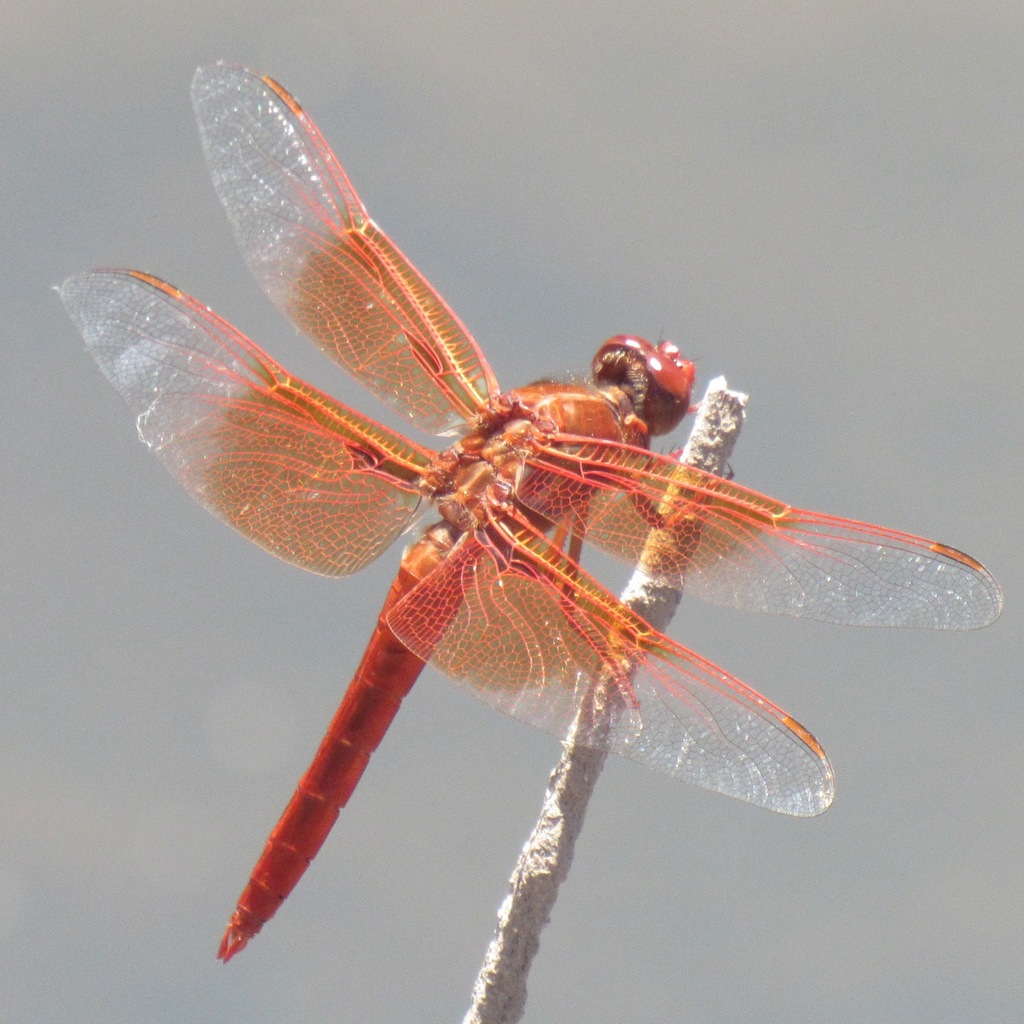
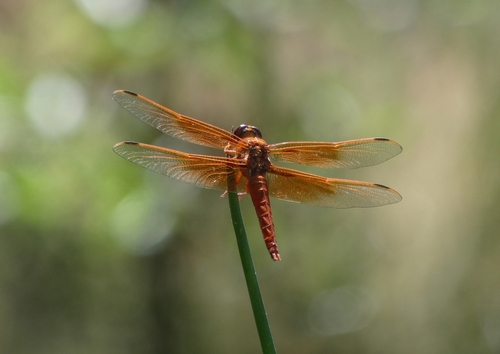
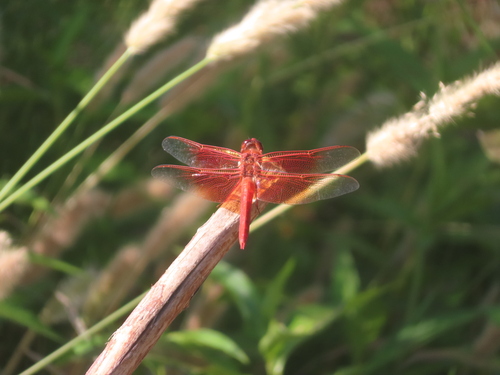
The flame skimmer (Libellula saturata) is a medium-large skimmer dragonfly found mainly in western North America. Males are unmistakably bright orange-red overall, while females and immature males are yellow to brownish with similar wing coloration. Adults are powerful fliers and often perch on rocks, logs or vegetation near ponds, pools, slow streams and irrigation ditches. Nymphs live in the water and are predatory, emerging after one to several years depending on conditions.
🔍How to identify a flame skimmer
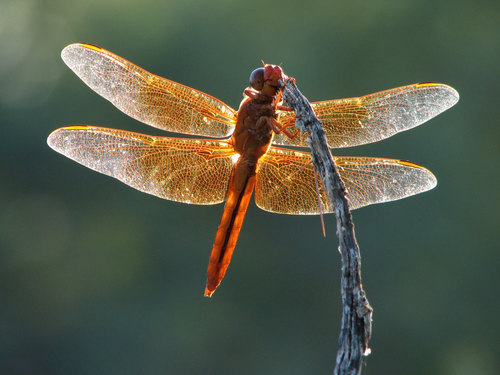
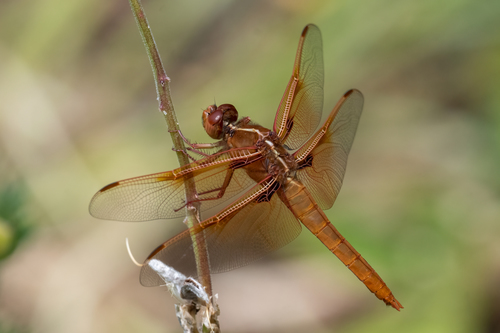
Males have a robust, cylindrical abdomen and thorax that are bright orange to red; wings are washed with orange from the base to about the middle, with orange veins. Females and immature males are yellowish-brown to tan with similar wing tinting but lack the intense red body color. Eyes meet at the top of the head. Wings are broad and the body appears thicker than delicate darner dragonflies.
- Bright orange-red males with orange-tinted wings and robust, stocky body
- Females/immatures are yellow-brown but share the orange-tinged wings
- Perches on low sunny spots near still water and makes short sallies to catch prey
- Broader wings and thicker abdomen than slender meadowhawks or darners
Lookalikes
Neon skimmer Libellula croceipennis
Very similar bright red male, but the wings have only a small orange patch at the base and the leading-edge veins; the flame skimmer has orange wash over the inner half of the wings.
Red rock skimmer Paltothemis lineatipes
Males are red but more slender, with dark mottling on the thorax and abdomen and mostly clear wings; usually perches on rocks along streams.
Cardinal meadowhawk Sympetrum illotum
Smaller and slimmer red dragonfly with a small reddish patch at the wing bases and pale spots on the side of the thorax.
↻Life cycle
Egg
Females lay eggs in or on the surface of water, often by dipping the abdomen while flying.
Nymph (aquatic)
Aquatic nymphs are predators that live on the bottom or among plants, feeding on aquatic invertebrates and small tadpoles; this stage can last months to years.
Adult (imago)
Adults emerge from the final nymphal skin, dry their wings, and become aerial predators; they mate and the female returns to water to lay eggs.
🍃Diet and predators
Young eat
Aquatic invertebrates, insect larvae, small tadpoles and fish fry
Adults eat
Flying insects such as mosquitoes, flies, small moths and midges
Predators of the young
Fish, aquatic insects (large beetles), amphibians and other aquatic predators
Predators of adults
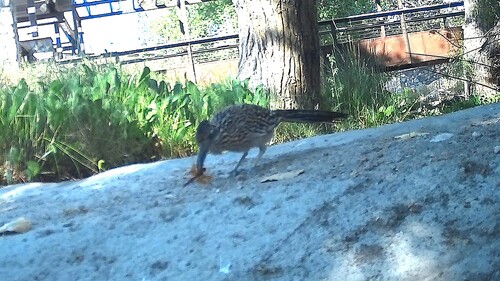
Birds, larger dragonflies, spiders and insectivorous bats
🌱Effect on plants and gardens
Adults are aerial predators that eat flying insects (including mosquitoes and other small pests); they do not feed on or damage plants.
📍Where and when to find it
Adults: perched on rocks, logs, emergent plants and fence posts near still water. Nymphs: among submerged vegetation and on pond or stream bottoms.
Best time
Warm months (late spring through summer), during sunny daytime hours.
Observation tips
Look for bright orange males perched in the sun; a telephoto lens or a long macro will help capture close-up detail without disturbing them.
✨Fun facts
- Male flame skimmers often sit on prominent sunny perches and defend small territories.
- Their common name comes from the intense flame-like orange-red coloration of adult males.
- They are fast, agile hunters that help control mosquito and fly populations around water.
?Frequently asked questions
Do flame skimmers bite?
They can grab and nip if handled, but bites are rare, not venomous and only cause a mild pinch.
Are flame skimmers dangerous to humans?
No — they are not venomous and are harmless to people; they are beneficial predators of nuisance insects.
Why is a flame skimmer in my house?
Occasional indoor sightings happen when adults are attracted to light or chase prey; they usually enter accidentally and can be guided back outside.
How do I get rid of flame skimmers?
They are beneficial; if you must remove one, gently catch it in a jar or cup and release it outdoors near water. Avoid killing them.
Where do flame skimmers live?
Near still or slow-moving freshwater in western North America — ponds, marshes, irrigation ditches and lake edges with sunny perches.
📷Photos of the flame skimmer
More dragonflies & damselflies
This guide was written with AI assistance and fact-checked, last updated 2026-10-10. Identification from photos is never certain: don't handle insects you can't identify, and get medical advice for bites, stings or allergic reactions. More about the flame skimmer: iNaturalist, Wikipedia.