
Black saddlebags
Tramea lacerata · Skimmers
A medium-sized dragonfly with broad dark patches at the base of the hindwings that look like saddlebags; common near ponds and lakes across much of the Americas.
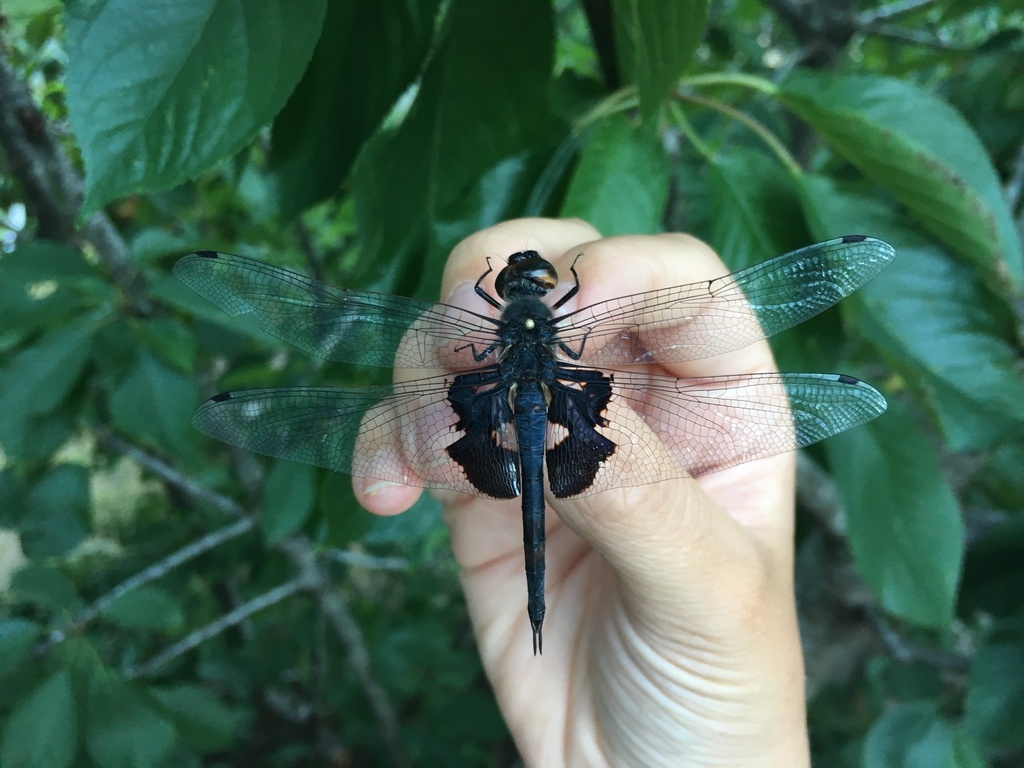
!Is the black saddlebags dangerous?
No. Not dangerous. Dragonflies do not have stings and rarely bite; a defensive nip is possible but harmless and uncommon. No venom or toxic effects; treat any minor bite like a small skin puncture (clean with soap and water).
Pets
Harmless to pets. Pets might try to catch them; accidental ingestion could cause mild throat irritation but no venomous risk.
📖Overview
Tramea lacerata, the black saddlebags, is a widespread skimmer (family Libellulidae) found near still and slow-moving water. Both sexes have a mostly black abdomen with pale yellowish spots on top of the seventh segment, and distinctive broad black patches over the hindwing bases that resemble saddlebags. They hunt on the wing, catching flying insects, and often perch on emergent vegetation or bare twigs. Larvae (naiads) live in aquatic habitats and are ambush predators until they metamorphose into flying adults.
🔍How to identify a black saddlebags
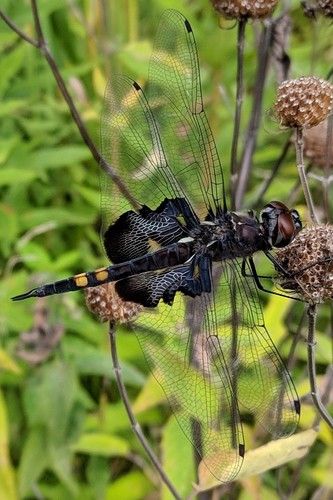
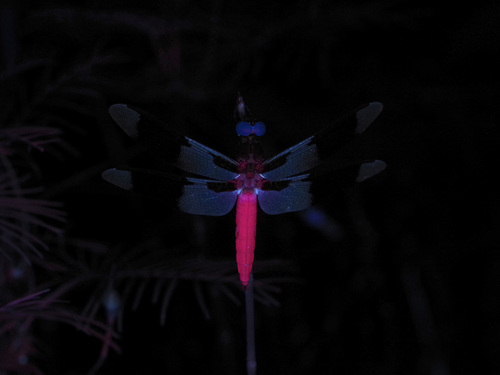
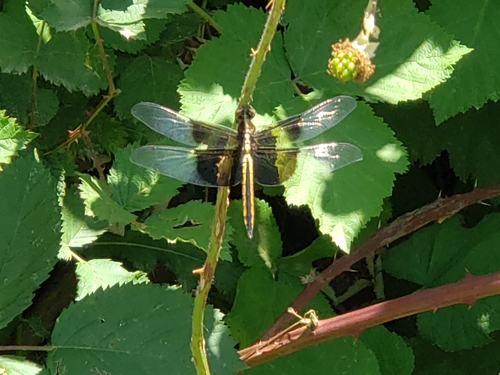
Adult black saddlebags have a medium-length, somewhat robust abdomen and clear wings with a large, dark patch that covers the proximal portion of each hindwing (the 'saddlebags'). The abdomen is mostly black in both sexes, with pale yellowish spots on top of the seventh segment (often dull in older individuals); the thorax is dark brown to blackish. Eyes meet on top of the head as typical for many skimmers. Wings have small dark pterostigmas near the tips.
- Large dark triangular patches at the base of each hindwing — the 'saddlebags' are the key field mark.
- Abdomen mostly black in both sexes, with pale yellowish spots on top of segment 7 near the tip.
- Spends long periods gliding over open water and fields, sometimes in migratory swarms; perches on twig tips near water.
Lookalikes
Red saddlebags Tramea onusta
Red saddlebags has a bright red body (males) and narrower reddish-brown hindwing patches, rather than the black body and broad black patches of black saddlebags; it is mainly a southwestern species.
Carolina saddlebags Tramea carolina
Carolina saddlebags has a red abdomen and reddish-purple hindwing patches, rather than the black body and black patches of black saddlebags; it occurs mainly in the eastern United States.
↻Life cycle
Egg
Females lay eggs in or just above water; eggs hatch into aquatic larvae.
Nymph (naiad)
Aquatic nymphs live on or in sediment and vegetation, ambushing small aquatic invertebrates; this stage may last many months to about a year depending on climate.
Adult (imago)
Terrestrial, flying stage that hunts aerial insects, mates, and the female returns to water to lay eggs.
🍃Diet and predators
Young eat
Aquatic invertebrates, small crustaceans, insect larvae; large naiads may take tadpoles or tiny fish.
Adults eat
Flying insects such as mosquitoes, flies, midges, moths and other small flying prey captured in flight.
Predators of the young
Fish, amphibians, aquatic insects such as larger beetles and dragonfly naiads.
Predators of adults
Birds, spiders (catching resting adults), frogs, larger dragonflies and mantids.
🌱Effect on plants and gardens
Does not feed on plants. Adults consume flying insects, including many pest species such as mosquitoes; larvae prey on aquatic invertebrates and small tadpoles or fish fry.
📍Where and when to find it
Adults: open perches over and around ponds, lakes and marshes; often seen flying low over water. Larvae: among submerged vegetation, mud and detritus in still or slow water.
Best time
Warm months (spring to fall); sunny days between mid-morning and late afternoon when they are actively hunting.
Observation tips
Use a telephoto lens or zoom to photograph without disturbing perching dragonflies; approach slowly and photograph against the water or sky for good contrast.
✨Fun facts
- The 'saddlebags' name comes from the broad dark patches on the base of the hindwings that look like bags hanging over a saddle.
- Tramea species are strong fliers and often hunt while cruising several meters above the water surface.
- Dragonflies are among the oldest flying insect groups, with ancestors existing over 300 million years ago; modern species like Tramea lacerata are highly adapted aerial predators.
?Frequently asked questions
Are black saddlebags dangerous?
No. They are harmless to people and pets and do not have venom. They may briefly nip if handled but bites are extremely rare and not medically significant.
Do black saddlebags bite?
Bites are very uncommon. If a dragonfly does nip while being handled, it causes little or no harm—clean the area if the skin is broken.
Why is a black saddlebags dragonfly in my yard?
If you have a pond, marsh or even a water feature nearby, black saddlebags are attracted to open water for breeding and perching and will hunt flying insects in yards close to those habitats.
How can I get rid of black saddlebags?
They are beneficial predators; removal is not recommended. If you must discourage them, reducing standing water will make the site less attractive for breeding.
Where do black saddlebags live?
They breed and hunt near ponds, lakes, marshes and slow-moving streams across much of the Americas; larvae live in the water and adults patrol over and near it.
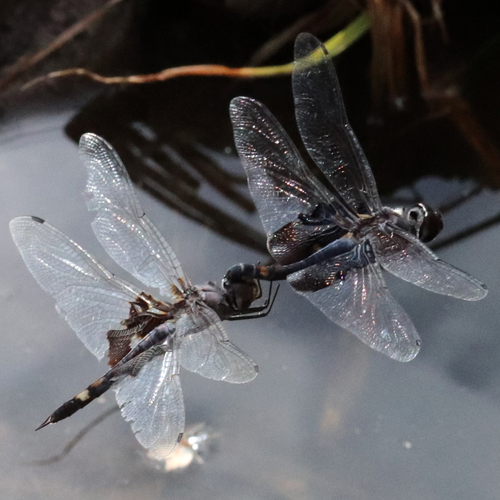
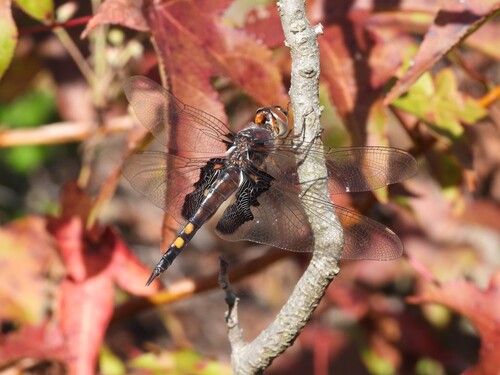
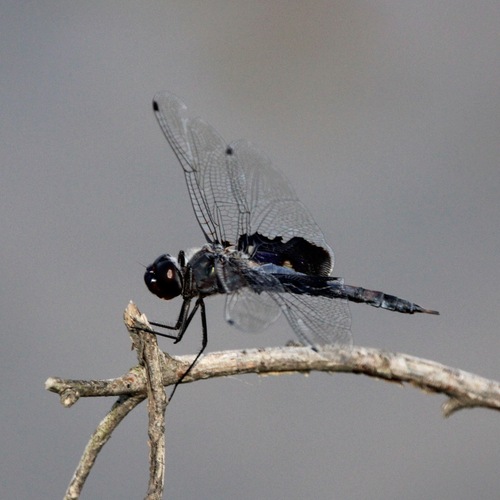
📷Photos of the black saddlebags

More dragonflies & damselflies
This guide was written with AI assistance and fact-checked, last updated 2026-10-10. Identification from photos is never certain: don't handle insects you can't identify, and get medical advice for bites, stings or allergic reactions. More about the black saddlebags: iNaturalist, Wikipedia.