
Large red damselfly
Pyrrhosoma nymphula · Damselflies
A common, bright red pond damselfly in Europe; adults perch on vegetation near slow water and are harmless to people.
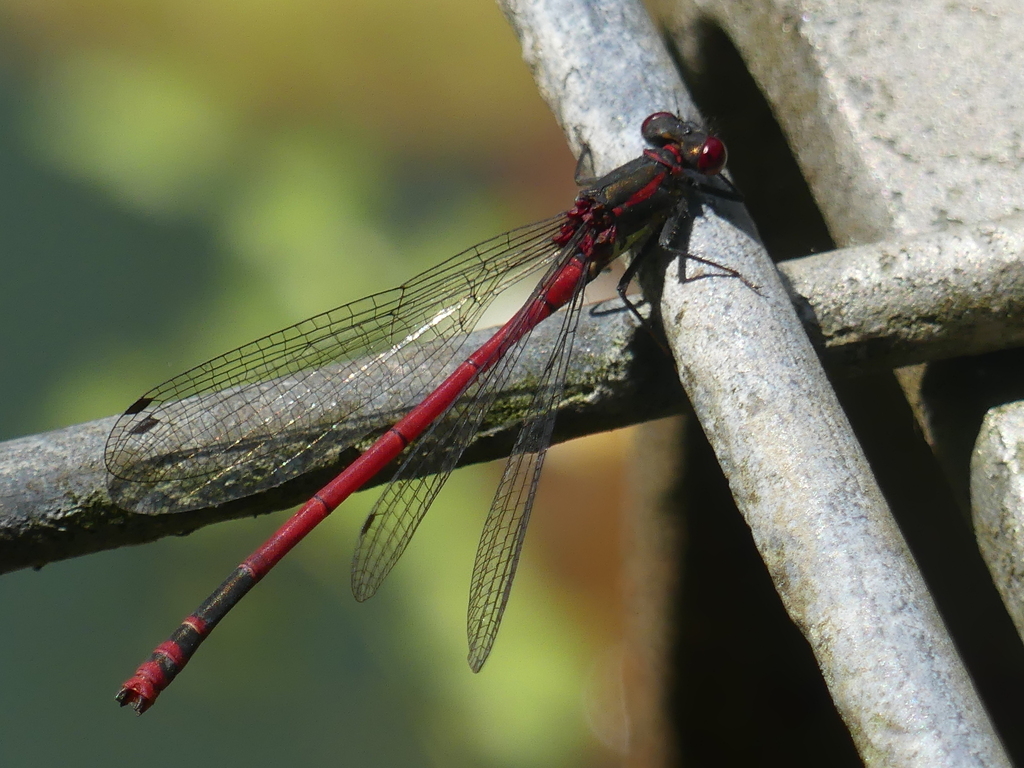
!Is the large red damselfly dangerous?
No. Large red damselflies do not sting or transmit disease. They can grasp skin briefly with their legs but do not bite in any harmful way. No special first aid is needed; simply release if handled.
Pets
Not dangerous to cats or dogs. Pets may catch them, but damselflies are not toxic. They are fragile and will be killed by pets if captured.
📖Overview
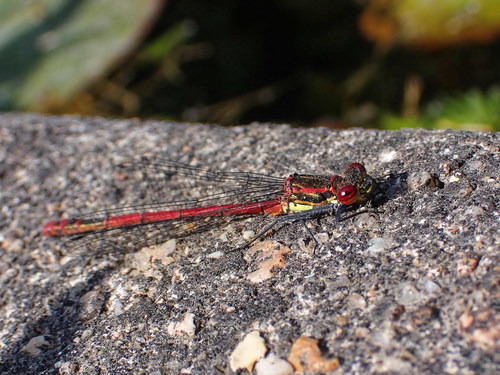
Pyrrhosoma nymphula (Large red damselfly) is a widespread and familiar damselfly across much of Europe. Adults are most often seen near ponds, ditches, slow streams and marshes where they perch on emergent vegetation and reed stems. The species is typically among the first damselflies to emerge in spring and can be seen into mid-summer. Males are vivid red with black markings; females occur in red and more orange-brown forms.
Larvae are aquatic predators that live in vegetation or among submerged debris for several months to a year before emerging as adults. Adults hunt small flying insects and are important predators of mosquitoes and other nuisance flies around water bodies.
🔍How to identify a large red damselfly
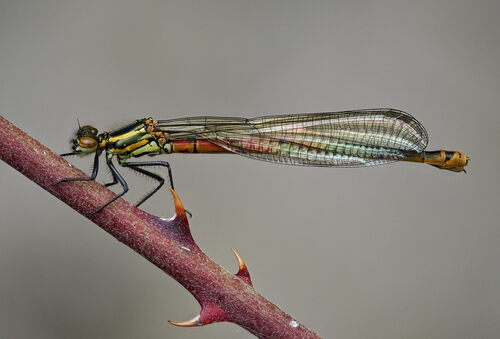
Adults are slender with a predominantly red abdomen and a dark bronze-black thorax with red (in males) or yellowish stripes on top. Males have a bright red abdomen with black markings on the last few segments (7-9). Legs are black. Wings are clear, held closed over the body when perched. Eyes are dark red. Females come in several colour forms, all with more black on the abdomen than males, ranging from mostly red to largely black-and-yellow. Black legs and the striped thorax help separate this species from other red damselflies.
- Bright red abdomen with black markings on the rear segments (males).
- Dark thorax with red or yellow stripes on top, black legs; clear wings held closed above the body when resting.
- Females have more black on the abdomen and occur in several colour forms; check leg colour and pattern rather than colour alone.
- Perches low on emergent stems at ponds and slow water; earlier in spring than many other damselflies.
Lookalikes
Small red damselfly Ceriagrion tenellum
Smaller and slimmer, with red legs and an unstriped bronze thorax; restricted to bogs and heaths. Pyrrhosoma nymphula has black legs and red or yellow thoracic stripes.
Blue-tailed damselfly Ischnura elegans
Usually blue and black in males with a distinctive blue 'tail' segment; females have variable colours but different abdomen patterning from P. nymphula.
↻Life cycle
Egg
Females lay eggs in submerged plant stems or directly into water; eggs hatch after days to weeks depending on temperature.
Larva (aquatic nymph)
Aquatic predatory nymphs live among vegetation and detritus, moult several times and feed on small aquatic invertebrates; this stage usually lasts many months.
Adult (imago)
Emerging adults leave the water, expand and harden their wings, then fly, mate and lay eggs. Adults are aerial predators and live for weeks to a few months.
🍃Diet and predators
Young eat
Aquatic invertebrates such as insect larvae, small crustaceans and other tiny animals
Adults eat
Small flying insects including mosquitoes, midges and flies
Predators of the young
Fish, aquatic beetles, amphibians and larger aquatic predators
Predators of adults
Birds, larger dragonflies, spiders and insectivorous mammals
🌱Effect on plants and gardens
Adults use emergent vegetation and marginal plants for perching and egg-laying; larvae live among submerged plants. They do not damage plants.
📍Where and when to find it
Adults on reed stems and marginal vegetation at ponds, ditches and slow streams; larvae among submerged plants and debris in the same habitats.
Best time
April to August in temperate Europe; daytime, especially sunny warm periods.
Observation tips
Approach slowly and photograph with a telephoto or macro lens; they often perch low on stems—watch for the characteristic red body and wing posture.
✨Fun facts
- Large red damselflies are often among the first damselflies to appear in spring in temperate Europe.
- Females occur in several colour forms, from largely red to mostly black, which can make them look quite different from males.
- Like all odonates, they are excellent aerial predators and help control mosquito populations around water.
?Frequently asked questions
Do large red damselflies bite?
No. They do not bite humans in any harmful way. They may grasp skin briefly but lack biting or stinging danger.
Are large red damselflies poisonous or dangerous?
No. They are harmless to people and pets.
Why is a red damselfly in my house?
They are attracted to light or may enter through open doors or windows while hunting flying insects. They do not live indoors and can be gently released outside.
How can I get rid of damselflies around my home?
Damselflies are beneficial predators. To discourage them indoors, reduce indoor lighting at night and close windows or use screens. Outside, limiting still water will reduce local populations, but they are generally desirable.
Where do large red damselflies live?
They live at ponds, ditches, marshes and slow streams with vegetation for perching and egg-laying across much of Europe.
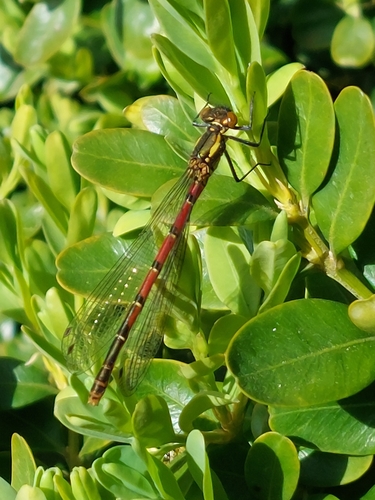
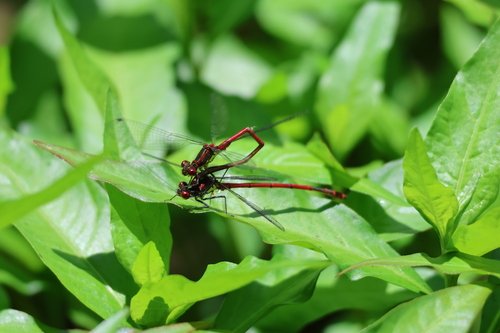
📷Photos of the large red damselfly
More dragonflies & damselflies
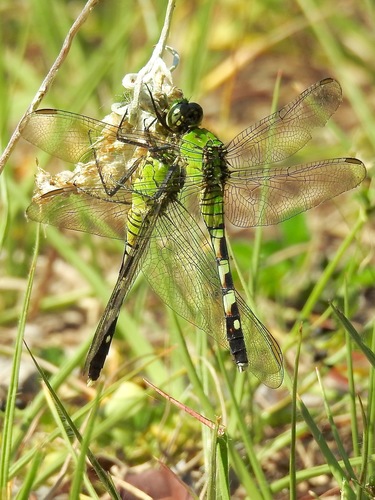
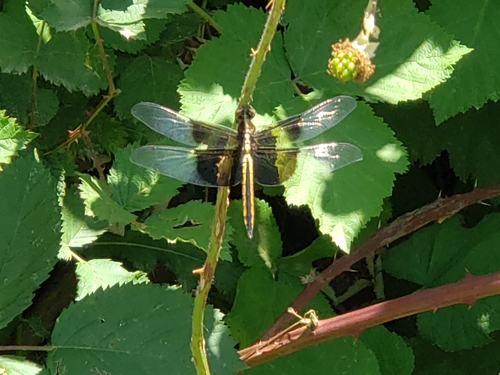
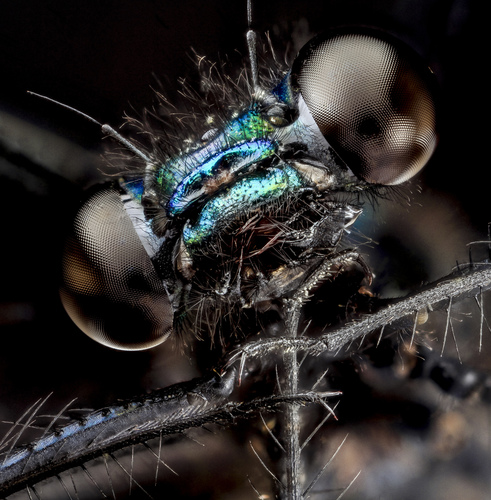
This guide was written with AI assistance and fact-checked, last updated 2026-10-10. Identification from photos is never certain: don't handle insects you can't identify, and get medical advice for bites, stings or allergic reactions. More about the large red damselfly: iNaturalist, Wikipedia.