
Common green darner vs Wandering glider
These two are easy to mix up. Here's how to tell a common green darner from a wandering glider, and whether either one bites or stings.
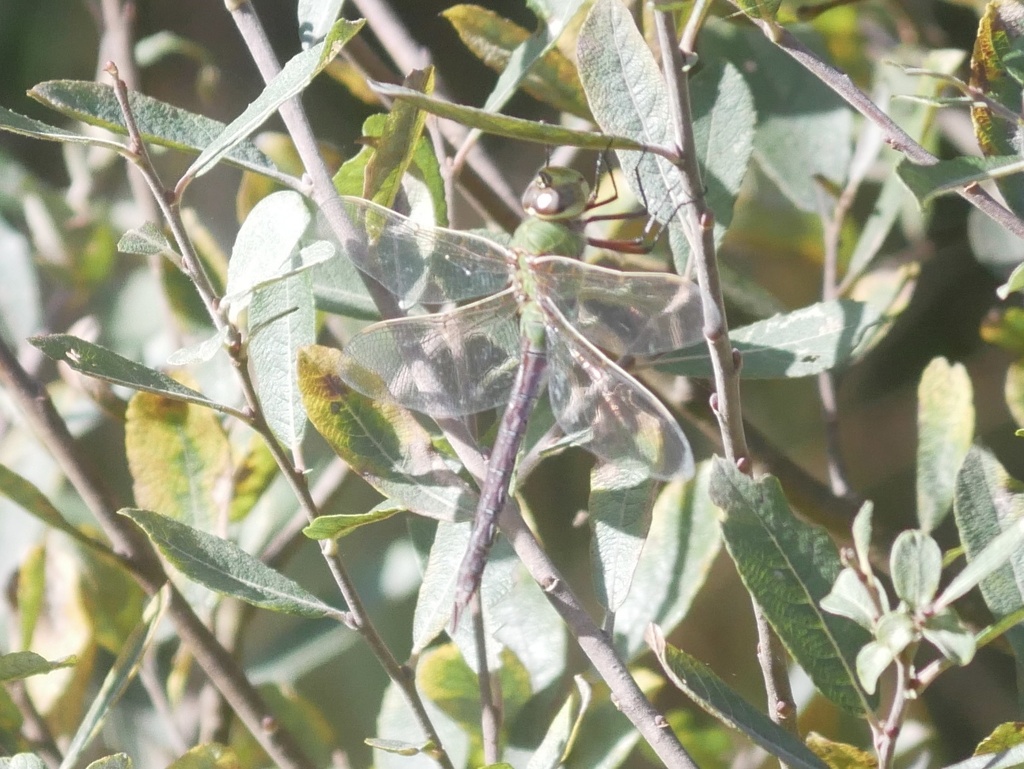
Common green darner
Anax junius
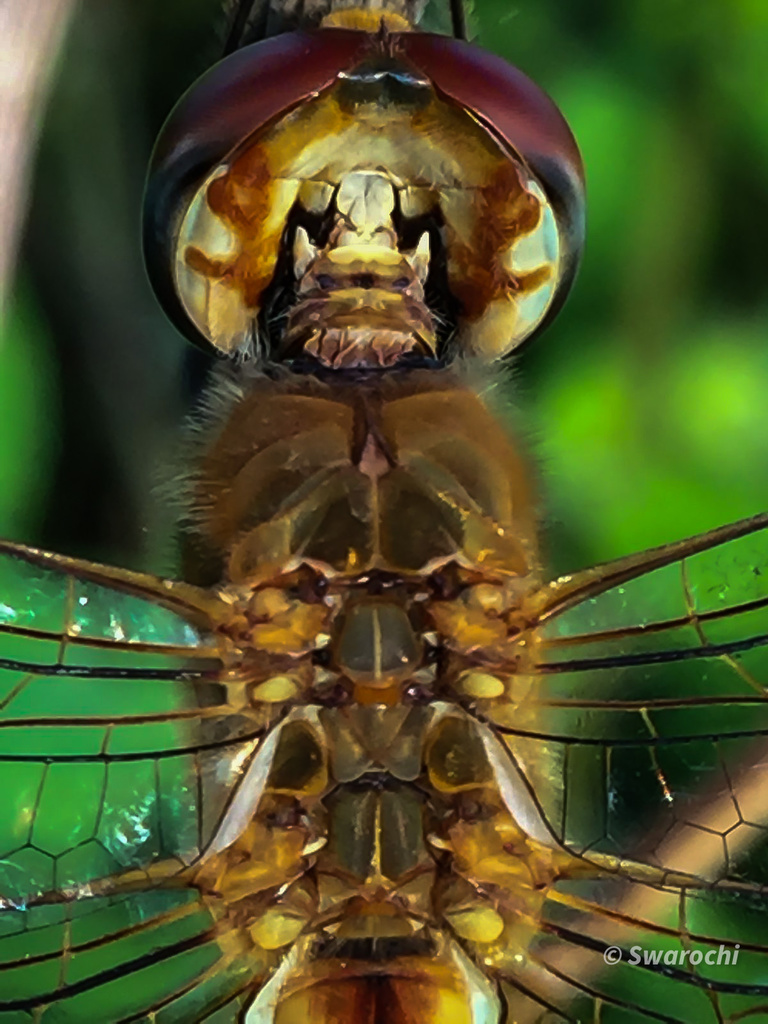
Wandering glider
Pantala flavescens
≠The key differences
Green darner is larger with a green thorax and blue abdomen segment in males; Pantala flavescens is generally smaller with a uniformly yellow-orange abdomen.
⚖︎Side by side
| Common green darner | Wandering glider | |
|---|---|---|
| To humans | Non-toxic | Non-toxic |
| Size | Body length about 68-80 mm; wingspan about 90-110 mm | Body length about 45-50 mm; wingspan about 80-85 mm |
| Colours | Green, Blue, Brown, Black | Yellow, Orange, Brown, Translucent wing |
| Family | Aeshnidae | Libellulidae |
| Habitat | Ponds, lakes, marshes, slow streams and adjacent fields; adults also hunt far from water | Open water bodies: ponds, marshes, rice paddies, slow-moving streams, and open country during migration |
| Range | Widespread across North America from southern Canada to Mexico; also Central America, the Caribbean and Hawaii, with occasional vagrants beyond | Nearly global: tropical and temperate regions worldwide except Antarctica; migratory populations cross oceans and reach many islands and continents |
| Active | Warm months (spring to autumn); mainly daytime, most active in warm sunny weather | Warm months in temperate zones; year-round in tropical regions. Active during daylight, especially sunny periods |
| Pest? | No | No |
🔍How to spot a common green darner
- Large size and long slender abdomen relative to many other dragonflies
- Bright green thorax and a 'bullseye' mark on the face; mature males have a mostly blue abdomen
- Clear wings with a narrow tan pterostigma near the tips and eyes that meet on top of the head
- Habit of patrolling over water and open fields with strong, direct flight
🔍How to spot a wandering glider
- Yellow to orange slender abdomen with a cylindrical profile
- Clear wings with a faint yellow wash near the base and small pale pterostigma
- Strong, steady flight often seen patrolling over open water or flying long distances
?Frequently asked questions
What is the difference between a common green darner and a wandering glider?
Green darner is larger with a green thorax and blue abdomen segment in males; Pantala flavescens is generally smaller with a uniformly yellow-orange abdomen.
Is a common green darner or a wandering glider more dangerous?
Common green darner: Non-toxic. Wandering glider: Non-toxic. Not dangerous. Not dangerous.
Identification from photos is never certain: don't handle insects you can't identify, and get medical advice for bites, stings or allergic reactions.