
Deer tick
Ixodes scapularis · Hard ticks
Small hard-bodied tick that commonly transmits Lyme disease and other pathogens to humans and animals across eastern North America.
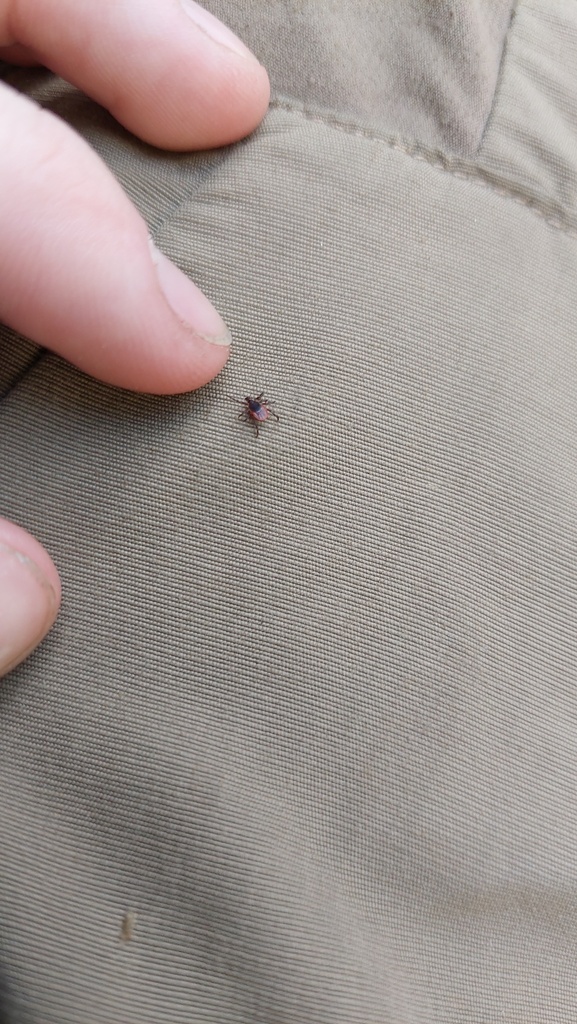
!Is the deer tick dangerous?
Yes, it can be. Deer ticks feed by attaching to skin and can transmit pathogens such as Borrelia burgdorferi (Lyme disease), Anaplasma, Babesia, and Powassan virus. Bites are usually painless. If bitten, remove the tick promptly with fine-tipped tweezers by grasping the tick close to the skin and pulling straight out without twisting. Clean the bite site and hands with soap and water or alcohol. Save the tick in a sealed container if medical evaluation is needed. See a healthcare provider if you develop a rash, fever, flu-like symptoms, or if you cannot remove the whole tick.
Pets
Pets can acquire the same pathogens (dogs more commonly show illness from some infections). Use veterinarian-recommended tick preventives (topical, oral, or collars), check pets after outdoor time, and remove attached ticks promptly. Consult a vet if your pet shows lethargy, fever, lameness or loss of appetite after a tick bite.
📖Overview
Ixodes scapularis, commonly called the deer tick or blacklegged tick, is a hard-bodied tick that parasitizes birds, small mammals and large mammals including deer and humans. It is best known as the primary vector of Borrelia burgdorferi, the bacterium that causes Lyme disease in much of eastern and central North America. Deer ticks have a multi-year, four-stage life cycle (egg, larva, nymph, adult) and can acquire and transmit several pathogens, including Lyme disease, anaplasmosis, babesiosis and Powassan virus.
Deer ticks are often encountered in wooded, brushy, or grassy areas with leaf litter where hosts are present. Nymphs, which are tiny and active in late spring and summer, cause many human infections because they are easy to miss. Adults are most active in cooler months such as spring and fall and commonly attach to deer and dogs as well as humans.
🔍How to identify a deer tick
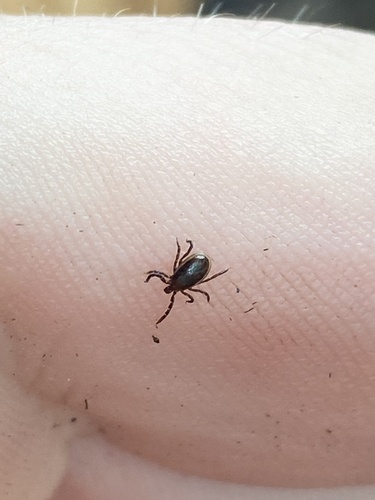
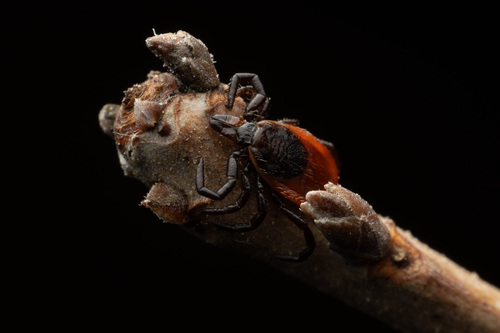
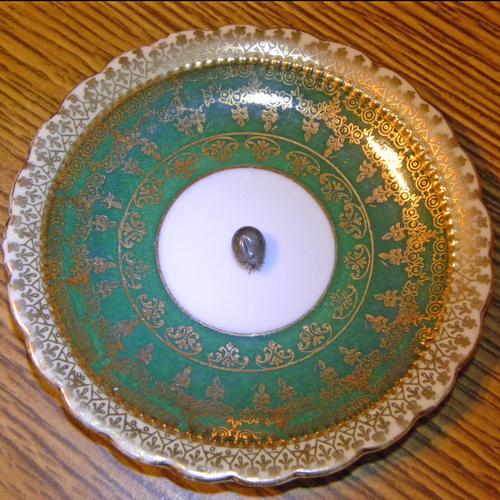
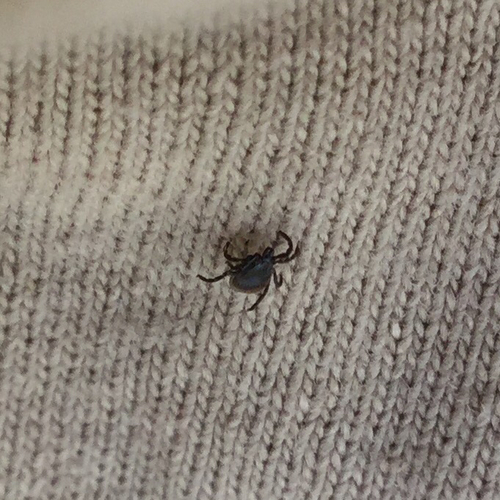
Adults have a hard scutum (shield) and eight legs like other ticks. Adult females have a dark brown to black scutum and a reddish-brown body; males are smaller and uniformly darker. Unfed adult females are about 3-5 mm long; males are slightly smaller. Nymphs are about 1-2 mm and look like tiny dark dots; larvae are about 0.8-1 mm and have six legs. When engorged after feeding, females swell dramatically and become grayish and pear-shaped.
- Small size with 8 legs (nymphs and adults); larvae have 6 legs
- Adults: dark scutum (shield) and reddish-brown body; males smaller and darker
- Nymphs are very small (about 1-2 mm) and often appear as tiny dark dots on skin or clothing
- Engorged females swell and become grayish and pear-shaped after feeding
Lookalikes
Lone star tick Amblyomma americanum
Female lone star ticks usually have a distinctive single white spot on the scutum; they are generally more aggressive and have longer mouthparts than Ixodes scapularis.
American dog tick Dermacentor variabilis
American dog ticks are larger and have distinct pale markings on the scutum; they are more common in grassy roadside and field habitats and are a different vector profile.
Western black-legged tick Ixodes pacificus
Similar appearance but primarily found on the Pacific coast; geographic location helps distinguish it from Ixodes scapularis.
↻Life cycle
Egg
Females lay up to a few thousand eggs in leaf litter in spring, then die; the eggs hatch into larvae in summer.
Larva
Six-legged larvae feed once on a small host (often small mammals or birds), then drop off and molt to the nymphal stage.
Nymph
Eight-legged nymphs seek a host (including humans); they feed once, potentially transmitting pathogens, then molt to adults.
Adult
Adult males and females seek larger hosts (deer, dogs, humans). Females feed, mate, and then lay eggs to complete the cycle.
🍃Diet and predators
Young eat
Blood from birds and small mammals (larvae and nymphs commonly feed on rodents and small birds)
Adults eat
Blood from larger mammals such as deer, dogs and humans
Predators of the young
Small predators and parasitoids, birds, some ants, and ground-dwelling beetles
Predators of adults
Ground-dwelling predators (birds, opossums, some ants) and parasitic wasps in some regions
🌱Effect on plants and gardens
Deer ticks do not feed on plants and have no direct effect on gardens or crops; they are parasites of vertebrates.
How to get rid of deer ticks
Reduce tick habitat by keeping grass short, removing leaf litter and brush, creating a gravel or woodchip barrier between woods and lawns, and discouraging deer with fencing or repellents. Use targeted acaricide treatments where appropriate and approved. Treat pets with veterinarian-recommended tick preventives. Personal protection: wear long clothing, tuck pants into socks, use EPA-registered repellents containing DEET or picaridin on skin and permethrin-treated clothing, and perform regular body checks after outdoor activities.
📍Where and when to find it
Look in leaf litter, along forest edges, logs, and low vegetation. Nymphs often quest on low vegetation and can attach while you walk through brush; adults climb higher on vegetation and on hosts.
Best time
Late spring and summer for nymphs; fall and early spring for adults. Check after any outdoor activity in suitable habitats.
Observation tips
Wear light-colored clothing to spot ticks, tuck pants into socks, inspect clothing and skin frequently, and check pets and gear when returning indoors. Photograph ticks next to a scale (ruler) for size reference if needed for identification.
✨Fun facts
- Most human Lyme disease cases in the US are linked to nymphal deer ticks because their small size makes them easy to miss.
- Deer are important for adult tick reproduction, but small mammals like white-footed mice are key reservoirs that infect ticks with Lyme bacteria.
- Powassan virus, which deer ticks can transmit, can be transmitted more quickly after attachment than Lyme disease—sometimes within hours.
?Frequently asked questions
Do deer ticks bite humans?
Yes. Deer ticks attach to skin and feed on blood; bites are usually painless and can go unnoticed.
Do deer ticks transmit Lyme disease?
Yes. Ixodes scapularis is the primary vector of Borrelia burgdorferi in much of eastern and central North America.
How long does a tick need to be attached to transmit Lyme disease?
Transmission risk for Lyme disease increases with attachment time and is generally low in the first 24 hours but rises significantly after 36-48 hours. Some other pathogens may transmit faster.
How do I remove a deer tick?
Use fine-tipped tweezers to grasp the tick as close to the skin as possible and pull straight out with steady pressure. Do not twist or crush the tick. Clean the area and wash hands. Seek medical advice if you cannot remove the mouthparts or if symptoms develop.
Why are deer ticks in my yard?
Ticks are present where hosts (deer, rodents, birds, pets) and suitable habitat (leaf litter, brush, tall grass) exist. Overgrown yards, woodpiles, and edges next to woods increase tick presence.
How can I reduce tick risk around my home?
Maintain short lawns, remove leaf litter, create a woodchip or gravel barrier between woods and play areas, use targeted acaricide treatments if appropriate, treat pets with tick preventives, and perform regular tick checks.
📷Photos of the deer tick
More ticks
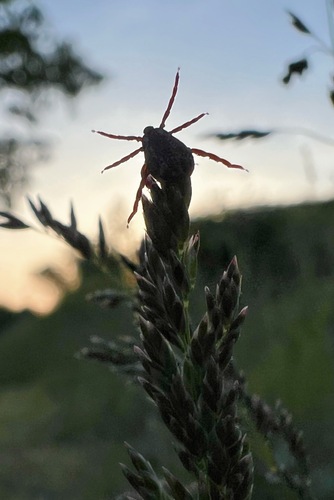
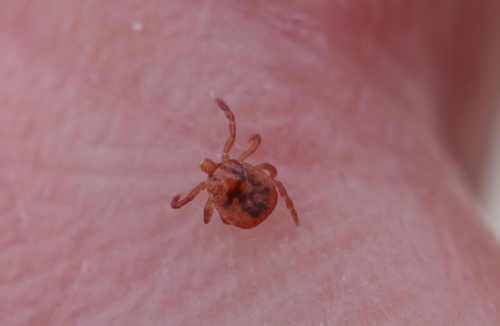
This guide was written with AI assistance and fact-checked, last updated 2026-10-09. Identification from photos is never certain: don't handle insects you can't identify, and get medical advice for bites, stings or allergic reactions.