
Deer tick vs American dog tick
These two are easy to mix up. Here's how to tell a deer tick from a american dog tick, and whether either one bites or stings.
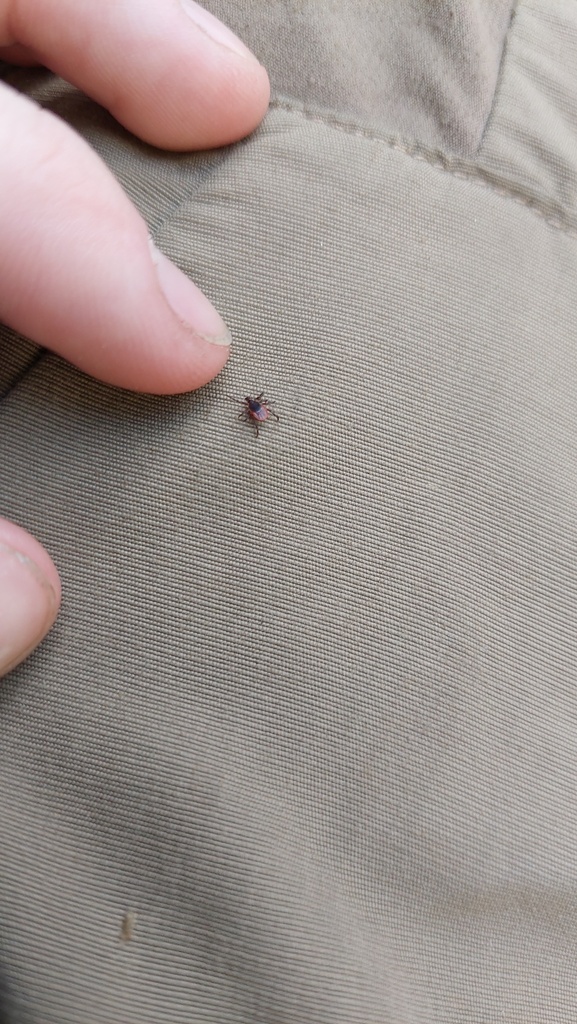
Deer tick
Ixodes scapularis
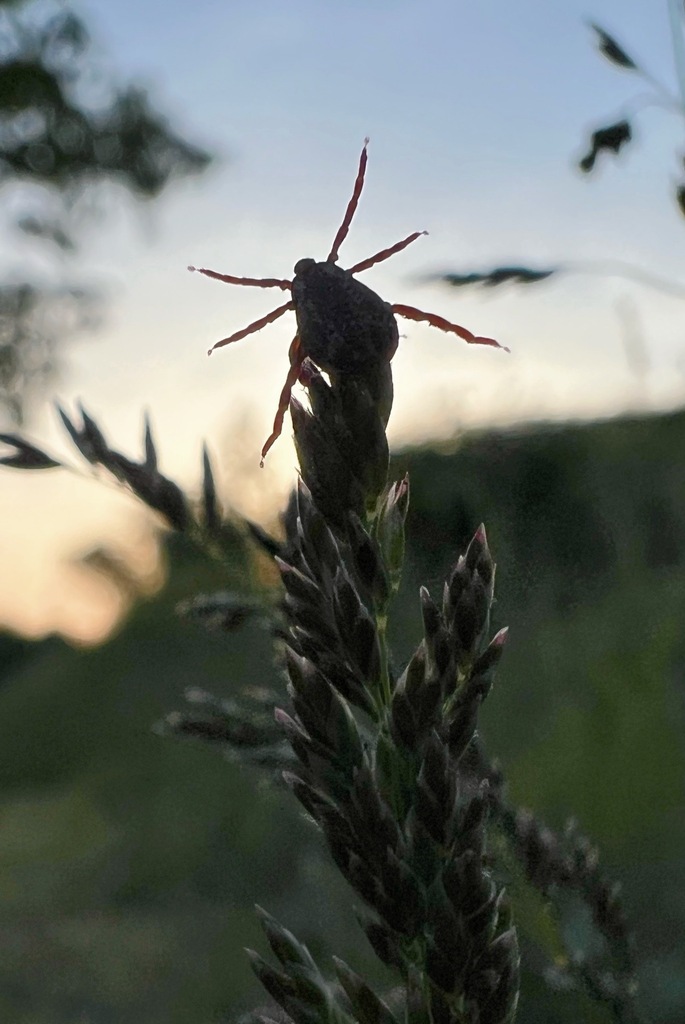
American dog tick
Dermacentor variabilis
≠The key differences
American dog ticks are larger and have distinct pale markings on the scutum; they are more common in grassy roadside and field habitats and are a different vector profile.
Smaller and darker overall; Ixodes lacks the ornate scutum pattern typical of Dermacentor and has different mouthpart and body shape.
⚖︎Side by side
| Deer tick | American dog tick | |
|---|---|---|
| To humans | Disease vector | Disease vector |
| Size | Adult female 3-5 mm unfed (much larger when engorged); nymph 1-2 mm; larva about 0.8-1 mm | Unfed adults 3-5 mm long; engorged females up to about 15 mm |
| Colours | Dark brown / black, Reddish brown, Black (legs), Engorged gray | Brown, Reddish-brown, Cream (pale ornamentation), Grey (engorged female) |
| Family | Ixodidae | Ixodidae |
| Habitat | Wooded and brushy areas, leaf litter, forest edges, overgrown yards, and ecotones with abundant small mammals and deer | Grassy fields, trails, forest edges, leaf litter and tall roadside vegetation; often found where mammals travel or rest. |
| Range | Northeastern, mid-Atlantic and upper Midwestern United States, parts of the southeastern US, and southeastern Canada | Eastern and central United States and southern Canada, with separate populations along parts of the Pacific coast. |
| Active | Nymphs most active late spring and summer; adults active in fall, early spring and milder winter days; larvae active in summer | Most active spring through early summer and in warm autumn periods; adults quest during daylight on warm, humid days. |
| Pest? | Yes | Yes |
🔍How to spot a deer tick
- Small size with 8 legs (nymphs and adults); larvae have 6 legs
- Adults: dark scutum (shield) and reddish-brown body; males smaller and darker
- Nymphs are very small (about 1-2 mm) and often appear as tiny dark dots on skin or clothing
- Engorged females swell and become grayish and pear-shaped after feeding
🔍How to spot a american dog tick
- Hard, oval body with a dorsal scutum and visible mouthparts projecting forward.
- Adults 3-5 mm when unfed, females noticeably expand when engorged.
- Brown to reddish-brown color with lighter cream or buff ornamentation on the scutum (more obvious on males).
- Usually found questing on grass and low vegetation rather than high in trees.
?Frequently asked questions
What is the difference between a deer tick and a american dog tick?
American dog ticks are larger and have distinct pale markings on the scutum; they are more common in grassy roadside and field habitats and are a different vector profile. Smaller and darker overall; Ixodes lacks the ornate scutum pattern typical of Dermacentor and has different mouthpart and body shape.
Is a deer tick or a american dog tick more dangerous?
Deer tick: Disease vector. American dog tick: Disease vector. Deer ticks feed by attaching to skin and can transmit pathogens such as Borrelia burgdorferi (Lyme disease), Anaplasma, Babesia, and Powassan virus. Bites can cause localized irritation; more importantly, the species can transmit Rocky Mountain spotted fever and, less commonly, tularemia.
Identification from photos is never certain: don't handle insects you can't identify, and get medical advice for bites, stings or allergic reactions.