
American dog tick
Dermacentor variabilis · Hard ticks
A common hard tick in North America that bites dogs and people and can transmit Rocky Mountain spotted fever and tularemia.
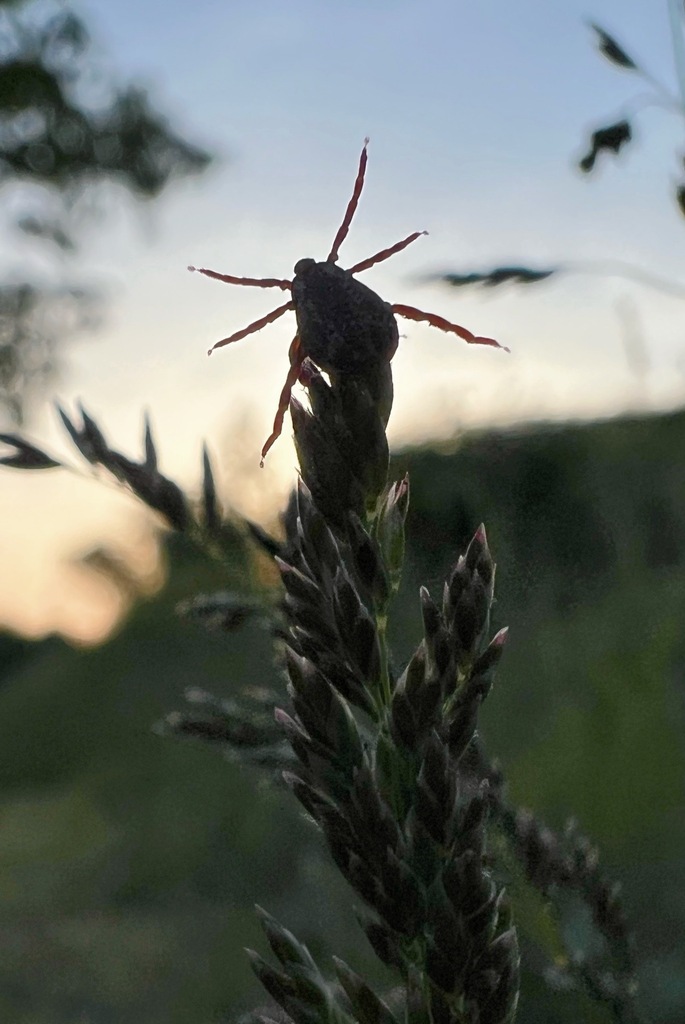
!Is the american dog tick dangerous?
Yes, it can be. Bites can cause localized irritation; more importantly, the species can transmit Rocky Mountain spotted fever and, less commonly, tularemia. If bitten, remove the tick promptly and clean the area. Save the tick for identification if possible. Seek medical attention if you develop fever, rash, severe headache or flu-like symptoms in the weeks after a tick bite.
Pets
Can attach to dogs and other pets and transmit tick-borne diseases; heavy infestations can cause anemia in small animals. Check pets after outdoor activity and consult a veterinarian about tick prevention products.
📖Overview
Dermacentor variabilis is a three-host hard tick found across much of eastern North America and parts of the Pacific coast. Adults quest on grasses and low vegetation to attach to passing mammals, especially dogs, but they will also bite humans. Females swell significantly when engorged. This species is medically important because it can transmit pathogens such as Rickettsia rickettsii (Rocky Mountain spotted fever) and Francisella tularensis (tularemia) under certain conditions.
🔍How to identify a american dog tick
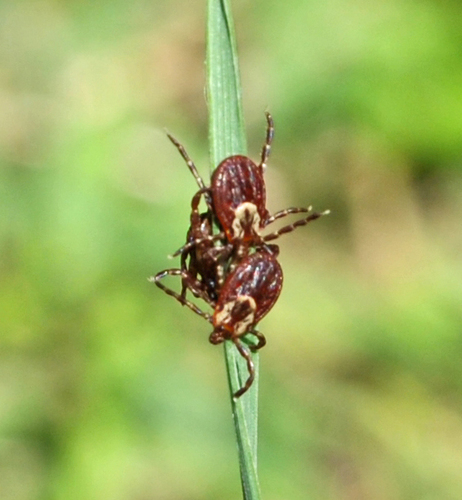
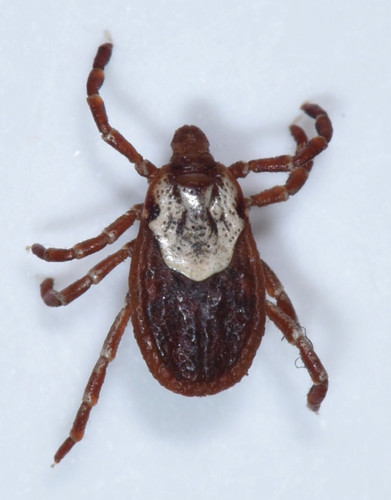
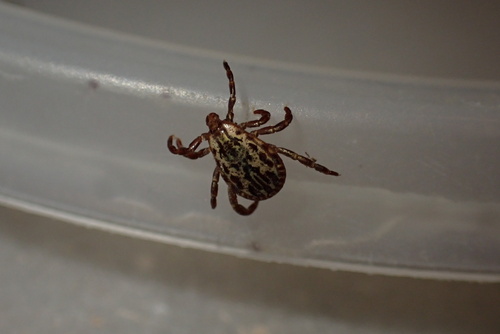
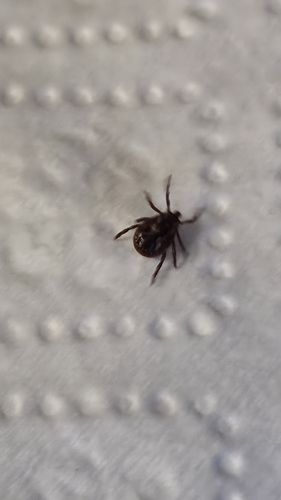
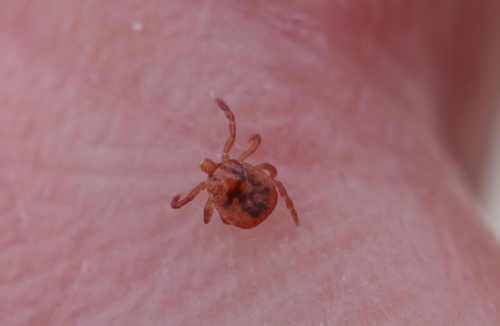
Adults are compact, roughly oval, and have a hard dorsal shield (scutum) with pale ornamentation (more obvious on males). Coloration in unfed adults is generally brown to reddish-brown with lighter patterning on the scutum and edges. Females have a larger, unornamented rear portion of the body that expands dramatically when engorged with blood, becoming rounded and much paler or greyish when full.
- Hard, oval body with a dorsal scutum and visible mouthparts projecting forward.
- Adults 3-5 mm when unfed, females noticeably expand when engorged.
- Brown to reddish-brown color with lighter cream or buff ornamentation on the scutum (more obvious on males).
- Usually found questing on grass and low vegetation rather than high in trees.
Lookalikes
Brown dog tick Rhipicephalus sanguineus
Brown dog tick is more uniformly reddish-brown without the pale scutum ornamentation and commonly infests kennels and indoor environments.
Rocky Mountain wood tick Dermacentor andersoni
Very similar appearance; D. andersoni is more typical in higher elevation western US and shows differences in scutum ornamentation and range (D. variabilis is east/central and separate Pacific populations).
Deer tick (blacklegged tick) Ixodes scapularis
Smaller and darker overall; Ixodes lacks the ornate scutum pattern typical of Dermacentor and has different mouthpart and body shape.
↻Life cycle
Egg
Female lays thousands of eggs in leaf litter or soil; eggs hatch into larvae after several weeks depending on temperature and humidity.
Larva (seed tick)
Six-legged larvae climb vegetation and take a small blood meal from small mammals or birds, then drop off to molt to nymphs.
Nymph
Eight-legged nymphs seek another host (often small to medium mammals), feed, then drop off and molt to adults.
Adult
Adults seek larger hosts (dogs, deer, humans). After mating on a host, the engorged female drops off and lays eggs, completing the cycle.
🍃Diet and predators
Young eat
Blood meals from small mammals and birds (larvae and nymphs).
Adults eat
Blood meals from medium to large mammals (dogs, raccoons, deer, humans).
Predators of the young
Ground-dwelling birds, ants and other arthropods, some small mammals.
Predators of adults
Birds, some mammals, and parasitoids or pathogens; many predators take ticks opportunistically.
🌱Effect on plants and gardens
Ticks do not feed on plants and have no direct beneficial or harmful effect on gardens, but their presence is associated with wildlife that move through vegetation.
How to get rid of american dog ticks
Reduce tick habitat by keeping grass short, removing leaf litter and brush near yards, creating a barrier of wood chips/gravel between lawn and woods, and discouraging deer and rodents. Use veterinarian-recommended tick preventatives on pets (topical, oral, or collars). For high-risk yards consider targeted acaricide treatments or professional pest control. Indoors, vacuuming and laundering bedding in hot water help remove ticks lodged on fabrics.
📍Where and when to find it
Questing on grasses and low shrubs at the edges of woods, along trails, and in yards; check hosts (dogs, deer, rodents) for attached ticks.
Best time
Spring and early summer are peak times; check during warm, humid daylight hours when ticks are most active.
Observation tips
Wear long pants and light-coloured clothing when walking in tick habitat, tuck pants into socks, use repellents on exposed skin, and perform thorough tick checks after outdoor activity. Photograph the tick from above on a neutral background for documentation if needed.
✨Fun facts
- Females can increase body size manyfold when engorged, changing shape and color.
- Dermacentor variabilis is a three-host tick: each life stage feeds on a different host before molting.
- Though called the American dog tick, it feeds on many wild mammals and will readily bite humans.
?Frequently asked questions
Do American dog ticks bite people?
Yes. They will attach to humans and take a blood meal if given the opportunity.
Are American dog ticks dangerous?
They can be. They are known vectors of Rocky Mountain spotted fever and can transmit tularemia; not every bite causes disease, but seek medical advice if symptoms develop.
How do I remove an American dog tick from skin?
Use fine-tipped tweezers, grasp the tick as close to the skin as possible and pull upward with steady, even pressure. Do not twist or crush. Clean the bite area and hands with soap and water or alcohol. Save the tick for identification if possible and watch for symptoms.
Why are American dog ticks in my yard or house?
They are common where host wildlife (deer, rodents) and dogs visit. Tall grass, leaf litter, and brush near yards increase tick presence; dogs can bring ticks into homes.
How can I prevent ticks on my pets and in my yard?
Use veterinarian-recommended tick preventatives on pets, keep lawn mowed, remove leaf litter and brush, create barriers between lawn and wild areas, and consider targeted acaricide treatments in high-risk areas.
Can a removed tick be tested for disease?
Yes, many public health or veterinary labs offer tick testing for certain pathogens. A positive test does not always mean transmission occurred, so consult a healthcare provider for bite management.
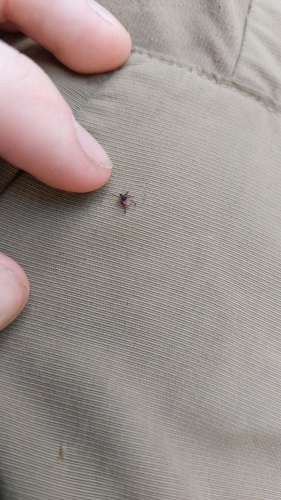
📷Photos of the american dog tick

More ticks
This guide was written with AI assistance and fact-checked, last updated 2026-10-09. Identification from photos is never certain: don't handle insects you can't identify, and get medical advice for bites, stings or allergic reactions.