
Brown dog tick
Rhipicephalus sanguineus · Hard ticks
A small, brown hard tick that prefers dogs, can live indoors, and transmits canine and occasionally human diseases.
!Is the brown dog tick dangerous?
Yes, it can be. Bites cause local irritation and sometimes allergic reactions. Rhipicephalus sanguineus can transmit pathogens (for example the Rickettsia bacteria that cause Rocky Mountain spotted fever in parts of the southwestern United States and Mexico, and Mediterranean spotted fever in southern Europe, Africa and Asia) so bites that produce fever, rash or flu-like symptoms require medical attention. Remove ticks promptly with fine-tipped tweezers by grasping close to the skin and pulling steadily. If you cannot remove a tick, or if signs of infection or systemic illness develop, seek medical care.
Pets
A primary parasite of dogs; heavy infestations can cause anemia, skin irritation, secondary infections and transmit pathogens such as Ehrlichia canis and Babesia vogeli. Treat dogs with veterinarian-recommended tick preventives and see your vet if you find many ticks or if your pet becomes ill.
📖Overview
Rhipicephalus sanguineus is a widespread hard tick species complex closely associated with domestic dogs. It is adapted to living in and around human habitations and kennels and can complete its life cycle indoors in temperate climates. Adults, nymphs and larvae feed on mammal blood; dogs are the preferred host but humans can be bitten occasionally. This species is an important vector of several canine pathogens and in some regions transmits agents that affect humans.
🔍How to identify a brown dog tick
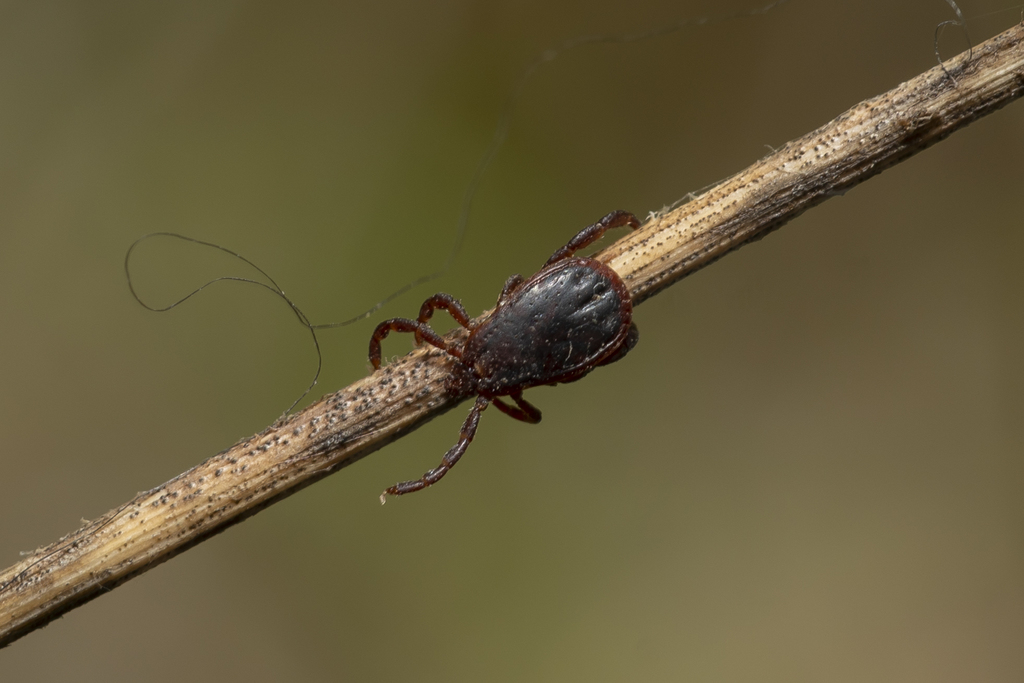
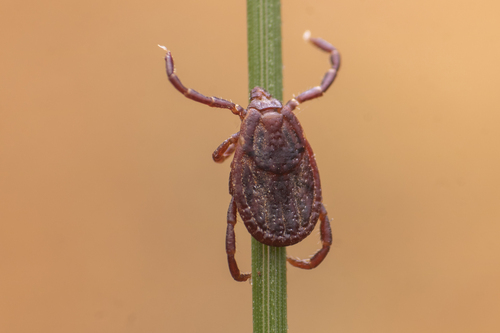
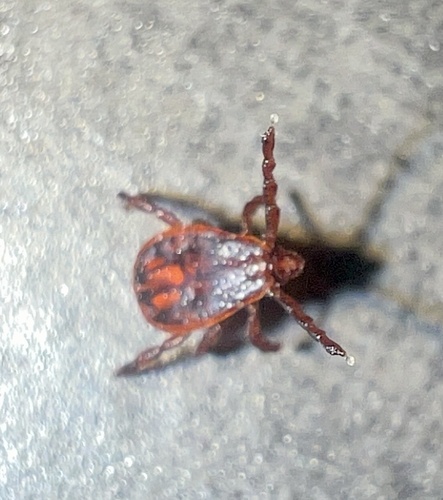
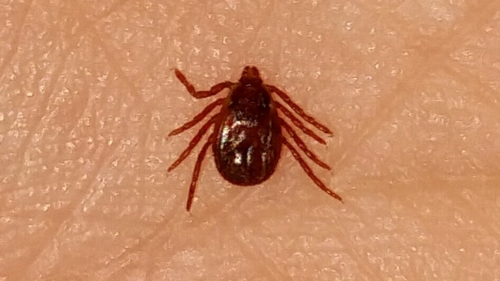
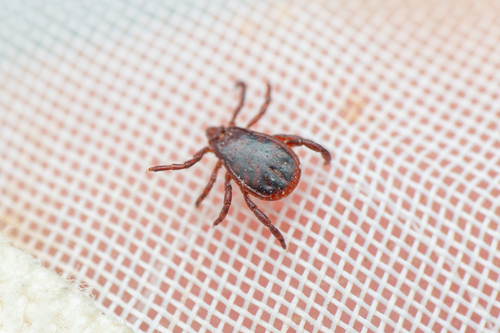
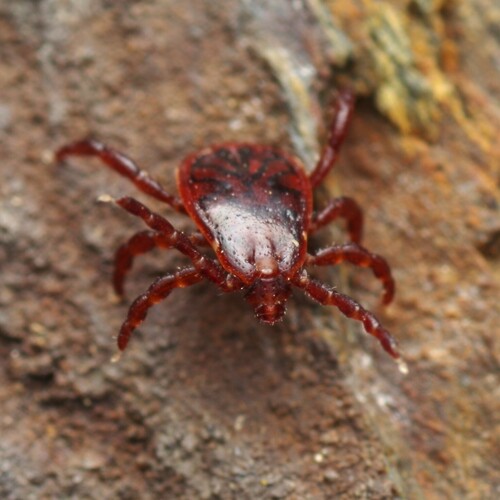
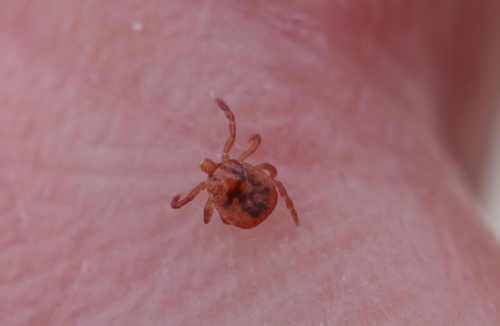
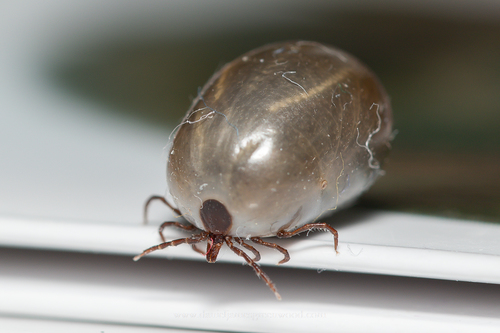
Adults are reddish-brown to dark brown, with an oval, flattened body when unfed and rounded, much larger bodies when engorged. Males remain smaller and flatter than engorged females. The tick has the hard dorsal scutum typical of hard ticks and six legs as larvae but eight legs as nymphs and adults. Mouthparts (capitulum) are visible from above. Size varies with life stage and feeding: unfed adults about 3-5 mm long, engorged females up to about 10 mm or larger.
- Small, uniformly brown to reddish-brown hard tick with visible mouthparts and a hard scutum
- Adults 3-5 mm unfed; engorged females become much larger, swollen and paler
- Often found on dogs (ears, between toes, groin) or in dog bedding and kennel cracks
- Unlike some other ticks, this species commonly completes its life cycle indoors and may persist in houses and kennels
Lookalikes
American dog tick Dermacentor variabilis
Larger and patterned (cream and brown markings) scutum; Dermacentor species are not uniformly reddish-brown and are less likely to complete life cycles indoors.
Gulf coast tick Amblyomma maculatum
More pronounced ornate scutum with pale markings and broader mouthparts; Amblyomma species are typically outdoor ticks preferring grassy or coastal habitats.
↻Life cycle
Egg
Females lay thousands of eggs in protected cracks or bedding after dropping off a host; eggs hatch into larvae.
Larva (seed tick)
Six-legged larvae quest for a small host, feed once, then drop off and moult to nymphs.
Nymph
Eight-legged nymphs feed on a host, drop off, and moult to adults; each blood meal is required to progress.
Adult
Adults feed (often on dogs), mate on or off the host, and females engorge, drop off, and lay eggs to complete the cycle.
🍃Diet and predators
Young eat
Blood of mammals (small mammals and dogs)
Adults eat
Blood of mammals, primarily dogs
Predators of the young
Small predators such as ants, some beetles, and parasitic wasps can attack eggs and ticks in the environment
Predators of adults
Some birds, opossums and other small mammals may eat ticks; predation is limited in indoor environments
🌱Effect on plants and gardens
Not a plant pest; does not feed on or damage plants
How to get rid of brown dog ticks
Control focuses on treating dogs and the environment: apply veterinarian-approved topical, oral or collar acaricides to dogs; wash and dry bedding and soft furnishings at high temperature; vacuum floors, cracks and baseboards and discard vacuum bag contents; treat heavily infested indoor areas or kennels with residual acaricide products labelled for ticks or hire professional pest control. Repeated treatments over weeks are often required to break the life cycle. Always follow product labels and consult a veterinarian for herd or multi-dog situations.
📍Where and when to find it
On dogs (ears, between toes, neck, groin), dog bedding, kennels, cracks and crevices indoors; larvae and nymphs may be in similar sheltered sites.
Best time
Year-round indoors; outdoors more common in warmer months. Check dogs daily, especially after kennels or walks.
Observation tips
Check common dog attachment sites, use good lighting and a magnifier to see small stages, and launder bedding at high temperature to kill eggs and ticks.
✨Fun facts
- Brown dog ticks are one of the few tick species that can complete their entire life cycle indoors, which is why infestations can persist inside homes and kennels.
- They are highly adapted to dogs and are found worldwide largely because of human movement of dogs and kennels.
- Females can lay thousands of eggs after a single blood meal.
?Frequently asked questions
Do brown dog ticks bite humans?
Yes, they will bite humans occasionally, but dogs are their preferred host. Human bites are less common than dog bites.
Are brown dog ticks dangerous to people?
They can transmit bacterial pathogens in some regions; any tick bite followed by fever, rash or flu-like symptoms should prompt medical evaluation.
Why do I find ticks in my house?
Brown dog ticks can live and reproduce indoors, especially where dogs sleep. Infested pets, bedding and cracks in floors or walls allow them to persist inside.
How do I get rid of brown dog ticks?
Treat all dogs with veterinarian-recommended tick preventives, wash and hot-dry bedding, vacuum thoroughly and use environmental acaricides or professional pest control for heavy infestations. Repeat measures are usually needed to break the life cycle.
How do I remove a brown dog tick from skin?
Use fine-tipped tweezers to grasp the tick close to the skin and pull steadily without twisting. Clean the bite site and wash your hands. Save the tick in a sealed container if medical attention is needed.
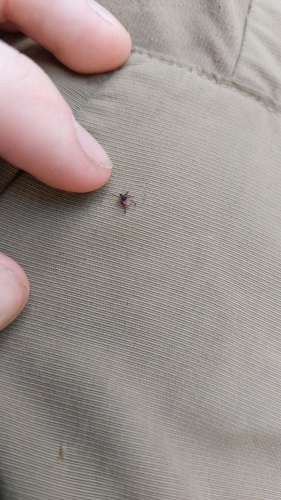
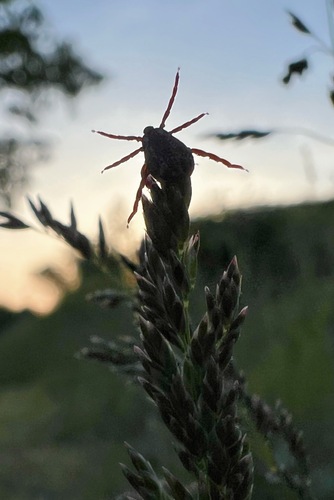
📷Photos of the brown dog tick
More ticks
This guide was written with AI assistance and fact-checked, last updated 2026-10-10. Identification from photos is never certain: don't handle insects you can't identify, and get medical advice for bites, stings or allergic reactions. More about the brown dog tick: iNaturalist, Wikipedia.