
Castor bean tick
Ixodes ricinus · Hard ticks
A common hard-bodied tick in Europe that feeds on mammals, birds and reptiles and can transmit Lyme disease and other pathogens.
!Is the castor bean tick dangerous?
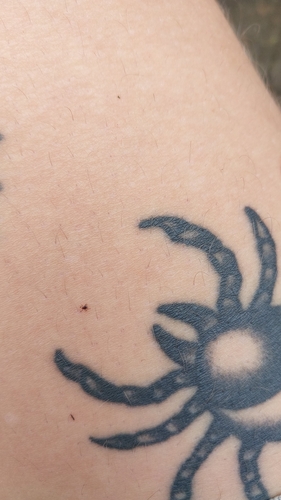
Yes, it can be. Ixodes ricinus does not inject strong venom but can transmit pathogens including the bacteria that cause Lyme borreliosis and, in some areas, tick-borne encephalitis virus and others. Bites are often painless; ticks may remain attached for several days. Remove attached ticks promptly with fine-tipped tweezers or a tick removal tool: grasp the tick as close to the skin as possible and pull straight out with steady pressure. Clean the bite site and hands with soap and water or alcohol. Seek medical advice if you cannot remove the tick, if signs of infection develop, or if you develop a rash (including expanding 'bullseye' rash), fever, flu-like symptoms, or neurological signs within weeks after a bite.
Pets
Can transmit tick-borne diseases to pets (e.g., Lyme disease, anaplasmosis and babesiosis) and cause local skin irritation or anemia in heavy infestations. Check pets after outdoor activity and remove ticks promptly. Discuss tick prevention (topical/oral preventatives, collars) with a veterinarian.
📖Overview
Ixodes ricinus is a three-host hard tick widespread across Europe, parts of North Africa and western Asia. It lives in humid, vegetated habitats (woods, hedgerows, grassland margins) where it quests on vegetation for passing hosts. All mobile stages (larva, nymph, adult) feed on blood; each stage usually feeds on a different host individual. It is an important vector of several pathogens, notably Borrelia burgdorferi sensu lato (Lyme borreliosis), tick-borne encephalitis virus in some regions, and other bacteria and parasites.
🔍How to identify a castor bean tick
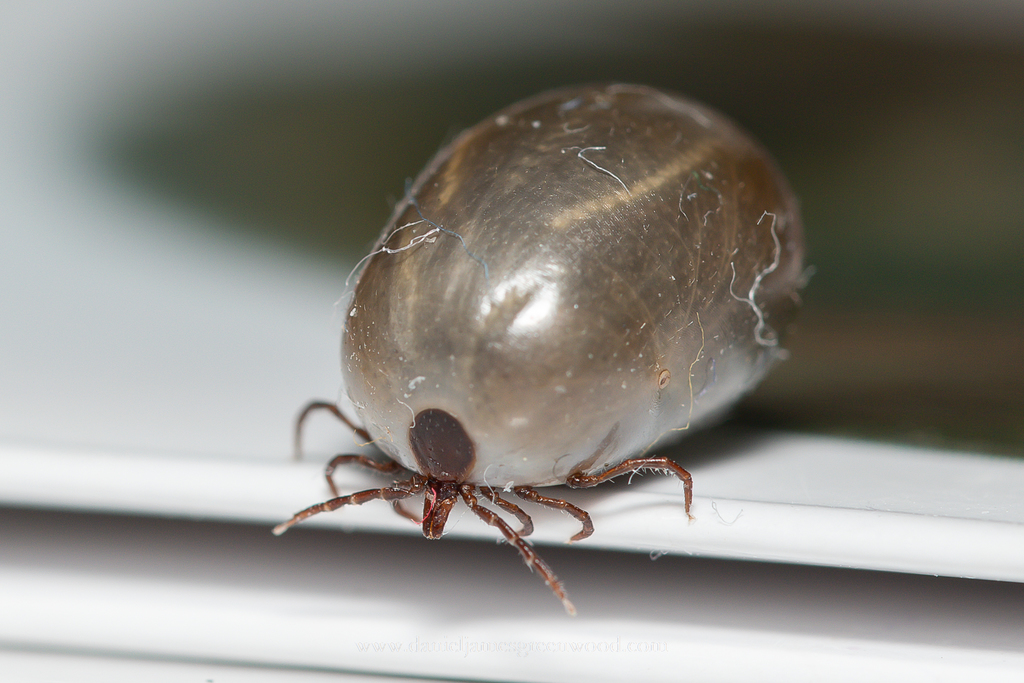
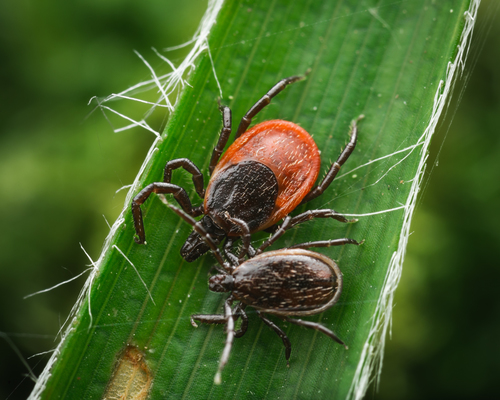
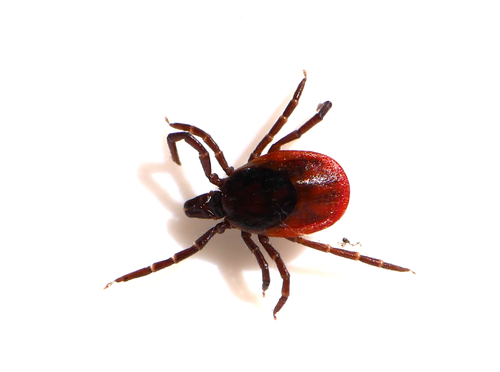
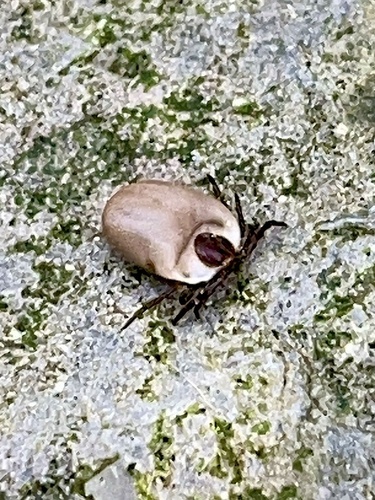
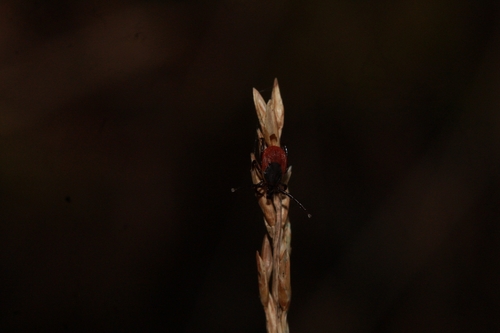
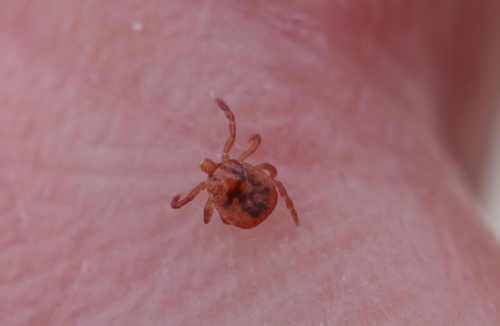
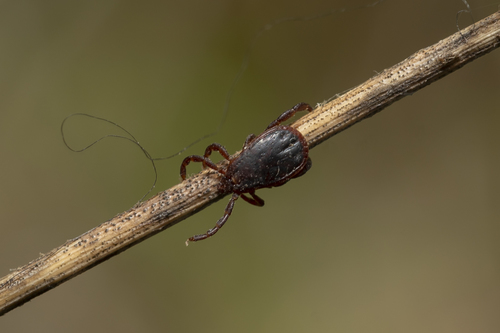
Adults are small, oval, flattened when unfed and strongly engorged after feeding. The scutum (dorsal shield) is present; males have a larger scutum covering most of the dorsum while females have a smaller scutum so their abdomen can expand when feeding. Colour varies from reddish-brown to dark brown or blackish, with paler legs. When fully engorged the female can become greyish and swollen. Mouthparts (basis capituli and palps) are visible at the front as a distinct head region.
- Small, rounded hard-bodied tick with visible mouthparts at the front and a dorsal scutum.
- Adults reddish-brown to dark brown; females expand markedly when engorged and can appear greyish.
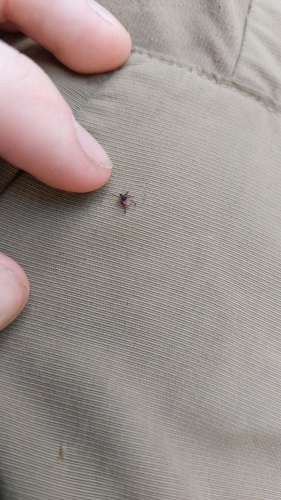
- Nymphs are tiny (about 1-2 mm) and often responsible for unnoticed bites.
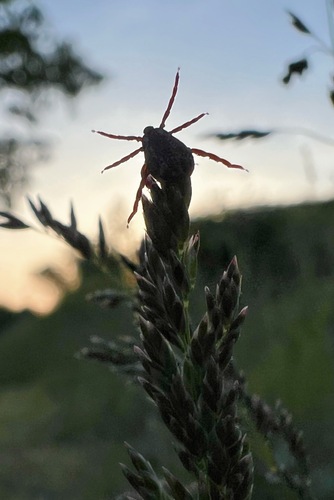
- Found questing on low vegetation, leaf litter edges and shrubs in humid woodland or grassy margins.
Lookalikes
Taiga tick Ixodes persulcatus
Closely related species in eastern Europe and Asia; differs in subtle morphological characters and geographical range; lab identification or expert morphological keys needed to separate them accurately.
Ornate cow tick Dermacentor reticulatus
Dermacentor species are larger and stockier, with a whitish-patterned (ornate) scutum and festoons on the rear edge; they often prefer open grassy habitats and have short, broad mouthparts.
Red sheep tick Haemaphysalis punctata
Smaller and with different capitulum and festoon structure; also differs in preferred hosts and microhabitat.
↻Life cycle
Egg
Females lay several thousand eggs in leaf litter or soil; eggs hatch into larvae after a variable period depending on temperature and humidity.
Larva
Six-legged larvae quest on vegetation and feed once on a small host (often small mammals or birds), then drop off to moult; larvae are tiny (about 0.5-1 mm).
Nymph
Eight-legged nymphs quest for a second host (small to medium mammals, birds, or humans); nymphs are epidemiologically important because they are small and bite humans frequently.
Adult
Adults seek larger hosts (deer, livestock, humans). After feeding, adult females lay eggs and die; males may feed little and concentrate on mating.
🍃Diet and predators
Young eat
Blood of small mammals, birds, reptiles and occasionally amphibians.
Adults eat
Blood of larger mammals (deer, livestock, pets, humans) and sometimes large birds.
Predators of the young
Predators include ground-dwelling birds, some beetles, ants and small mammals that consume ticks in leaf litter.
Predators of adults
Birds, some mammals (hedgehogs, rodents), predatory insects and nematodes, and fungi can kill adult ticks.
🌱Effect on plants and gardens
Does not feed on plants; presence reflects healthy wild mammal and bird populations rather than direct plant impact.
How to get rid of castor bean ticks
Reduce tick habitat: keep grass short, remove leaf litter and brush near homes, create a gravel or woodchip barrier between wooded areas and lawns, and discourage deer and rodent access. Use personal protective measures: wear long sleeves and trousers, tuck trousers into socks, use approved repellents containing DEET or picaridin (icaridin) on skin, and consider permethrin-treated clothing (keep permethrin products away from cats). Treat pets with veterinarian-recommended tick preventatives. Insecticide treatments for yards may reduce tick numbers but should be used carefully and according to label and local regulations.
📍Where and when to find it
Questing on grasses, shrubs and leaf litter edges in humid woodlands, hedgerows and grassy margins; check low vegetation and the lower legs of people and animals. Examine pets, clothing and skin after being in these habitats.
Best time
Best months are spring to early summer and autumn in temperate regions; check during daylight hours when humidity is high and temperatures are mild.
Observation tips
Wear light-coloured clothing to spot ticks, use repellents, tuck trousers into socks, and photograph any attached tick for identification if seeking medical advice. Check carefully after returning from woodland or tall grass.
✨Fun facts
- Ixodes ricinus is a three-host tick: each life stage feeds once on a different host before moulting.
- Nymphs are epidemiologically important because their small size makes bites easy to miss, increasing pathogen transmission risk.
- Tick activity often increases after mild, wet weather because humidity is important to prevent desiccation.
?Frequently asked questions
Do castor bean ticks bite people?
Yes. Larvae, nymphs and adults will bite humans if they come into contact while questing on vegetation.
Are castor bean ticks dangerous?
They can be dangerous as vectors of diseases, especially Lyme borreliosis and, in some regions, tick-borne encephalitis. Risk depends on local infection rates and prompt tick removal.
How do I remove a tick safely?
Use fine-tipped tweezers or a tick removal tool to grasp the tick as close to the skin as possible and pull straight out with steady pressure. Avoid twisting, crushing or using substances to 'make it back out.' Clean the wound and monitor for symptoms; seek medical advice if unsure or if symptoms develop.
Why is a tick in my house?
Ticks often get into houses on pets, clothing or by crawling in from nearby vegetation. Pets and wildlife (mice, hedgehogs, deer) commonly bring ticks close to homes.
How can I reduce ticks in my yard?
Maintain short grass, remove leaf litter and brush, create barriers between woods and lawn, discourage deer, and consider targeted acaricide application or professional pest advice where appropriate.
How long after a bite can disease appear?
Symptoms vary by disease; for Lyme disease an expanding rash or flu-like symptoms may appear days to weeks after a bite. Tick-borne encephalitis and other infections have variable incubation times. Seek medical assessment if you develop symptoms.
📷Photos of the castor bean tick
More ticks
This guide was written with AI assistance and fact-checked, last updated 2026-10-10. Identification from photos is never certain: don't handle insects you can't identify, and get medical advice for bites, stings or allergic reactions. More about the castor bean tick: iNaturalist, Wikipedia.