
Lone star tick
Amblyomma americanum · Hard ticks
A blood-feeding hard tick found across eastern and central North America, notable for the female's single white 'lone star' spot and its role as a disease vector.
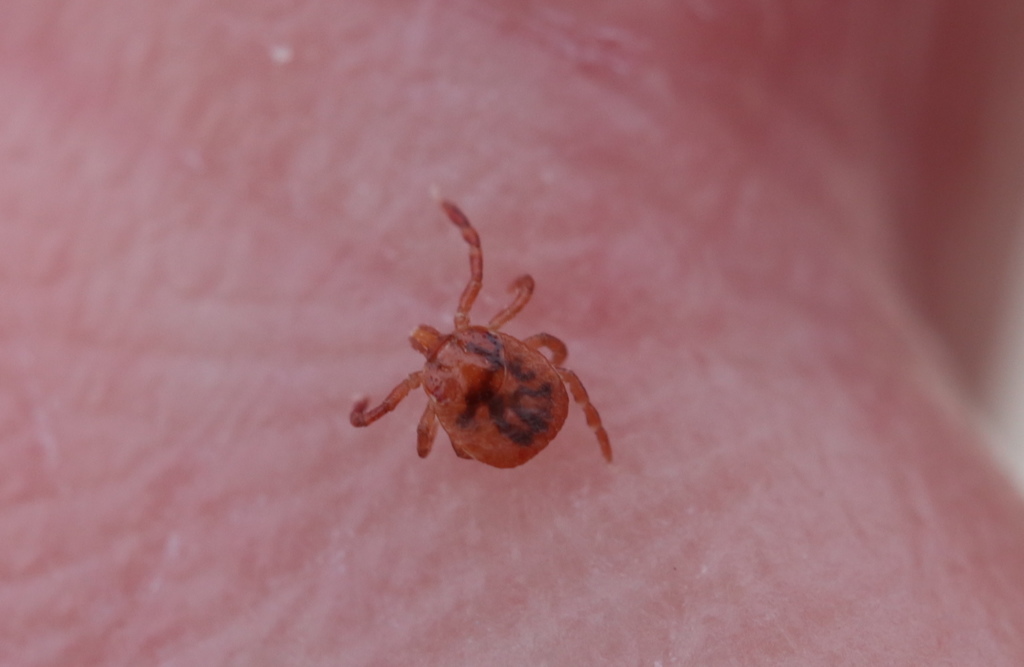
!Is the lone star tick dangerous?
Yes, it can be. Bites can be itchy and irritating and can transmit pathogens (notably ehrlichiosis and tularemia) and are associated with STARI. Bites can also trigger alpha-gal syndrome (delayed allergic reaction to red meat) in some people. If bitten, remove the tick promptly with fine-tipped tweezers, pulling straight out without twisting; clean the area with soap and antiseptic and save the tick in a sealed container for identification if possible. Seek medical attention if you develop fever, rash, muscle aches, swelling, or other flu-like symptoms, or a delayed allergic reaction after eating red meat.
Pets
Can transmit tick-borne diseases to dogs and other animals and cause anemia if infestations are heavy. Regular tick checks, veterinary tick prevention products (topical, oral, or collars), and prompt removal of attached ticks reduce risk. See a veterinarian if your pet becomes lethargic, feverish, or shows abnormal signs after a tick bite.
📖Overview
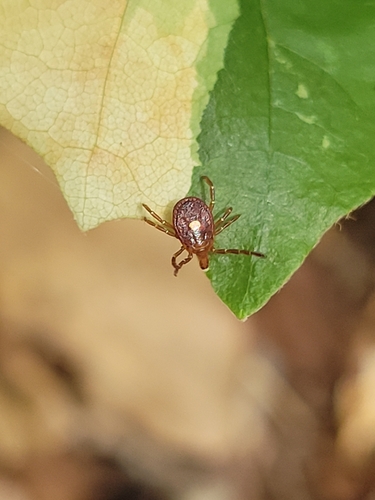
The lone star tick is a three-host hard tick that feeds on a wide range of mammals, birds and reptiles. It is active mainly in warm months and is commonly encountered in woodlands, brushy edges, and tall-grass habitats where hosts like white-tailed deer are present. Females are famous for a single conspicuous white or cream spot on the scutum; males lack this spot and have mottled markings.
Amblyomma americanum is medically important because it can transmit several pathogens (including ehrlichiosis and tularemia), is associated with a Lyme-like illness called STARI, and has been linked to the development of red meat allergy (alpha-gal syndrome) in some people after tick bites. Its geographic range has been expanding northward and westward in recent decades.
🔍How to identify a lone star tick
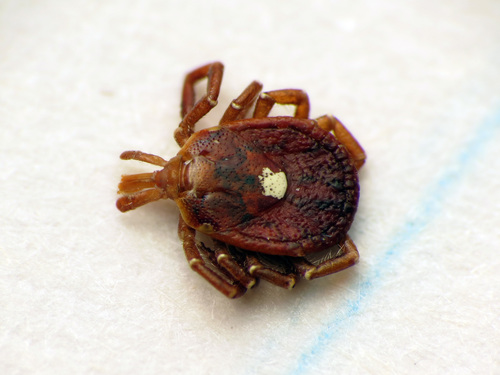
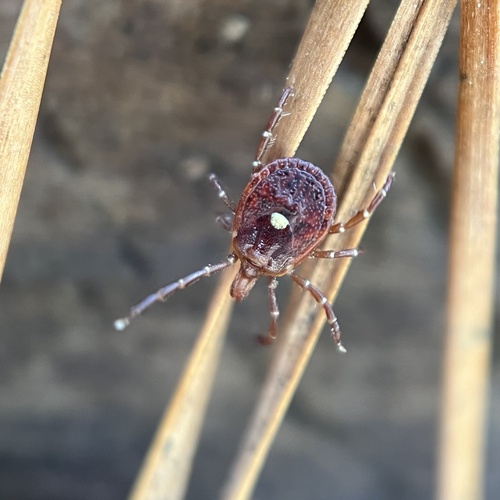
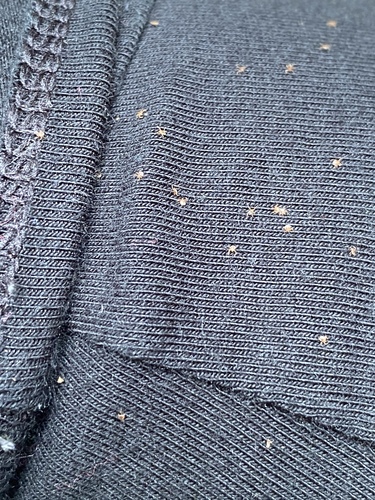
Unfed adults are flattened and leathery. Females are reddish-brown with a single, round, white or cream dorsal spot (the 'lone star') centered on the scutum; males are more mottled with pale markings but no single spot. Nymphs and larvae are smaller and uniformly brown to reddish. When engorged after feeding, females swell to many times their unfed size and become grayish to pale.
Mouthparts are long and visible from above (typical of Amblyomma). Adults have 8 legs (as arachnids) and a hard dorsal shield (scutum).
- Female adults show a single distinct white or cream dorsal spot (the 'lone star') on an otherwise reddish-brown body.
- Males lack the single spot and have pale mottled markings across the scutum.
- Mouthparts are long and visible from above; adults have eight legs and a hard scutum.
- Size varies widely: unfed adults 3-6 mm, engorged females swell to over 10 mm.
Lookalikes
American dog tick Dermacentor variabilis
D. variabilis has white mottling on its back in both sexes and lacks the single central white female spot; mouthparts are shorter relative to body.
Blacklegged tick (deer tick) Ixodes scapularis
I. scapularis is smaller, darker, with a uniformly dark scutum in females and different mouthpart and leg coloration; Ixodes species typically transmit Lyme disease, which Amblyomma americanum rarely transmits.
Gulf Coast tick Amblyomma maculatum
A. maculatum has distinct pale ornamentation and different geographic association; the female lacks the single central 'lone star' spot seen in A. americanum.
↻Life cycle
Egg
Females lay thousands of eggs in leaf litter or soil and then die; eggs hatch into larvae.
Larva (seed tick)
Six-legged larvae feed once on a small host (rodent, bird or reptile), then drop off to molt to nymph.
Nymph
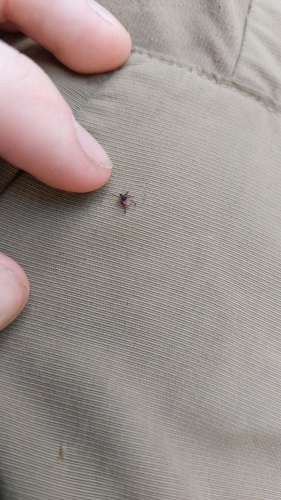
Eight-legged nymphs seek a second host and feed; after detaching they molt to adults. Nymphs are important in pathogen transmission to humans.
Adult
Adults seek larger hosts (deer, livestock, people). Mated females feed until engorged, then drop off to lay eggs and complete the cycle.
🍃Diet and predators
Young eat
Blood of small mammals, birds, and reptiles (rodents, ground-dwelling birds, etc.)
Adults eat
Blood of larger mammals including white-tailed deer, livestock, dogs and humans
Predators of the young
Ground-foraging birds, ants, spiders, and parasitic wasps
Predators of adults
Birds, some mammals, certain beetles and pathogens (fungi, nematodes) that attack ticks
🌱Effect on plants and gardens
Does not feed on plants; not a plant pest.
How to get rid of lone star ticks
Reduce habitat (clear brush and tall grass, create a dry buffer between woods and lawns), discourage deer and rodent hosts (secure trash, use fencing), use EPA-registered personal repellents (DEET, picaridin) on skin and permethrin on clothing, perform daily tick checks after outdoor activity, shower soon after being outdoors, and treat yard edges or use professional pest control for severe infestations. For pets, use veterinarian-recommended tick preventatives.
📍Where and when to find it
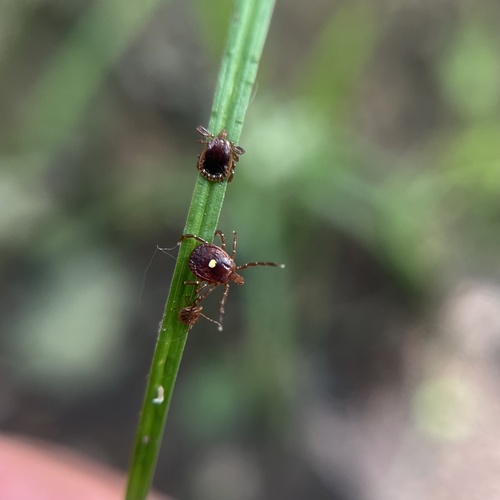
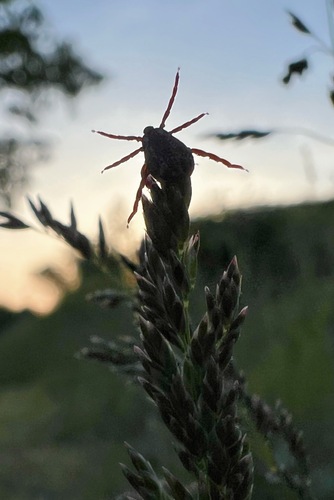
Adults on tall vegetation, trail edges, and shrubs waiting to quest for hosts; nymphs and larvae in leaf litter and low vegetation or on small mammals and birds.
Best time
Spring through fall (peak activity in late spring and summer); mid-morning to early evening on warm, humid days.
Observation tips
Check ankles, groin, armpits, and scalp after being in wooded or brushy areas. Use a white cloth or light-colored clothing to spot questing ticks more easily.
✨Fun facts
- The female's single white spot gives the species its common name; males show multiple pale markings instead.
- Its range has been expanding northward in recent decades, likely due to changes in climate and host populations such as deer.
- Bites from this species have been linked to alpha-gal syndrome, an allergic response to mammal meat that can appear days after eating red meat.
?Frequently asked questions
Do lone star ticks bite humans?
Yes. Both nymphs and adults will bite and feed on humans if given the opportunity.
Are lone star ticks dangerous?
They are medically important because they can transmit illnesses (e.g., ehrlichiosis, tularemia) and have been associated with alpha-gal meat allergy. Seek medical care for fever, rash, or other symptoms after a bite.
How do I remove a lone star tick?
Use fine-tipped tweezers to grasp the tick as close to the skin as possible and pull straight upward with steady pressure. Clean the bite site and hands, and save the tick in a sealed container for identification if needed.
Why am I finding lone star ticks in my yard?
They thrive where hosts (white-tailed deer, small mammals, birds) and suitable cover (leaf litter, brush, tall grass) are nearby. Yard habitat that attracts deer or has overgrown edges increases tick presence.
How can I prevent tick bites outdoors?
Wear long sleeves and pants, treat clothing with permethrin, use EPA-registered repellents on skin (DEET or picaridin), stay in cleared paths, and perform regular tick checks after being outdoors.
📷Photos of the lone star tick
More ticks
This guide was written with AI assistance and fact-checked, last updated 2026-10-09. Identification from photos is never certain: don't handle insects you can't identify, and get medical advice for bites, stings or allergic reactions.