
Deer tick vs Lone star tick
These two are easy to mix up. Here's how to tell a deer tick from a lone star tick, and whether either one bites or stings.
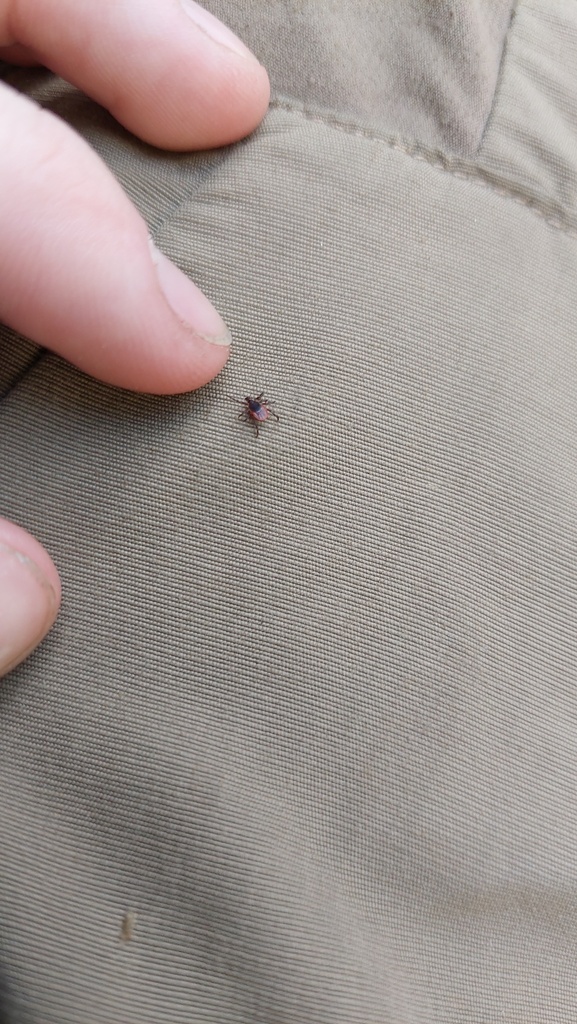
Deer tick
Ixodes scapularis
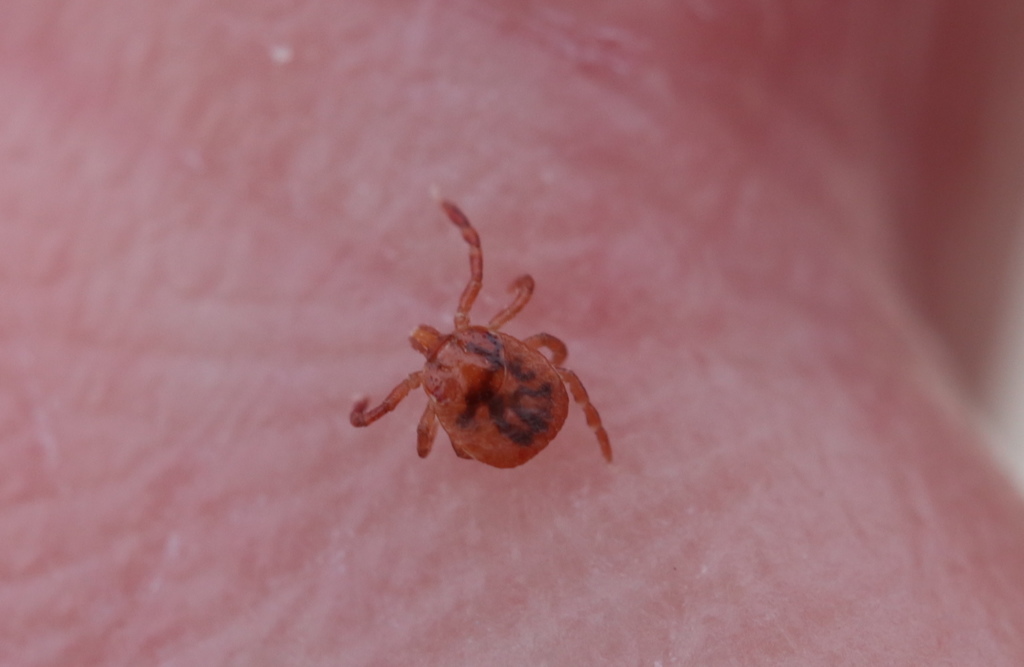
Lone star tick
Amblyomma americanum
≠The key differences
Female lone star ticks usually have a distinctive single white spot on the scutum; they are generally more aggressive and have longer mouthparts than Ixodes scapularis.
I. scapularis is smaller, darker, with a uniformly dark scutum in females and different mouthpart and leg coloration; Ixodes species typically transmit Lyme disease, which Amblyomma americanum rarely transmits.
⚖︎Side by side
| Deer tick | Lone star tick | |
|---|---|---|
| To humans | Disease vector | Disease vector |
| Size | Adult female 3-5 mm unfed (much larger when engorged); nymph 1-2 mm; larva about 0.8-1 mm | Unfed adults 3-6 mm; engorged females up to 15 mm or larger |
| Colours | Dark brown / black, Reddish brown, Black (legs), Engorged gray | Reddish brown, Cream/white (female spot), Pale mottling |
| Family | Ixodidae | Ixodidae |
| Habitat | Wooded and brushy areas, leaf litter, forest edges, overgrown yards, and ecotones with abundant small mammals and deer | Woodlands, brushy edges, overgrown fields, and areas with high deer or other wildlife activity; also lawns and trail margins near wooded areas |
| Range | Northeastern, mid-Atlantic and upper Midwestern United States, parts of the southeastern US, and southeastern Canada | Originally southeastern and south-central USA, now widespread across the eastern and central United States and expanding northward, with occasional records in southern Canada |
| Active | Nymphs most active late spring and summer; adults active in fall, early spring and milder winter days; larvae active in summer | Spring through fall in most of its range; adults and nymphs most active in warm months and on warm, humid days |
| Pest? | Yes | Yes |
🔍How to spot a deer tick
- Small size with 8 legs (nymphs and adults); larvae have 6 legs
- Adults: dark scutum (shield) and reddish-brown body; males smaller and darker
- Nymphs are very small (about 1-2 mm) and often appear as tiny dark dots on skin or clothing
- Engorged females swell and become grayish and pear-shaped after feeding
🔍How to spot a lone star tick
- Female adults show a single distinct white or cream dorsal spot (the 'lone star') on an otherwise reddish-brown body.
- Males lack the single spot and have pale mottled markings across the scutum.
- Mouthparts are long and visible from above; adults have eight legs and a hard scutum.
- Size varies widely: unfed adults 3-6 mm, engorged females swell to over 10 mm.
?Frequently asked questions
What is the difference between a deer tick and a lone star tick?
Female lone star ticks usually have a distinctive single white spot on the scutum; they are generally more aggressive and have longer mouthparts than Ixodes scapularis. I. scapularis is smaller, darker, with a uniformly dark scutum in females and different mouthpart and leg coloration; Ixodes species typically transmit Lyme disease, which Amblyomma americanum rarely transmits.
Is a deer tick or a lone star tick more dangerous?
Deer tick: Disease vector. Lone star tick: Disease vector. Deer ticks feed by attaching to skin and can transmit pathogens such as Borrelia burgdorferi (Lyme disease), Anaplasma, Babesia, and Powassan virus. Bites can be itchy and irritating and can transmit pathogens (notably ehrlichiosis and tularemia) and are associated with STARI.
Identification from photos is never certain: don't handle insects you can't identify, and get medical advice for bites, stings or allergic reactions.