
American dog tick vs Brown dog tick
These two are easy to mix up. Here's how to tell an American dog tick from a brown dog tick, and whether either one bites or stings.
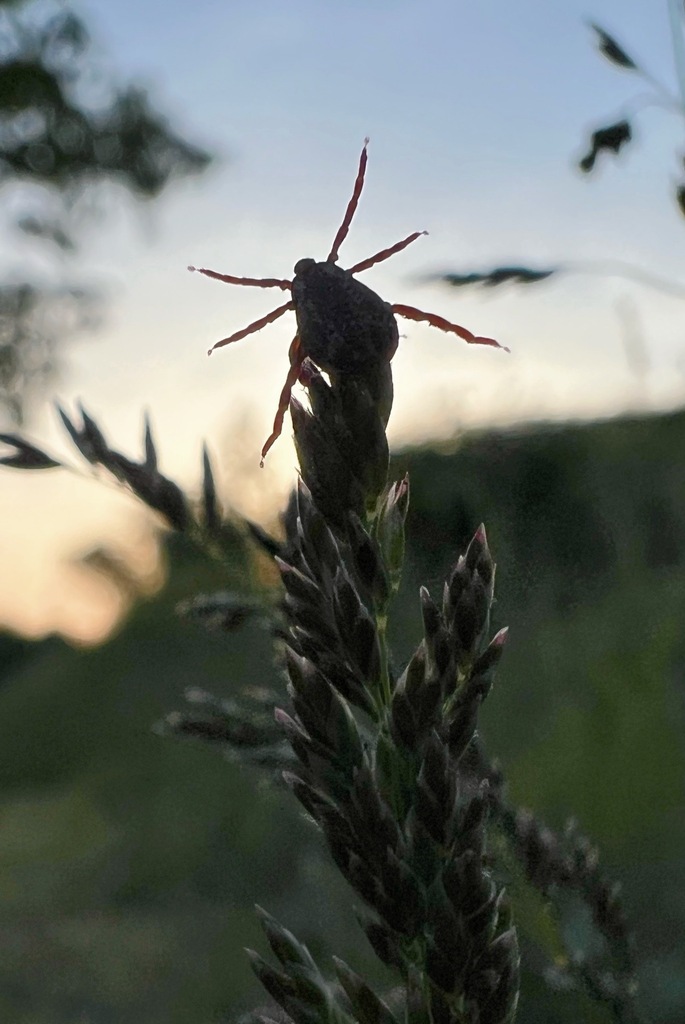
American dog tick
Dermacentor variabilis
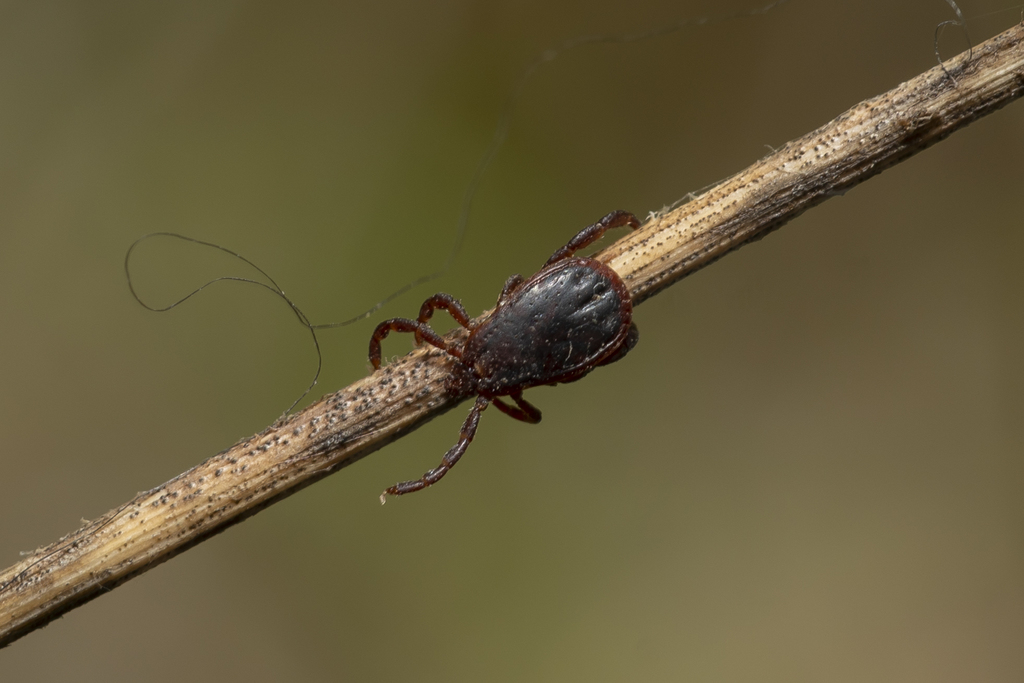
Brown dog tick
Rhipicephalus sanguineus
≠The key differences
Brown dog tick is more uniformly reddish-brown without the pale scutum ornamentation and commonly infests kennels and indoor environments.
Larger and patterned (cream and brown markings) scutum; Dermacentor species are not uniformly reddish-brown and are less likely to complete life cycles indoors.
⚖︎Side by side
| American dog tick | Brown dog tick | |
|---|---|---|
| To humans | Disease vector | Disease vector |
| Size | Unfed adults 3-5 mm long; engorged females up to about 15 mm | Unfed adults 3-5 mm; engorged females up to 10 mm or more |
| Colours | Brown, Reddish-brown, Cream (pale ornamentation), Grey (engorged female) | Reddish brown, Medium brown, Dark brown |
| Family | Ixodidae | Ixodidae |
| Habitat | Grassy fields, trails, forest edges, leaf litter and tall roadside vegetation; often found where mammals travel or rest. | Kennels, dog bedding, cracks and crevices inside homes and garages, sheltered outdoor locations; thrives in human structures in temperate regions |
| Range | Eastern and central United States and southern Canada, with separate populations along parts of the Pacific coast. | Worldwide in warmer temperate and tropical regions; cosmopolitan largely due to association with domestic dogs |
| Active | Most active spring through early summer and in warm autumn periods; adults quest during daylight on warm, humid days. | Year-round where indoors or in warm climates; outdoors most active in warmer months; active day and night while seeking hosts |
| Pest? | Yes | Yes |
🔍How to spot an American dog tick
- Hard, oval body with a dorsal scutum and visible mouthparts projecting forward.
- Adults 3-5 mm when unfed, females noticeably expand when engorged.
- Brown to reddish-brown color with lighter cream or buff ornamentation on the scutum (more obvious on males).
- Usually found questing on grass and low vegetation rather than high in trees.
🔍How to spot a brown dog tick
- Small, uniformly brown to reddish-brown hard tick with visible mouthparts and a hard scutum
- Adults 3-5 mm unfed; engorged females become much larger, swollen and paler
- Often found on dogs (ears, between toes, groin) or in dog bedding and kennel cracks
- Unlike some other ticks, this species commonly completes its life cycle indoors and may persist in houses and kennels
?Frequently asked questions
What is the difference between an American dog tick and a brown dog tick?
Brown dog tick is more uniformly reddish-brown without the pale scutum ornamentation and commonly infests kennels and indoor environments. Larger and patterned (cream and brown markings) scutum; Dermacentor species are not uniformly reddish-brown and are less likely to complete life cycles indoors.
Is an American dog tick or a brown dog tick more dangerous?
American dog tick: Disease vector. Brown dog tick: Disease vector. Bites can cause localized irritation; more importantly, the species can transmit Rocky Mountain spotted fever and, less commonly, tularemia. Bites cause local irritation and sometimes allergic reactions.
Identification from photos is never certain: don't handle insects you can't identify, and get medical advice for bites, stings or allergic reactions.