
Western honey bee vs Common drone fly
These two are easy to mix up. Here's how to tell a western honey bee from a common drone fly, and whether either one bites or stings.
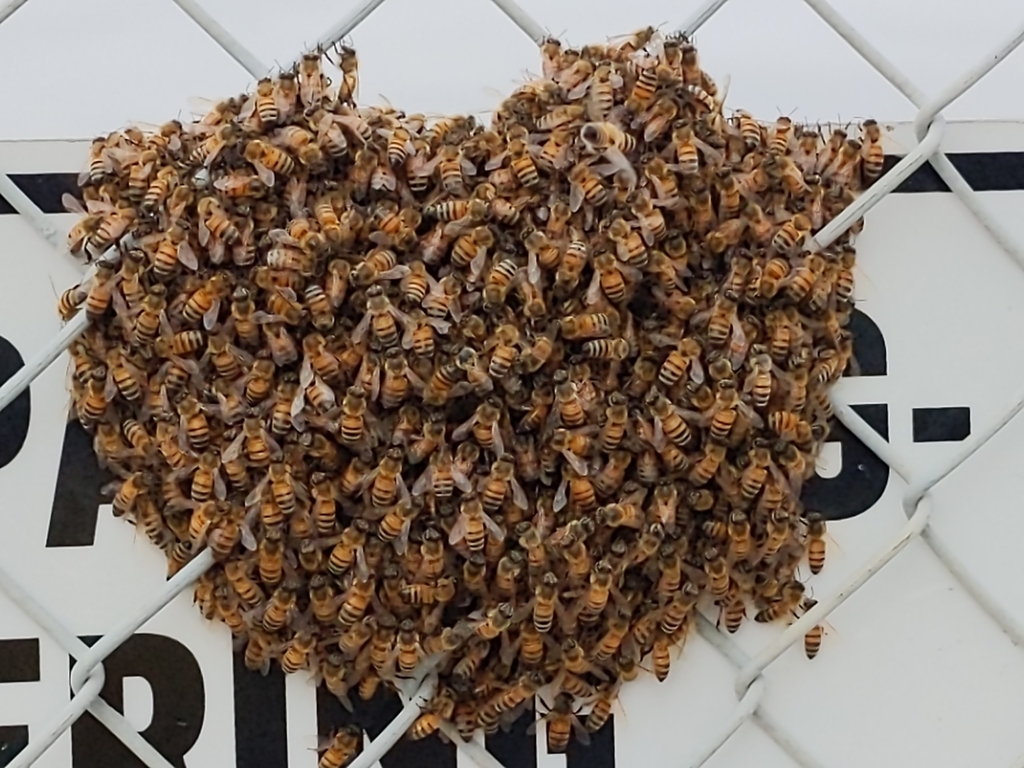
Western honey bee
Apis mellifera
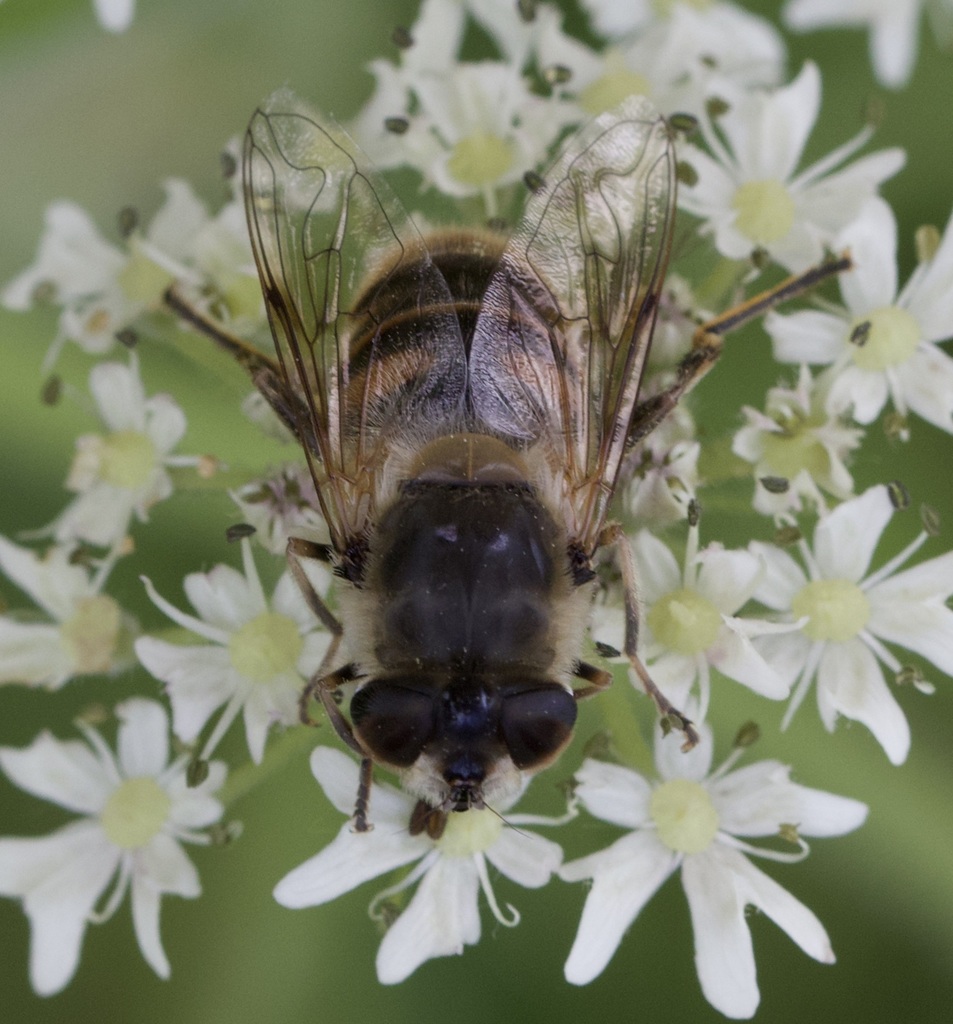
Common drone fly
Eristalis tenax
≠The key differences
Honeybees have denser body hair, two pairs of wings, long elbowed antennae and, in workers, pollen baskets on the hind legs; workers can sting, drones cannot. Drone flies have one pair of wings, very short antennae and large eyes that take up most of the head.
⚖︎Side by side
| Western honey bee | Common drone fly | |
|---|---|---|
| To humans | Stinging insect | Non-toxic |
| Size | 10-15 mm body length (worker) | 12-16 mm body length |
| Colours | Golden brown, Dark brown, Black | Dark brown, Black, Yellow-brown, Orange-brown |
| Family | Apidae | Syrphidae |
| Habitat | Cavity-nesting in tree hollows or man-made hives; found in agricultural, suburban and wild landscapes where flowering plants are available. | Gardens, farmland, meadows, woodland edges; larvae in stagnant or polluted water, drainage systems, manure heaps and wet organic-rich substrates |
| Range | Native to Africa, Europe and parts of western Asia; now globally introduced and established on most continents. | Originally Palearctic but now cosmopolitan — common across Europe, North America, parts of Africa, Asia, Australia and other regions |
| Active | Active in spring through early autumn in temperate zones; year-round activity in warmer climates; diurnal (daytime foraging). | Active mainly spring to autumn in temperate regions; adults fly during daylight, often sunny warm hours |
| Pest? | No | No |
🔍How to spot a western honey bee
- Worker size 10-15 mm with golden-brown and dark banded abdomen
- Hind legs have smooth pollen baskets (corbiculae) often carrying yellow or orange pollen
- Distinctive waisted body and two pairs of translucent wings; workers have barbed stinger (not visible externally)
🔍How to spot a common drone fly
- Bee-like banded abdomen but body less hairy on close inspection.
- Single pair of wings (flies) versus two pairs in bees — look for wing venation typical of hoverflies.
- Characteristic hovering flight and darting movement; often visits flowers like a bee.
- If you can see the larva, the long posterior breathing tube ("rat-tail") identifies Eristalis-type larvae.
?Frequently asked questions
What is the difference between a western honey bee and a common drone fly?
Honeybees have denser body hair, two pairs of wings, long elbowed antennae and, in workers, pollen baskets on the hind legs; workers can sting, drones cannot. Drone flies have one pair of wings, very short antennae and large eyes that take up most of the head.
Is a western honey bee or a common drone fly more dangerous?
Western honey bee: Stinging insect. Common drone fly: Non-toxic. Workers can sting once (barbed stinger typically remains in skin), causing local pain, swelling and itching. Adults cannot sting or bite and carry no venom; like all hoverflies they only feed on nectar and pollen.
Identification from photos is never certain: don't handle insects you can't identify, and get medical advice for bites, stings or allergic reactions.