
Head louse vs Body louse
These two are easy to mix up. Here's how to tell a head louse from a body louse, and whether either one bites or stings.
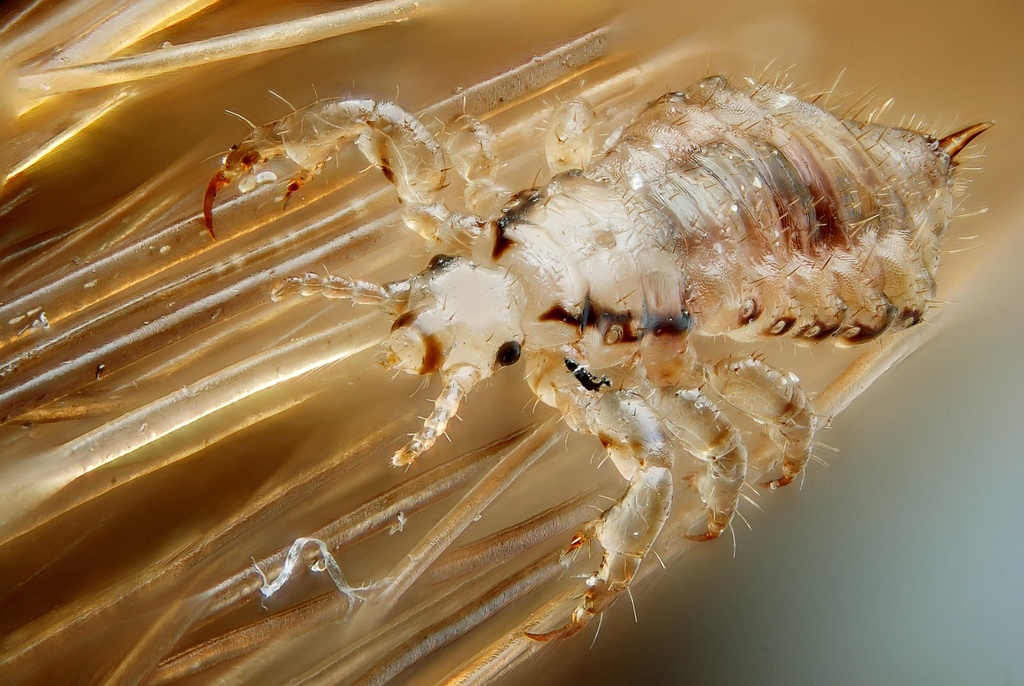
Head louse
Pediculus humanus capitis
Body louse
Pediculus humanus humanus
≠The key differences
Body lice live in clothing seams and visit the skin to feed; they are usually associated with poor hygiene and can transmit diseases. Head lice live and lay eggs on hair and are not typically disease vectors.
Lives and lays eggs on hair shafts of the scalp; eggs attached to hair and the insects are usually found on the scalp rather than clothing.
⚖︎Side by side
| Head louse | Body louse | |
|---|---|---|
| To humans | Bites, itching | Disease vector |
| Size | 2-4 mm long | 2.3-3.6 mm long |
| Colours | Grey-brown, Pale cream (nit) | Pale grey, Light brown, Cream |
| Family | Pediculidae | Pediculidae |
| Habitat | Human scalp (preferentially behind ears and at nape of neck); occasionally on pillowcases, hats or brushes for short periods | Human clothing and bedding; hides in seams, folds and undergarments, moves to skin to feed |
| Range | Worldwide, common in communities with close head-to-head contact | Worldwide wherever humans live; common historically in wartime and refugee camps, present today in areas with limited access to laundry and overcrowding |
| Active | Year-round; active day and night while on host | Active year-round where conditions allow; most active when hosts wear infrequently washed clothing |
| Pest? | Yes | Yes |
🔍How to spot a head louse
- Look close to the scalp behind the ears and at the nape of the neck for small moving insects 2-4 mm long
- Find nits: tiny pearly eggs glued to hair within 1-3 cm of the scalp that do not brush off easily
- Use a bright light and a fine-toothed nit comb on wet hair to comb out lice and nits
- Adult lice crawl—if a specimen jumps or flies, it is not a head louse
🔍How to spot a body louse
- Look for tiny pale-grey to brown 2.3-3.6 mm insects in clothing seams, especially collars, waistbands and undergarments.
- Find eggs (nits) cemented to fabric fibers rather than to hair shafts (which indicates head lice).
- Itching and scratch marks on the torso, buttocks and thighs are common where lice feed.
- Body lice move to the skin to feed and return to clothing; inspecting clothing rather than scalp hair is key.
?Frequently asked questions
What is the difference between a head louse and a body louse?
Body lice live in clothing seams and visit the skin to feed; they are usually associated with poor hygiene and can transmit diseases. Head lice live and lay eggs on hair and are not typically disease vectors. Lives and lays eggs on hair shafts of the scalp; eggs attached to hair and the insects are usually found on the scalp rather than clothing.
Is a head louse or a body louse more dangerous?
Head louse: Bites, itching. Body louse: Disease vector. Head lice bite to feed causing itching and secondary skin irritation. Bites are itchy and can cause excoriation from scratching.
Identification from photos is never certain: don't handle insects you can't identify, and get medical advice for bites, stings or allergic reactions.