
Head louse
Pediculus humanus capitis · Lice
A small, wingless blood-feeding parasite that lives on the human scalp and causes itching and visible eggs (nits) glued to hair shafts.
!Is the head louse dangerous?
Only mildly. Head lice bite to feed causing itching and secondary skin irritation. Intense scratching can lead to skin breaks and secondary bacterial infection. Unlike body lice, head lice are not known to transmit major infectious diseases. First aid: avoid scratching, keep scalp clean, see treatment below; seek medical help if signs of infection (redness, swelling, pus) develop.
Pets
Not a threat to pets. Head lice are specific to humans and will not establish on cats or dogs.
📖Overview
Pediculus humanus capitis is an obligate ectoparasite of humans found worldwide. Adults and nymphs feed on human blood and spend their entire life on the host or very near it (clothing, bedding for short periods). Infestations are most common in children and spread by close head-to-head contact or sharing hair items. Head lice are not known to transmit the serious human diseases associated with body lice.
🔍How to identify a head louse
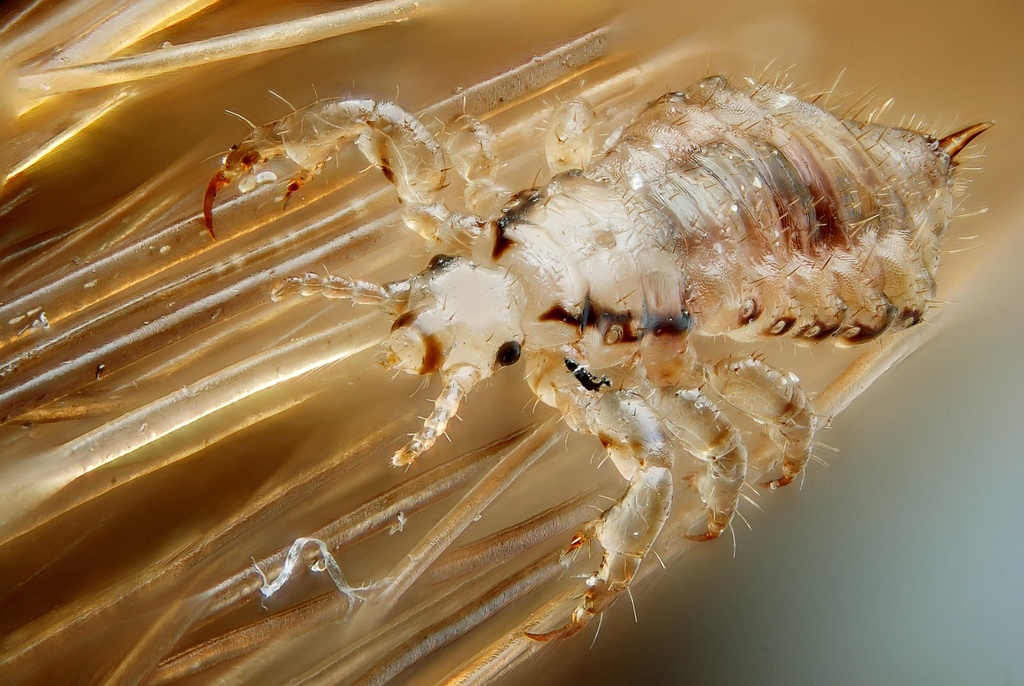
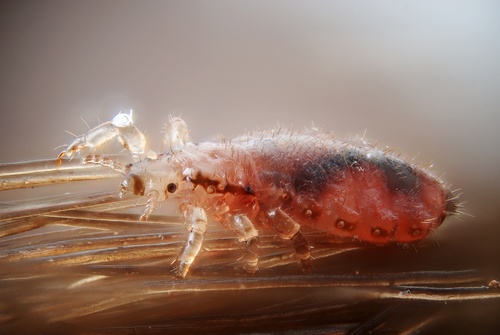
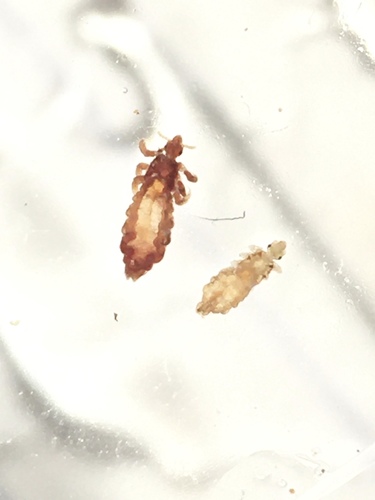
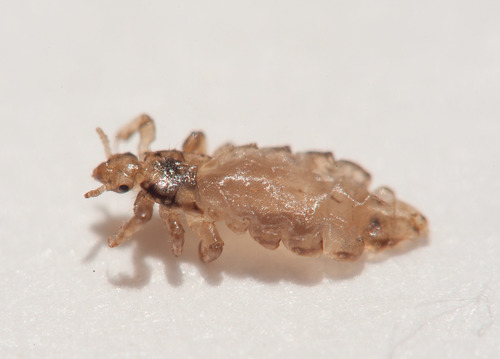
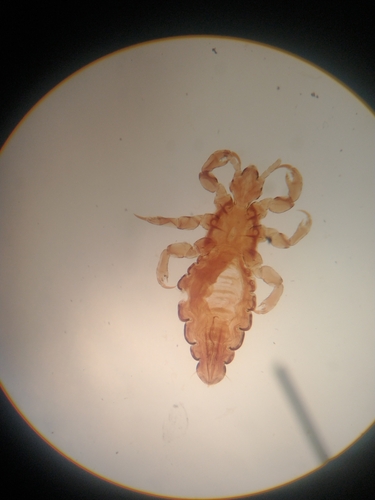
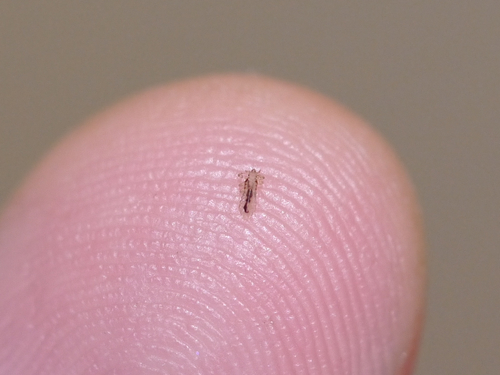
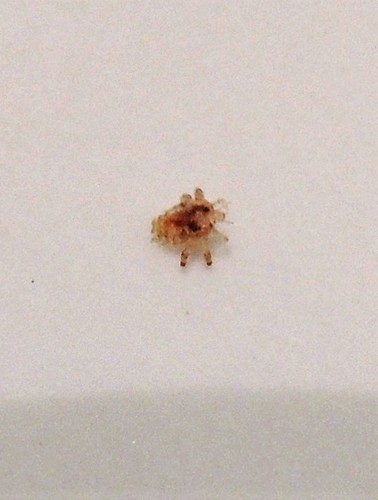
Adults are 2-4 mm long, wingless, with a flattened, elongated body and six legs ending in claws adapted to grasp human hair. Colour ranges from pale grey to brownish depending on how recently they have fed. Eggs (nits) are pearly white to yellow-brown, 0.8 mm long, and firmly glued to hair shafts close to the scalp.
- Look close to the scalp behind the ears and at the nape of the neck for small moving insects 2-4 mm long
- Find nits: tiny pearly eggs glued to hair within 1-3 cm of the scalp that do not brush off easily
- Use a bright light and a fine-toothed nit comb on wet hair to comb out lice and nits
- Adult lice crawl—if a specimen jumps or flies, it is not a head louse
Lookalikes
Body louse Pediculus humanus humanus
Body lice live in clothing seams and visit the skin to feed; they are usually associated with poor hygiene and can transmit diseases. Head lice live and lay eggs on hair and are not typically disease vectors.
Pubic louse (crab louse) Pthirus pubis
Shorter, broader body and claws adapted to coarse hair. Usually found in pubic and coarse body hair rather than scalp hair.
↻Life cycle
Egg (nit)
Laid on hair near the scalp, glued to the hair shaft; hatch in about 7-10 days depending on temperature.
Nymph
Three immature stages that resemble small adults; they feed on blood and mature in about 7-10 days after hatching.
Adult
Reproductive stage; females lay up to 6 eggs per day and live about 20-30 days on a host.
🍃Diet and predators
Young eat
Human blood (feed multiple times per day)
Adults eat
Human blood (feed every few hours)
Predators of the young
Occasionally ants or other arthropods if dislodged from a host; survival off-host is brief
Predators of adults
Few natural predators while on a human host; off-host they are vulnerable to drying and predation by arthropods
🌱Effect on plants and gardens
Not applicable; does not feed on plants
How to get rid of head lice
Combine mechanical removal (wet combing with a fine-toothed 'nit' comb) with approved topical treatments when needed. Treatments include over-the-counter permethrin 1% or pyrethrin-based products, topical ivermectin lotion, and prescription agents (malathion 0.5%, spinosad, benzyl alcohol lotion) or oral ivermectin prescribed by a doctor. Follow the label, including minimum age limits for young children. Repeat treatment or combing after 7-10 days to remove newly hatched nymphs. Wash bedding, hats and recently worn clothing in hot water (at least 60 degrees C) or dry-clean; items that cannot be washed can be sealed in plastic bags for 2 weeks. Avoid unproven home remedies and insecticides not labeled for head lice. For persistent infestations seek advice from a healthcare provider or pharmacist.
📍Where and when to find it
Inspect scalp, especially behind ears and at the nape of the neck; nits are stuck to hair shafts close to the scalp. Use a comb and good light.
Best time
Any time of year; inspect whenever itching or contact with an infested person is suspected. Daytime is fine since lice are active while attached to the host.
Observation tips
Part hair into small sections and comb from root to tip over a white towel or tray. Wetting hair or using conditioner makes combing easier and more effective at removing lice and nits.
✨Fun facts
- Head lice cannot jump or fly; they move by crawling from hair to hair.
- Nits are glued to hair shafts with a waterproof cement secreted by the female, making them hard to remove.
- Infestations are most common among school-age children because of close head-to-head contact.
?Frequently asked questions
Do head lice bite?
Yes — they pierce the skin to feed on blood. Bites cause itching and sometimes irritation.
Are head lice dangerous?
No — they are unpleasant and cause itching but are not known to transmit the serious diseases associated with body lice.
How did I get head lice?
Most commonly from close head-to-head contact with an infested person or sharing combs, hats or hair accessories that recently touched an infested scalp.
How do I get rid of head lice?
Combine thorough wet-combing with a fine nit comb and an approved lice treatment (permethrin, pyrethrins, or prescription options). Repeat treatment/combing after 7-10 days and launder or isolate recently used clothing and bedding.
Can pets get head lice?
No — human head lice are host-specific and cannot establish on dogs or cats.
📷Photos of the head louse
More lice & fleas
This guide was written with AI assistance and fact-checked, last updated 2026-10-10. Identification from photos is never certain: don't handle insects you can't identify, and get medical advice for bites, stings or allergic reactions. More about the head louse: iNaturalist, Wikipedia.