
Oriental rat flea
Xenopsylla cheopis · Fleas
A small, wingless blood-feeding flea that lives on rats and is a major historic vector of plague and other rodent-borne diseases.
!Is the Oriental rat flea dangerous?
Yes, it can be. Xenopsylla cheopis bites cause itchy welts; more seriously, the species is a proven vector of Yersinia pestis (plague) and can transmit Rickettsia typhi (murine typhus). If you find them in a home, assume a rodent infestation and a potential disease risk. First aid for bites: clean the site with soap and water, apply antiseptic, and treat itching with topical hydrocortisone or oral antihistamines as needed. Seek medical attention promptly if you develop fever, swollen lymph nodes, severe illness, or flu-like symptoms after flea exposure.
Pets
Can bite pets, causing irritation and potential allergic dermatitis. Pets that hunt or live with rodents may become infested; heavy infestations can cause anemia in small or young animals. Fleas on pets can be controlled with veterinarian-recommended topical or oral treatments.
📖Overview
Xenopsylla cheopis is a species of flea closely associated with commensal rodents (especially Rattus species). Adults are obligate blood feeders that live on host animals or in their nests and bedding. The species is of medical importance because it is an efficient biological vector of Yersinia pestis (the bacterium that causes plague) and can carry other pathogens such as Rickettsia typhi (murine typhus). It is distributed widely in tropical and subtropical regions and occurs worldwide wherever its rodent hosts are present.
Fleas of this species reproduce in rodent nests, building voids and household areas where rodent hair and organic debris accumulate. Control focuses on reducing rodent populations and their nesting materials, combined with targeted insecticidal measures when needed.
🔍How to identify an Oriental rat flea
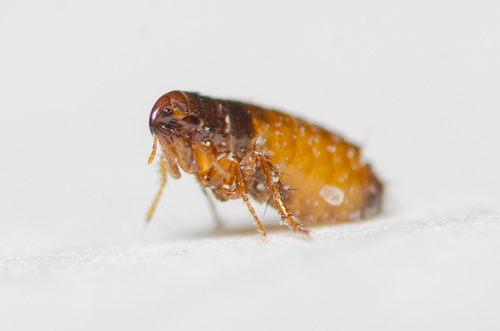
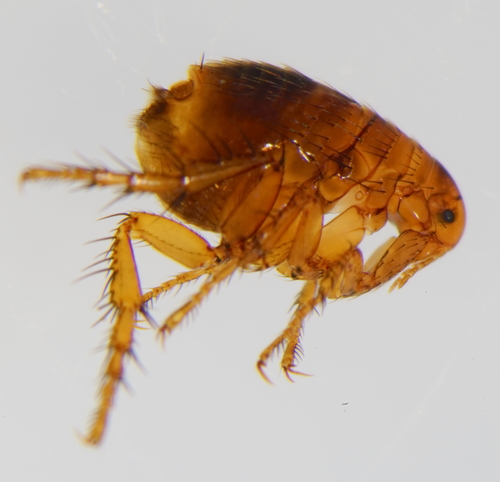
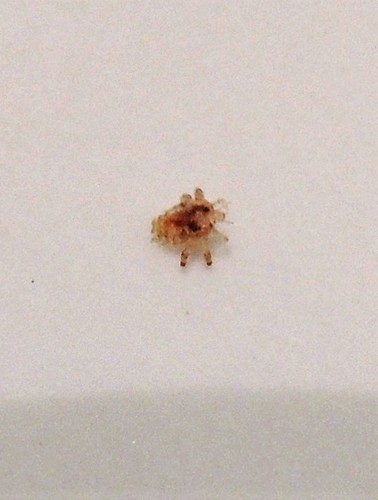
Adults are small (about 1.5-3 mm long), wingless and laterally compressed, which helps them move through host fur. They are generally medium to dark brown, with long powerful hind legs adapted for jumping. Unlike cat and dog fleas, it lacks both a genal comb (on the head) and a pronotal comb (on the thorax); the absence of combs is a key feature of this genus. Antennae are short and tucked into grooves. Larvae are wormlike, pale, 3-5 mm long, legless, and covered in bristles.
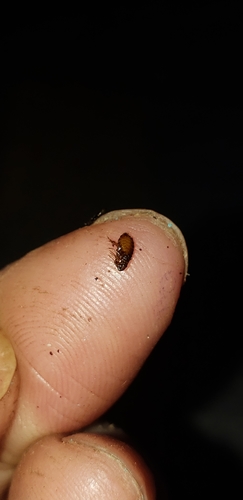
- Small (1.5-3 mm), wingless and laterally compressed insect that jumps using powerful hind legs.
- Light to dark brown color with no genal comb on the head and no pronotal comb on the thorax.
- Associated with rats or rat nesting areas; find adults on hosts or pupae/eggs in nest materials and bedding.
- Under magnification, look for the lack of combs together with a vertical rod-like thickening (mesopleural suture) on the middle thoracic segment, characteristic of Xenopsylla species.
Lookalikes
Human flea Pulex irritans
Pulex irritans also lacks genal and pronotal combs but lacks the rod-like mesopleural thickening on the thorax seen in Xenopsylla cheopis; P. irritans is less closely tied to rats.
Cat flea Ctenocephalides felis
Ctenocephalides felis has both genal and pronotal combs, which Xenopsylla cheopis lacks; C. felis is more commonly found on cats and dogs than on rats.
↻Life cycle
Egg
Laid on the host or in the host's nest/harborage; eggs are small, white and fall into bedding and nest material.
Larva
Wormlike, blind-ended larvae feed on organic debris including adult flea feces (dried blood) in the nest; they undergo several molts.
Pupa
Larvae spin a silken cocoon and pupate in debris; pupae can remain dormant for weeks to months until vibrations, carbon dioxide or heat trigger adult emergence.
Adult
Wingless, laterally flattened blood-feeding insects that seek hosts to feed and mate; females require blood meals to produce eggs.
🍃Diet and predators
Young eat
Larvae eat organic debris in nests, especially dried blood in adult flea feces and detritus.
Adults eat
Obligate blood feeders on mammals; adults prefer rodents, especially rats, but will feed on humans and other mammals if available.
Predators of the young
Predated by mites, predatory beetle larvae and other small arthropods in nest debris; also vulnerable to microbial pathogens.
Predators of adults
Eaten by ants, spiders and other insectivorous arthropods; some birds and small mammals remove fleas during grooming.
🌱Effect on plants and gardens
Does not feed on plants and has no direct impact on gardens or crops.
How to get rid of Oriental rat fleas
Focus on rodent control (sealing entry points, trapping, sanitation) and removing rodent nesting material. Clean and vacuum areas where rodents nest; wash bedding and fabrics at high temperature. Insecticidal options include residual insecticide sprays or dusts labeled for flea control in voids and along rodent runs, and systemic or topical flea treatments for pets. For suspected plague transmission or large infestations, contact local public health authorities or a licensed pest control professional.
📍Where and when to find it
Look on commensal rodents (rats) and in rodent nests, attics, wall voids, storage areas, under floorboards, carpets, and in bedding where rodents have nested. Larvae and pupae are found in nest debris rather than on the host.
Best time
Year-round in warm climates; in temperate zones, late spring to early autumn. Flea activity for feeding occurs mainly at night and during crepuscular hours.
Observation tips
Use gloves when inspecting suspected rodent nests. Vacuum thoroughly and inspect dust/debris for small dark jumping insects. A magnifier or microscope helps see diagnostic combs and body shape.
✨Fun facts
- Xenopsylla cheopis played a central role in historic human plague outbreaks because it efficiently transmits Yersinia pestis between rats and to humans.
- Flea pupae can remain dormant inside cocoons for months and wait for signs of a host (vibration, carbon dioxide) before emerging as adults.
- Fleas are wingless insects; their powerful hind legs let them jump many times their own body length.
?Frequently asked questions
Do oriental rat fleas bite humans?
Yes. They prefer rats but will bite humans if their preferred hosts are not available; bites cause itchy welts and can transmit diseases.
Can the oriental rat flea transmit plague?
Yes. Xenopsylla cheopis is a well-documented and efficient vector of Yersinia pestis, the bacterium that causes plague.
Why are these fleas in my house?
They typically appear because of a rodent infestation or nearby rat nesting material. Eggs and larvae develop in nests, bedding and cracks where rodents rest.
How do I get rid of oriental rat fleas?
Eliminate the rodent source (seal entry points, trap or bait rats), remove and clean nest material, vacuum thoroughly and launder fabrics, and use appropriate insecticidal treatments or professional pest control if needed.
Are flea bites dangerous to children or pets?
Bites usually cause itching; in some people or animals they can trigger allergic reactions. More seriously, fleas can transmit diseases—seek medical or veterinary advice if fever, swollen lymph nodes, severe illness, or persistent irritation occurs.
More lice & fleas
This guide was written with AI assistance and fact-checked, last updated 2026-10-10. Identification from photos is never certain: don't handle insects you can't identify, and get medical advice for bites, stings or allergic reactions. More about the Oriental rat flea: iNaturalist, Wikipedia.