
Cat flea
Ctenocephalides felis · Fleas
A small, wingless blood-feeding flea common on cats and dogs worldwide that causes itchy bites and can transmit parasites and pathogens.
!Is the cat flea dangerous?
Only mildly. Cat flea bites cause itchy red spots; some people develop flea allergy dermatitis with severe itching. Fleas can also transmit the tapeworm Dipylidium caninum if an infected flea is accidentally ingested, and have been associated with bacterial agents (for example Rickettsia felis). Treat bites by cleaning the area with soap and water, avoid scratching, use topical anti-itch creams if needed, and seek medical advice for severe reactions or signs of infection.
Pets
Fleas commonly cause intense itching, hair loss, scabs, and flea allergy dermatitis in cats and dogs. Heavy infestations can lead to anaemia in young animals. Use veterinarian-recommended flea treatment products and consult a vet for severe cases or for treatment of very young or ill animals. Never use dog flea products on cats: many contain permethrin, which is highly toxic to cats.
📖Overview
Ctenocephalides felis is the most common flea found on domestic cats and dogs worldwide. Adults are obligate blood feeders that spend most of their adult life on a host, while eggs, larvae and pupae develop off-host in the host's environment (bedding, carpets, nests). Infestations cause flea bites and often allergic dermatitis in sensitive animals and humans, and fleas can carry pathogens such as the tapeworm Dipylidium caninum and some bacterial agents.
🔍How to identify a cat flea
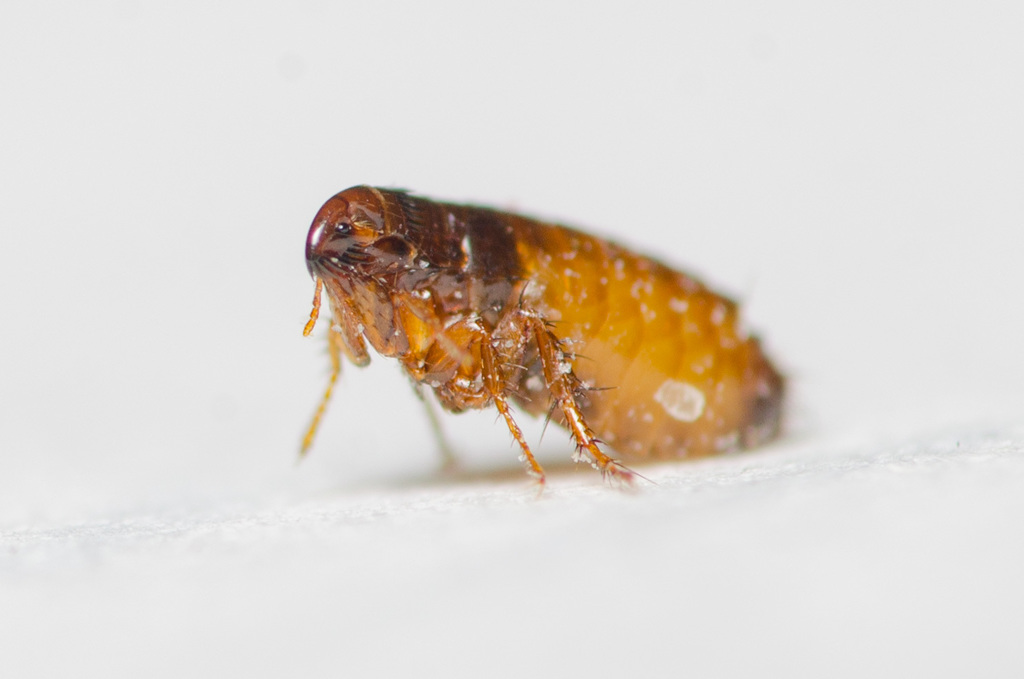
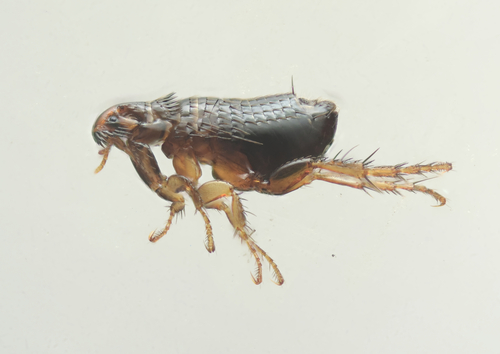
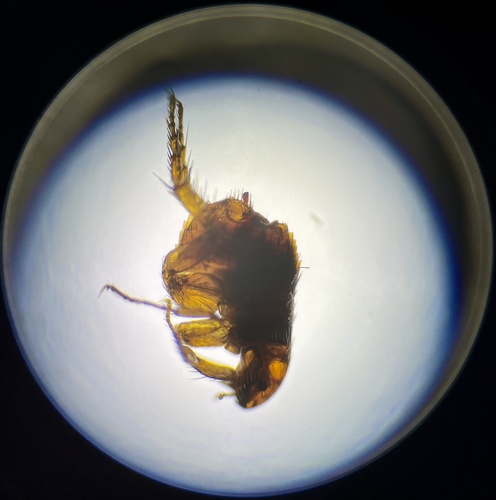
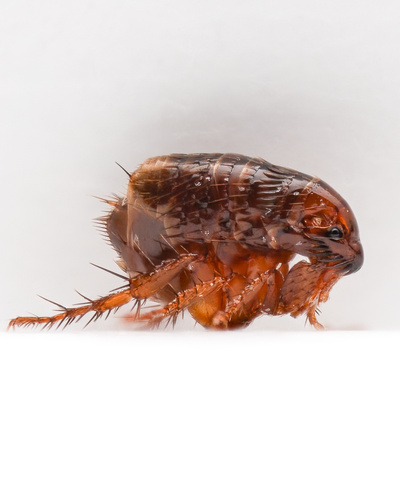
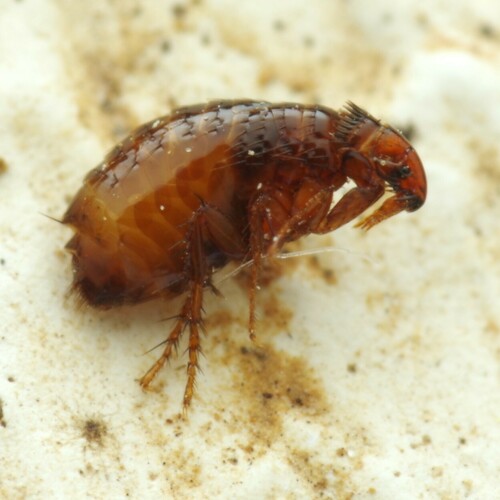
Adults are small (about 1.5-3.3 mm long), laterally flattened, wingless insects with strong jumping legs and a dark reddish-brown to blackish colour. They have comb-like rows of spines (genal and pronotal combs) on the head and thorax which help distinguish genus Ctenocephalides from other fleas. Under magnification the head is elongated and the body is covered with backward-pointing hairs.
- Very small (1.5-3.3 mm), laterally flattened, wingless and dark reddish-brown.
- Strong hind legs for jumping; will leap when disturbed.
- Genal and pronotal combs (rows of spines) present on head and thorax — characteristic of Ctenocephalides genus.
- Found on hosts (cats, dogs) or as dark moving specks in pet bedding and carpets; can be confirmed by microscopic examination.
Lookalikes
Dog flea Ctenocephalides canis
Very similar in appearance; C. canis prefers dogs while C. felis is more common on both cats and dogs. Specialists use microscopic differences in male genitalia and comb spine counts for reliable separation.
Human flea Pulex irritans
Lacks the prominent genal combs seen in Ctenocephalides and has a broader host range; less commonly found on pets.
Sticktight flea Echidnophaga spp.
Sticktight fleas attach firmly to skin (especially around ears and face) rather than moving freely; body shape and attachment behavior distinguish them.
↻Life cycle
Egg
Small, smooth, white eggs laid on the host that fall into the environment; eggs hatch in about 2 days to 2 weeks depending on temperature and humidity.
Larva
Worm-like, blind larvae that avoid light and feed on organic debris and adult flea feces (dried blood); larval stage lasts about 5-15 days under good conditions.
Pupa
Cocooned pupae develop into adults; pupae can remain dormant for weeks to many months and emerge when vibration, carbon dioxide or heat indicate a host is near.
Adult
Wingless jumping adults seek a host to feed on blood, mate and lay eggs; adults begin feeding within minutes to hours of finding a host.
🍃Diet and predators
Young eat
Larvae eat organic debris and adult flea feces (dried blood) found in the environment.
Adults eat
Blood of mammals and sometimes birds; preferred hosts are cats and dogs, but they will feed on humans and other mammals.
Predators of the young
Generalist predators and parasitoids in soil and leaf litter, plus microbial pathogens; ants and predatory beetles can eat eggs and larvae.
Predators of adults
Predatory insects and arachnids can catch some adults, but most adult mortality is from environmental stress, grooming by hosts, and control measures.
🌱Effect on plants and gardens
Not a plant pest; no direct impact on plants or crops.
How to get rid of cat fleas
Treat all pets with veterinarian-recommended systemic or topical adulticides and insect growth regulators (IGRs). Wash pet bedding and household fabrics in hot water; vacuum carpets, furniture and cracks thoroughly and discard vacuum bag contents or empty canister outdoors. Use environmental insecticides or professional pest control if infestation persists; focus on killing larvae and pupae with IGRs (pyriproxyfen, methoprene) and removing organic debris where immature stages develop. Repeat treatments according to product instructions because pupae can remain dormant and re-emerge.
📍Where and when to find it
On host animals (especially cats and dogs), in pet bedding, carpets, upholstered furniture, cracks, animal sleeping areas and nests. Eggs and larvae are typically in the environment rather than on the host.
Best time
Year-round indoors; outdoors most likely to find active stages in warm months (spring to autumn). Any time of day when hosts are present.
Observation tips
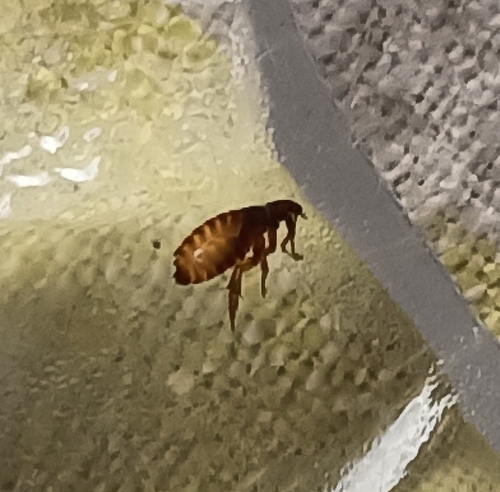
Check pets by parting fur and looking near the base of the tail, neck and groin; use a fine-tooth flea comb into white paper or towel to spot flea dirt (small black specks that turn red-brown when moistened). Photographing live fleas often requires a macro lens or close-up with strong light.
✨Fun facts
- Cat fleas are the most common flea species found on both cats and dogs worldwide.
- Flea pupae can stay dormant inside sticky cocoons for months and only emerge when they detect a potential host nearby.
- Adult fleas are powerful jumpers: a single leap can cover more than 100 times their own body length.
?Frequently asked questions
Do cat fleas bite humans?
Yes — cat fleas will bite humans, causing itchy red spots; they prefer animal hosts but will feed on people if animals are unavailable.
Can cat fleas live on people?
They do not live permanently on people; adults prefer animal hosts and usually remain on pets. On people they feed temporarily and then return to animal hosts or the environment.
Do cat fleas carry disease?
They can transmit Dipylidium caninum (a tapeworm) to pets if the flea is ingested, and have been implicated in spreading bacterial agents. Serious disease in people is uncommon but possible.
How do I get rid of cat fleas in my house?
Treat all pets with veterinarian-recommended flea products, wash pet bedding and textiles in hot water, vacuum carpets and furniture thoroughly and dispose of vacuum contents, and use environmental insecticides and IGRs or professional pest control for heavy infestations. Repeat treatments to address pupae that may emerge later.
Why do I find fleas in my house if I do not have pets?
Fleas can be brought in on wildlife (rodents, stray animals) or on a person’s clothing after visiting infested areas. Immature stages can persist in carpeting and upholstery for months.
📷Photos of the cat flea
More other creepy crawlies
This guide was written with AI assistance and fact-checked, last updated 2026-10-09. Identification from photos is never certain: don't handle insects you can't identify, and get medical advice for bites, stings or allergic reactions.