
Human flea vs Oriental rat flea
These two are easy to mix up. Here's how to tell a human flea from an Oriental rat flea, and whether either one bites or stings.
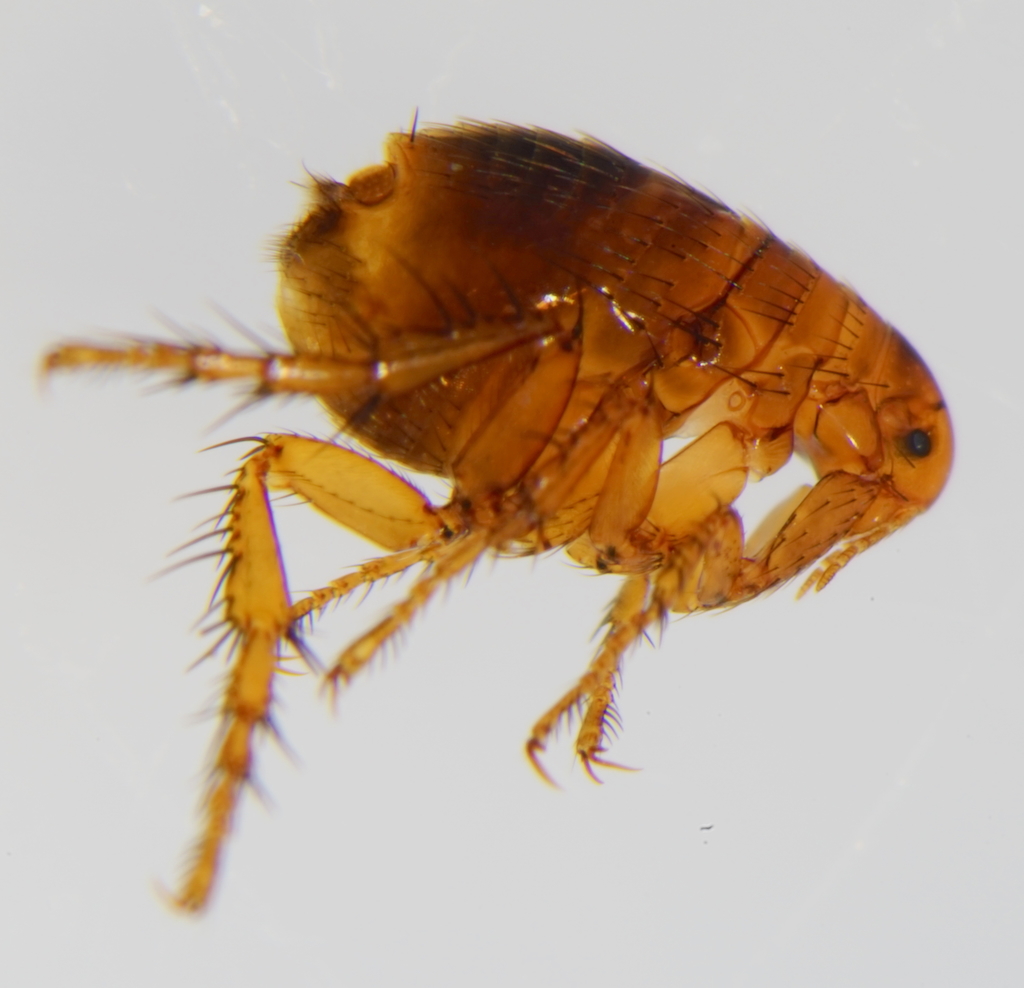
Human flea
Pulex irritans
Oriental rat flea
Xenopsylla cheopis
≠The key differences
Pulex irritans also lacks genal and pronotal combs but lacks the rod-like mesopleural thickening on the thorax seen in Xenopsylla cheopis; P. irritans is less closely tied to rats.
⚖︎Side by side
| Human flea | Oriental rat flea | |
|---|---|---|
| To humans | Biting pest | Disease vector |
| Size | 1.5-3.0 mm long | 1.5-3 mm long |
| Colours | Dark brown, Blackish brown | Dark brown, Light brown |
| Family | Pulicidae | Pulicidae |
| Habitat | Human dwellings, animal resting areas, nests and burrows; larvae develop in carpets, bedding, cracks in floors, soil and detritus near hosts | On commensal rodents (rats), in rodent nests, building voids, storage areas, and sometimes in human dwellings where rodents nest. |
| Range | Cosmopolitan; recorded worldwide in association with humans and a variety of mammals | Originally tropical/subtropical but now widespread worldwide wherever commensal rats (Rattus spp.) occur, including Asia, Africa, Europe, the Americas and islands. |
| Active | Active year-round in heated buildings; outdoors most active in warm months; adults bite any time of day but often feed when hosts are resting | Active year-round in warm climates; activity increases in warmer months in temperate regions and is primarily nocturnal to crepuscular when feeding on hosts. |
| Pest? | Yes | Yes |
🔍How to spot a human flea
- Small (1.5-3.0 mm), wingless and laterally flattened insect that jumps strongly
- Dark brown to black and shiny with backward-directed bristles
- Lacks genal and pronotal combs (rows of spines) that are present on cat and dog fleas (Ctenocephalides spp.)
- Short head compared with some other flea genera
🔍How to spot an Oriental rat flea
- Small (1.5-3 mm), wingless and laterally compressed insect that jumps using powerful hind legs.
- Light to dark brown color with no genal comb on the head and no pronotal comb on the thorax.
- Associated with rats or rat nesting areas; find adults on hosts or pupae/eggs in nest materials and bedding.
- Under magnification, look for the lack of combs together with a vertical rod-like thickening (mesopleural suture) on the middle thoracic segment, characteristic of Xenopsylla species.
?Frequently asked questions
What is the difference between a human flea and an Oriental rat flea?
Pulex irritans also lacks genal and pronotal combs but lacks the rod-like mesopleural thickening on the thorax seen in Xenopsylla cheopis; P. irritans is less closely tied to rats.
Is a human flea or an Oriental rat flea more dangerous?
Human flea: Biting pest. Oriental rat flea: Disease vector. Pulex irritans bites cause itchy, irritating welts and can trigger allergic dermatitis in sensitive people. Xenopsylla cheopis bites cause itchy welts; more seriously, the species is a proven vector of Yersinia pestis (plague) and can transmit Rickettsia typhi (murine typhus).
Identification from photos is never certain: don't handle insects you can't identify, and get medical advice for bites, stings or allergic reactions.